
At least three people lost their lives in the Gaza Strip on Thursday following Israeli airstrikes, health authorities and medical personnel said, with two of the victims identified as children. The incidents took place amid renewed mediation efforts in Cairo seeking to advance a U.S.-brokered plan for Gaza.
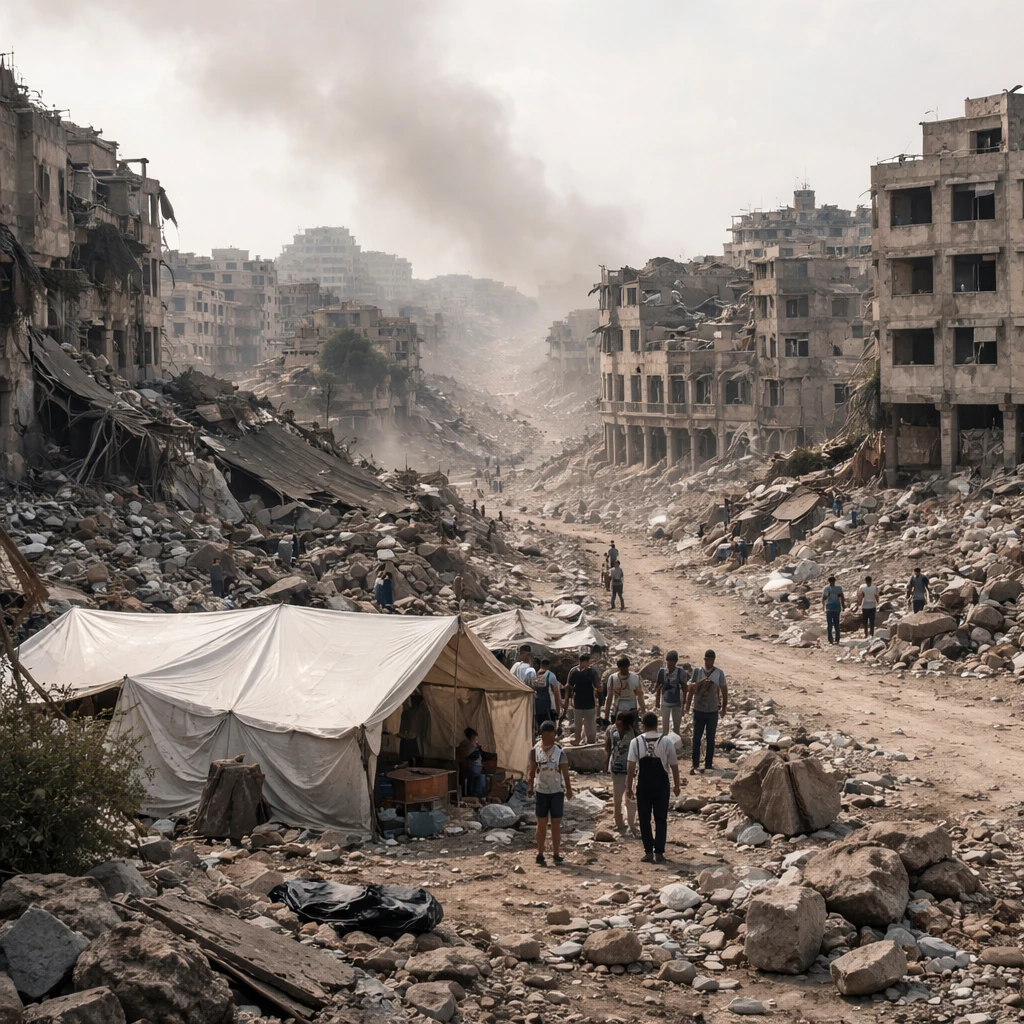
Medics reported that an airstrike struck a tent encampment in Khan Younis, in the southern part of the enclave, killing a man and an eight-year-old girl. In central Gaza, the Bureij refugee camp saw an airstrike hit a house, resulting in the death of an 18-month-old child and injuries to at least eight other people, medics said. The Israeli military stated that both strikes targeted Hamas militants.
Gaza health officials said these recent fatalities bring the total to more than 1,200 Palestinians, mostly civilians, killed by Israeli attacks since the ceasefire took effect. The health authorities noted that Hamas does not usually disclose its own casualties. While the truce has stopped full-scale combat, near-daily Israeli strikes have continued, and militants in Gaza have killed four Israeli soldiers during the same period.
Cairo talks and the U.S.-brokered plan
In Cairo, leaders of Hamas met with mediators from Egypt, Qatar and Turkey to discuss how to proceed with the second phase of President Donald Trump’s Gaza plan, as it was presented by a Board of Peace that oversees implementation. The plan outlines several major elements: a significant increase in humanitarian aid, the establishment of governance by a civilian Palestinian administration, the disarmament of Hamas, the withdrawal of Israeli forces from Gaza, and the deployment of an international force to help maintain security.
Talks on these elements have previously stalled. On Thursday, a Hamas official told mediators the movement was coming with a "positive and good" response, but the official did not say whether Hamas had agreed to full disarmament - a central sticking point that has persisted through four months of negotiations. Hamas has insisted that Israel must commit to ending attacks on Gaza and to withdrawing its forces.
Sources close to Hamas said the group was prepared to "confine and store" heavy weapons under the control of a Palestinian body rather than handing them over to Israel. Hamas did not provide a comment on that proposal. The fate of light or personal weapons remains unclear, as does whether Israel and the Board of Peace would accept any revised stance from Hamas. The Board of Peace declined to comment immediately on the Cairo discussions.
Israel has demanded that Hamas relinquish power entirely in Gaza and fully disarm. Last month, Hamas dissolved a de facto Gaza government but retained a caretaking body tasked with ensuring the continued provision of vital services to residents.
Humanitarian and territorial context
Israel effectively controls about 64% of the small coastal Gaza Strip, which has been heavily damaged during what is described in official statements as a two-year military assault that followed a 2023 Hamas attack on southern Israel. Nearly all of Gaza's roughly 2 million residents now live on a narrow coastal area, many in makeshift tents or in buildings damaged by the conflict, and are facing dire living conditions while remaining under Hamas control.
The resumption of high-level negotiations in Cairo aims to move the second phase of the plan forward, but the continued occurrence of airstrikes and unresolved questions about disarmament and security arrangements underscore the fragility of the current ceasefire and the challenges that remain in translating agreements into durable changes on the ground.