
Summary
The EU’s new anti-deforestation rules introduce strict traceability requirements for imports, with significant penalties for non-compliance. Brazil, which supplied about half of the bloc’s soybean meal imports last year and exported a record 23.3 million metric tons in 2025, has been flagged as a medium-risk source by the European Feed Manufacturers’ Federation (FEFAC). That assessment, together with logistical hurdles in central Brazil, has opened a potential market opportunity for Argentina, whose main production areas sit closer to export hubs and received a low risk rating from FEFAC.
Why this matters
The EUDR will require importers to demonstrate that agricultural commodities have not been produced on land that was deforested after a designated cut-off date. With the December 30 deadline approaching, traders and crushers are assessing which supply chains can meet the new rules. Argentina’s crushing industry contends its systems and geography make compliance simpler and cheaper, while Brazil’s sprawling interior production and multi-leg transport corridors create harder-to-trace flows.
Supply chain and traceability dynamics
FEFAC warned that the EUDR’s traceability demands could exclude as much as 4 million metric tons of soymeal from European markets - roughly 17% of Brazil’s total exports. In its risk assessment, FEFAC rated Brazil as "medium" for EUDR-related disruption and said the west-central state of Mato Grosso and other areas face "structural and logistical hurdles" to expanding fully compliant supply chains.
Dante Romano, research manager at Rosario-based grains broker Max Agro, highlighted the role of distance and modal complexity in Brazil’s challenge. He explained that farmers in central Brazil are more than 2,000 kilometres away from sea ports and frequently must transload between trucks, barges and trains to reach export terminals, a pattern that complicates the kind of traceability the EUDR demands.
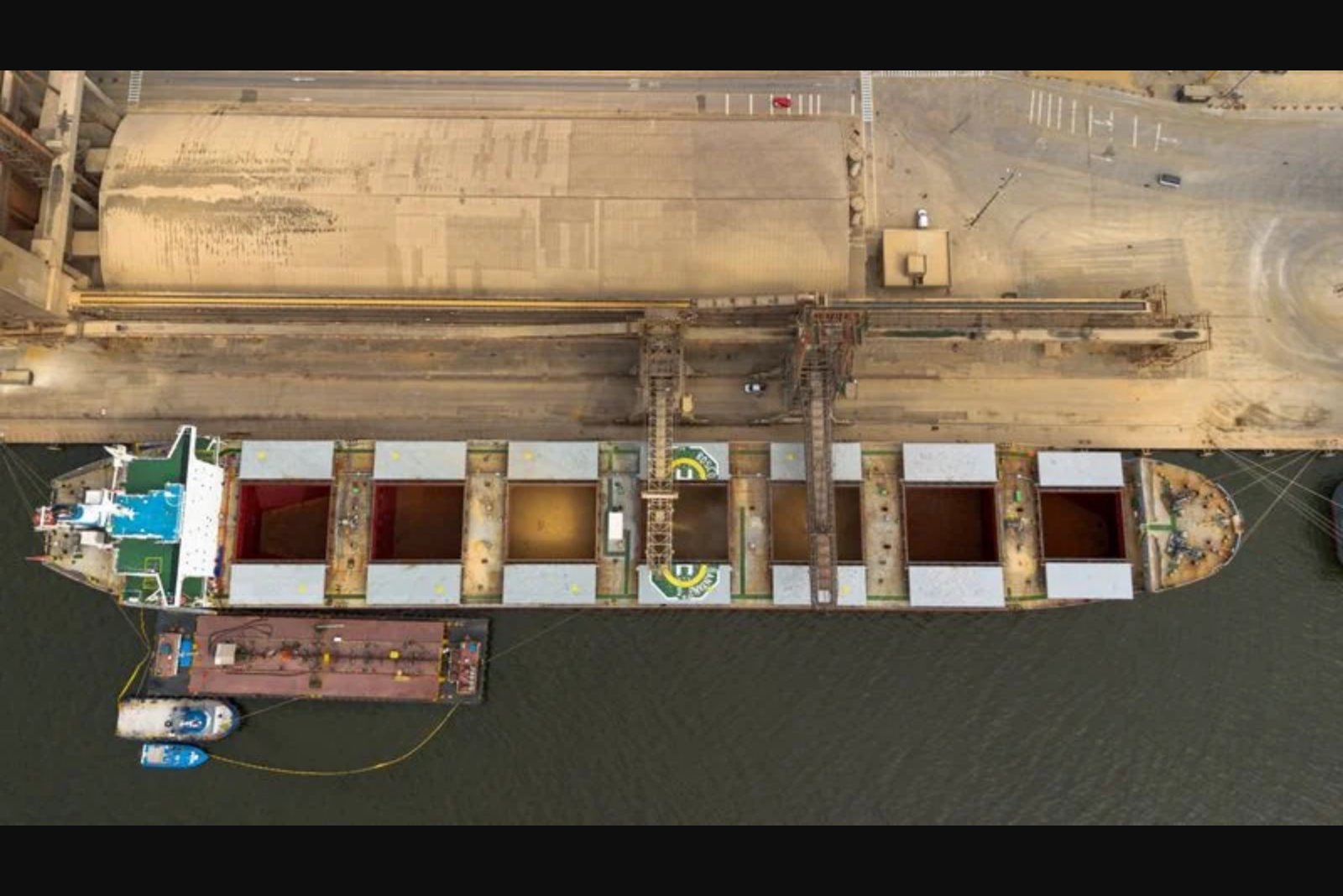
By contrast, Argentina’s core soybean-producing areas are typically within 350 kilometres of the Rosario port complex, which trading sources say makes chain-of-custody tracking both easier and less costly. That proximity is central to the argument from Argentina’s industry players that they can more readily demonstrate compliance with the incoming rules.
Industry positioning and claims
Argentina’s crushing industry, which is the world’s largest soymeal exporter after shipping about 27 million metric tons last year, is preparing to capture any additional European demand should Brazilian shipments fall short. Gustavo Idigoras, president of Argentina’s CIARA-CEC grains exporters and crushers chamber, estimated potential Brazilian export shortfalls at 5 million to 6 million tons and said, "We can easily fill that gap." He added, "Argentina is ready," pointing to the country’s VISEC traceability system that tracks soybeans and beef from production through to export and is fully operational.
Argentina’s FEFAC risk assessment classification was "low," with a projection that nearly all of the country’s soymeal crop in the first half of 2027 would meet EUDR requirements. Traders and analysts in the region say Argentina’s ability to redirect volumes toward Europe could prompt Brazil to seek alternative markets if European demand is lost.
Regional context and other suppliers
Paraguay, another member of the Mercosur trade bloc along with Argentina, Brazil and Uruguay, also received a low risk rating from FEFAC. Paraguay’s grains crushing chamber, CAPPRO, noted the country has "favorable structural conditions" to comply with Europe’s new rules, and highlighted that in its Region Oriental - where most soybeans are grown - legislation passed in 2004 prohibits deforestation for agricultural use.
The EUDR arrives at a sensitive moment for Mercosur-EU relations, following a provisional free-trade agreement reached in May. The timing of the regulation is also politically notable in Brazil: it will take effect just days before Luiz Inacio Lula da Silva is inaugurated for a new presidential term after defeating right-wing candidate Flavio Bolsonaro, who had said he would free production from "environmental hurdles" and let farmers do "whatever they wished" on their lands.
Voices from the field
Leaders in Brazil’s farming sector have criticized the EUDR. The president of Aprosoja, Buffon, described the legislation as unfair to Brazil, while also noting ongoing restoration efforts in some regions even as new cropland has been developed. He said, "Brazil’s environmental problems are much smaller than the size of our agriculture."
At the same time, those in Argentina’s crushing and export community are preparing operationally to capture demand should it shift. Analysts point to the interplay between logistics, traceability systems and regulatory compliance as the central factors that will determine which producers retain access to European markets under the new rules.
Bottom line
The EUDR’s enforcement could reshape short-term soymeal flows to the EU, favoring suppliers with shorter, more traceable supply chains and established monitoring systems. Argentina’s industry asserts it is well-positioned to expand shipments to Europe, while Brazil faces questions over whether its interior production and complex logistics can meet the rules without substantial adjustments.