
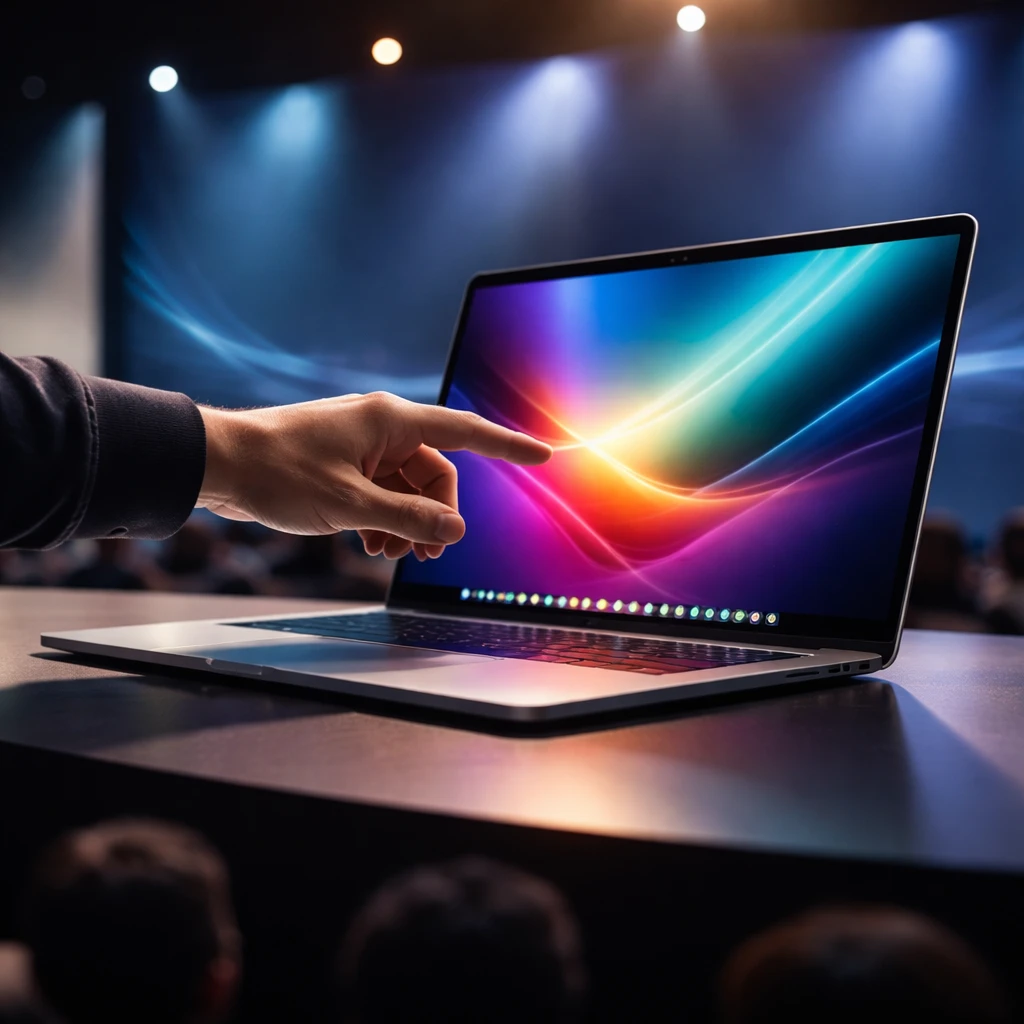
Apple is expected to present touchscreen-equipped MacBooks at a Los Angeles product event this week, abandoning a long-held stance against touch input on its laptop lineup. The announcement would cap a flurry of recent launches from the company as it heads into the critical holiday shopping period.
The Los Angeles gathering will follow three product pushes this fall: a folding iPhone, called Duo, revealed at Apple’s Silicon Valley headquarters in September, and a smart home hub introduced in New York earlier this month. Those earlier items are meant to explore new consumer categories; the MacBook touchscreen pivot reopens a persistent debate about bringing to Mac laptops the direct-display interactivity that has been standard on iPhones and iPads.
Apple’s leadership has historically opposed the idea of laptop touchscreens. In 2010, Steve Jobs described touchscreens on laptops as "ergonomically terrible," and in 2012 then-CEO Tim Cook compared the notion of combining tablets and laptops to mixing a toaster and a refrigerator in terms of user appeal. Another senior Apple engineer, John Ternus, has previously argued that the company’s iPad range already serves as its touchscreen computer offering.
Despite that internal resistance, touch-sensitive displays have been common on Windows laptops for more than a decade. With the iPhone approaching its 20th year on the market, some observers say newer generations of buyers simply expect interactive screens. Anshel Sag, an analyst at Moor Insights & Strategy, said he believes Apple was on the wrong side of the touch debate and characterized the anticipated shift as the "long arm of reality setting in."
A central uncertainty for Apple is how buyers will react to touchscreen MacBooks. The company has recorded an uptick in Mac sales recently, but that increase has been concentrated among technology enthusiasts and corporate purchasers acquiring machines to support on-device AI workloads. Whether broader consumer demand will follow remains an open question.
From a product standpoint, Apple announced an upgraded base MacBook Pro model this week featuring a new M6 chip. Media reports have indicated the first touchscreen MacBook models slated for shipment will use the company’s existing M5 Pro and M5 Max processors, which are already available in current MacBook Pro configurations. If those reports are accurate, the touchscreen models would not bring a meaningful performance uplift relative to existing high-end machines.
That trade-off in hardware improvements has drawn commentary from the technology community. Podcast host Jason Calacanis wrote on X that the primary demand among some buyers is for "more memory and better processors for local models," signaling that capability for local AI workloads is a prominent customer priority.
Implications and immediate considerations
The planned touchscreen MacBooks represent a strategic product decision at a moment when Apple is both expanding into new device categories and refreshing its core laptop line. How the broader market of consumers and enterprise buyers responds will be crucial for timing and scale of Mac adoption, especially for organizations purchasing machines for AI tasks on-device.