
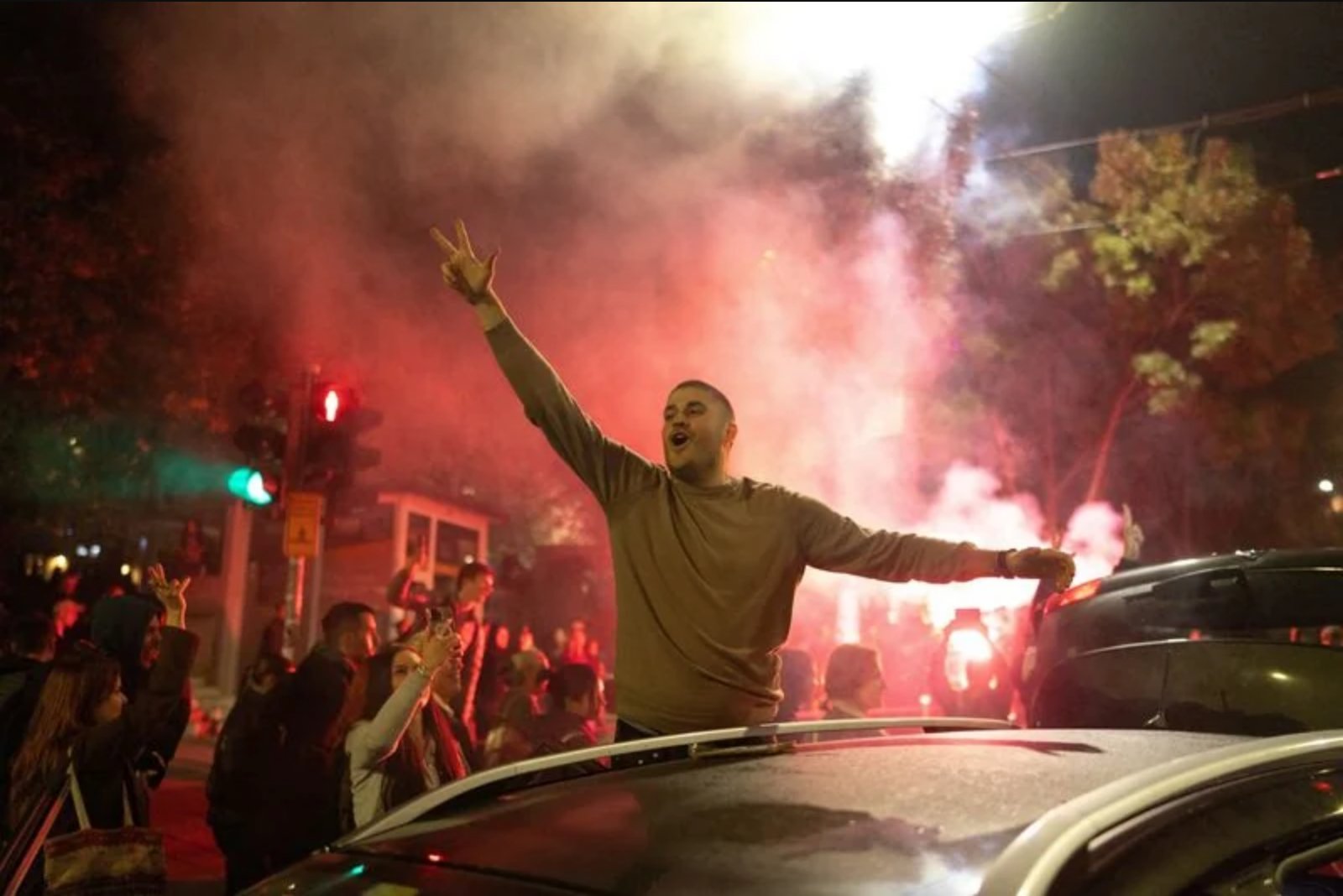
After a student-driven, leaderless protest movement helped remove Aleksandar Vucic from power in a snap election on Sunday, Serbia is now preparing to assemble a new government. The country awaits the appointment of a prime minister and other top ministers as the student-backed slate moves toward governing. Below are profiles of several prominent individuals named on the students’ list.
Dejan Soskic, 59 - Former central bank governor and economist
Dejan Soskic is an economist and a professor at the University of Belgrade’s Faculty of Economics who served as governor of Serbia’s central bank from 2010 until his resignation in 2012. He stepped down in protest at legislative changes he said undermined the bank’s independence. For years he has been an outspoken critic of Vucic’s administration.
Soskic was an avid biker in his youth and is described as having evolved into a softly spoken reformer. He has repeatedly highlighted institutional weaknesses that he believes characterised the country under Vucic. In 2021 he asserted, without providing evidence, that systemic corruption in Serbia was more widespread than in neighbouring states and that this was deterring both domestic and foreign direct investment. The now-deposed president and his Serbian Progressive Party have repeatedly denied allegations of corruption.
On fiscal matters, Soskic argues that prudent public finances would provide the foundation for a lasting rise in wages and pensions. During the campaign he proposed adjusting the exchange rate of the dinar - which currently operates on a managed float against the euro - either by weakening it to boost export competitiveness or by holding a stronger fixed rate while pursuing cost reductions such as wage cuts. Pro-government media have criticised Soskic’s record at the central bank, attributing the dinar’s depreciation during his tenure to his policies; Soskic has said the depreciation reflected mandatory monetary policy of the period rather than personal mismanagement.
Ilija Srdanovic, 55 - Cardiologist, professor and lead candidate
Ilija Srdanovic is a practising cardiologist and a professor at the University of Novi Sad Faculty of Medicine. A keen cyclist, he became the student movement’s lead candidate when the ballot list was finalised in September. His rise into frontline politics began amid the student-led anti-corruption demonstrations, where he frequently appeared as a public speaker.
Srdanovic took part in the movement’s "Guardians of the Constitution" bicycle tour across the northern Vojvodina province. He campaigned on a promise to create a decentralised health system "at the service of citizens and based on equality for all patients." In an interview with Belgrade-based FoNet news agency, Srdanovic said his political aim was to build "a better Serbia, nothing else is important." He also declined an invitation from Vucic to take part in a televised debate during the campaign.
While Srdanovic’s platform emphasises health reform and anti-corruption priorities, some of his positions align with existing state policy. He reiterated the Student List’s stance that Kosovo - which declared independence from Serbia in 2008 - remains an integral part of the country. He also indicated that integration with the European Union is not a current priority for the incoming administration, asserting that the immediate focus should be on domestic anti-corruption measures and what he described as national "existential survival."
Dejan Bodiroga, 53 - Former basketball captain and sports administrator
Dejan Bodiroga, a household name in Serbia for his achievements on the basketball court, is among the most visible public figures on the student movement’s list. Now 53 and serving as EuroLeague president, Bodiroga was the captain of the Yugoslav national basketball team during a decorated playing career. He characterised the election as a fight "for the return of a country that has been hijacked."
Bodiroga’s sporting accomplishments include back-to-back FIBA World Championship gold medals in 1998 and 2002 and leading the then Yugoslav side to an Olympic silver medal at the 1996 Atlanta Games. After retiring from play in 2007 he moved into senior sports administration and was named EuroLeague president in 2022.
Throughout the campaign Bodiroga was active at student rallies and participated in open-air folk dancing events in rural municipalities. His popular appeal has been underscored by supporters invoking a 1990s-era chant: "We have our God, his name is Bodiroga." He is one of the student movement’s most prominent public speakers.
Radomir Saicic, 64 - Chemistry professor and academic activist
Radomir Saicic, a 64-year-old organic chemistry professor and member of the Serbian Academy of Sciences and Arts (SANU), emerged as the public face of the students’ election victory. He took the podium at the student movement’s headquarters after Vucic conceded and hailed the result as a "citizens’ victory."
Saicic specialises in medicinal chemistry, with research concentrated on the synthesis of chemotherapy agents and antiviral therapies. His work has included a COVID-19 project in collaboration with the Pasteur Institute. He became involved in the student-led anti-corruption protests that followed the 2024 collapse of a railway station canopy in Novi Sad.
Saicic was among 25 academics who signed a petition calling for Vucic’s resignation, an action that drew criticism and attention from pro-government tabloids. In May 2026 he walked out of a SANU gallery exhibition to protest an appearance by Nikola Selakovic, the minister of culture. During the election campaign Saicic told supporters that Serbia was "occupied from within" and said he was prepared to place "even his life" at the disposal of the student movement.
On geopolitical questions, Saicic describes Kosovo as a "temporarily occupied territory" and supports maintaining energy ties with Russia. Political analysts and local media have identified him as a potential contender in the presidential election that will be triggered by Vucic’s recent resignation from that post.
Next steps and context
With the snap election producing a decisive change in leadership, the immediate task for the student-backed movement will be forming a government capable of appointing a prime minister and staffing key ministries. Candidates from disparate professional backgrounds offer contrasting strengths: economic policy and central banking experience; medical and health-system expertise; broad popular recognition and administrative experience in sports; and scientific research and academic standing.
How the student movement translates public momentum into cohesive governing strategy - including decisions on fiscal stability, health reform, exchange-rate policy and foreign-energy relationships - will be central to the country’s near-term political and economic trajectory. The incoming administration has signalled priorities that emphasise domestic anti-corruption reforms and internal stability over immediate moves toward European Union integration.
For now, Serbia’s political future hinges on coalition-building and the formal designation of ministers and senior officials to steer policy in the weeks and months ahead.