
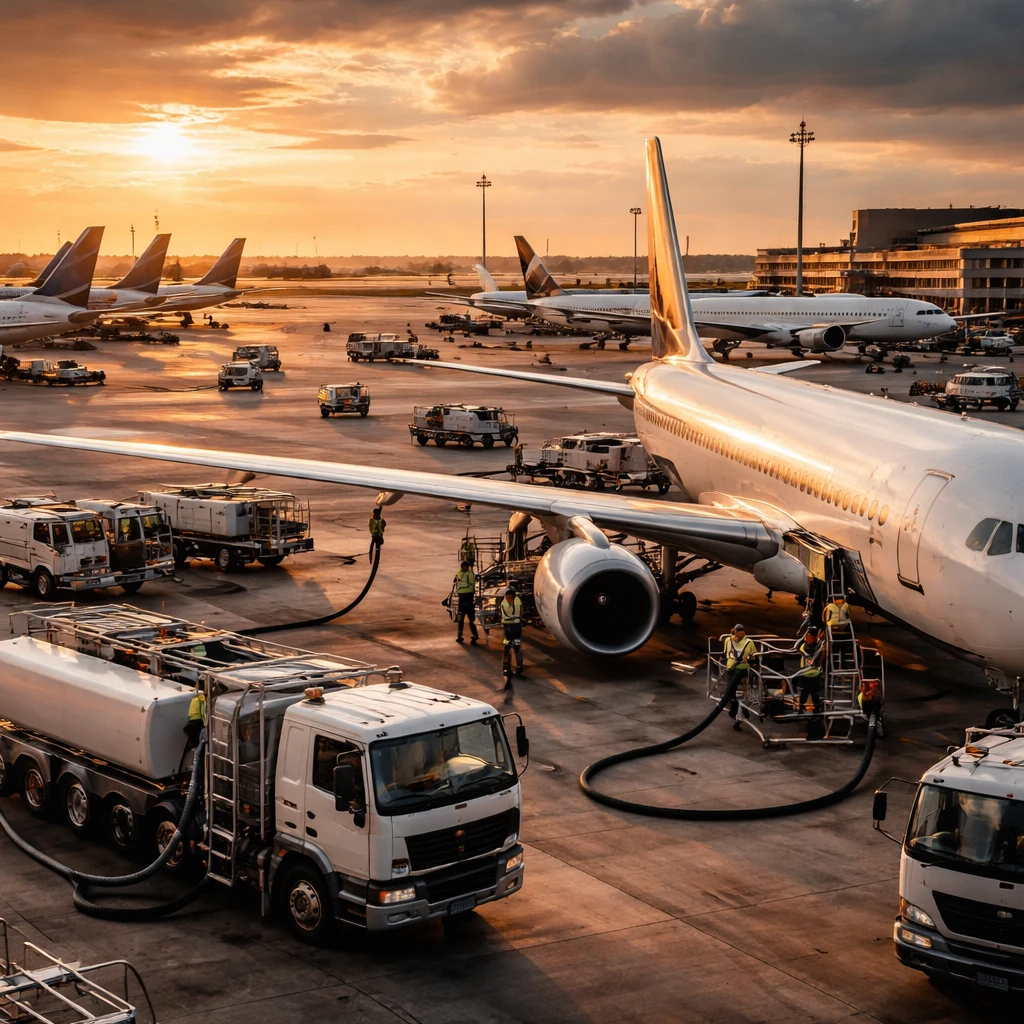
Airlines worldwide are increasingly resisting new fuel hedges as jet fuel prices remain roughly double what they were before the Iran conflict. The move away from locking in future fuel costs is prompting carriers to warn of significant fare increases to offset higher fuel bills rather than absorb rising expenses or buy protection at currently elevated prices.
Hedging historically has allowed carriers to secure future fuel costs and smooth volatility in operating expenses. But hedging arrangements can carry explicit premiums, collateral requirements or other costs. At present, airlines that enter hedges at today’s high price levels risk being locked into expensive contracts should geopolitical strains ease and fuel prices decline.
As the Middle East conflict moves into its ninth month, that recalibration in strategy means travelers are likely to face substantially higher air fares globally as carriers lose the cost certainty hedges provided. Without that protection, airlines confront a choice of absorbing the incremental fuel expense, cutting capacity, or seeking to pass costs to customers.
“Most hedging is finishing,” said AirAsia Chief Executive Tony Fernandes in recent comments, noting his airline is budgeting for 12 months of high oil prices and has stopped attempting to forecast the trajectory of geopolitical tensions. He added that the company had not modelled a scenario in which oil prices fell, and that exposure can only be managed by reducing costs or raising fares.
Finnair has similarly paused adding new hedges as fuel costs surged this year, and reported that the higher fuel input has already fed through to ticket prices. The carrier reported an average hedging ratio of 34% for 2027 and its finance chief, Pia Aaltonen-Forsell, highlighted the practical difficulty of locking in lower prices when the forward curve is elevated: “If we add right now, it’s more expensive.”
Jet fuel typically represents between 30% and 40% of an airline’s cost base. European and Asian carriers have traditionally hedged a greater portion of their fuel needs than many U.S. rivals, which largely abandoned hedging after past costly positions. Hedging still offers cost stability when prices rise, but it is effectively a directional bet on the future of oil markets and can backfire if prices fall.
Industry observers warn that pressure on airlines will grow as the hedges put in place before the conflict begin to expire, most notably through 2027. Ryanair’s chief executive, Michael O’Leary, has argued none of the European carriers are well-hedged until summer 2027 and projected that air fares may need to rise by 15% to 20% as a consequence. Ryanair also confirmed in September that it had stopped hedging.
At the same time, one large European carrier has hedged roughly 80% of its jet fuel needs for the year ending March 2027, a level of cover that stands in contrast to the broader industry trend of pulling back. The differing hedging positions across carriers mean the competitive landscape could shift depending on how long elevated fuel costs persist.
Not all fare increases have stuck. Low-cost carrier Norwegian Air Shuttle said it had been forced to reverse some post-conflict price hikes because customers would not accept the higher fares, underscoring consumer sensitivity and the limits airlines face when trying to pass on costs.
Hedging approaches remain fragmented across the industry. Some airlines have expanded hedge programmes since the conflict began, while others have reduced or closed out positions. Carriers with weaker balance sheets tend to have less flexibility to meet hedging-related costs, such as margin calls or collateral requirements, and therefore remain more exposed to spot fuel-price swings. This dynamic has contributed to a wave of bankruptcy and insolvency filings among more vulnerable operators.
U.S. carriers have largely shown little appetite to resume material hedging despite the year’s fuel shock. Analysts point to lower price sensitivity among U.S. travelers, which can make it easier for domestic carriers to pass through higher costs without losing demand. Official data in the article indicates air fares in the European Union rose 5.8% year-on-year in September, while U.S. air fares were up more than 20% year-on-year in the same month.
Several named U.S. airlines have little to no material hedging in place: American, United, Delta, JetBlue and Allegiant were reported as having no meaningful fuel hedges, while Frontier has no active hedging position. Southwest ended its long-running programme last year, and Alaska and Hawaiian Airlines likewise closed out remaining positions.
The risk calculus around hedging also surfaced in recent quarterly guidance and profit targets. Delta, United and Southwest either lowered profit forecasts or provided investor guidance that disappointed the market this month as fuel expenses rose. Even carriers that retain hedge cover for this year are taking other measures. Ryanair and Lufthansa, despite hedging more than 70% of their jet fuel needs for the current year, have reduced capacity on certain routes to limit exposure to unhedged fuel costs.
Air New Zealand’s chief financial officer, Kris Cudmore, summed up the position succinctly: while hedging affords nearer-term protection, it is not “a complete solution” to the uncertainty that fuel costs present.
The industry now faces an interlinked set of challenges. Carriers must balance the immediate cash and collateral implications of purchasing hedges at elevated forward prices against the potential competitive and demand impacts of raising fares. For airlines with constrained balance sheets, that balancing act will be even harder, and for passengers, the prospect of sustained higher air fares looms if hedging coverage continues to erode into 2027.
Summary
With jet fuel roughly double pre-conflict levels, many airlines have pulled back on new hedges due to cost and collateral considerations, increasing the likelihood of higher fares as hedge protections expire through 2027. The uneven hedging landscape leaves airlines, consumers and markets exposed to continued fuel-price volatility.
Key points
- Jet fuel is about twice pre-conflict levels, prompting airlines to reduce new hedging activity and warn of fare hikes.
- Hedging programs carry premiums and collateral requirements; entering hedges now risks locking in high prices if markets retreat.
- Regional differences matter: European and Asian carriers historically hedge more, U.S. carriers have largely avoided hedging, and hedging cover for many airlines could lapse through 2027.
Risks and uncertainties
- Hedge expirations in 2027 may expose airlines to elevated spot fuel prices, pressuring margins and prompting fare increases - impacting airline profitability and passenger demand.
- Carriers with weak balance sheets may be unable to absorb hedging costs or margin calls, increasing bankruptcy and insolvency risk within the sector.
- Consumer price sensitivity could limit the extent to which airlines can pass higher fuel costs through to fares, constraining revenue recovery and route capacity decisions.