
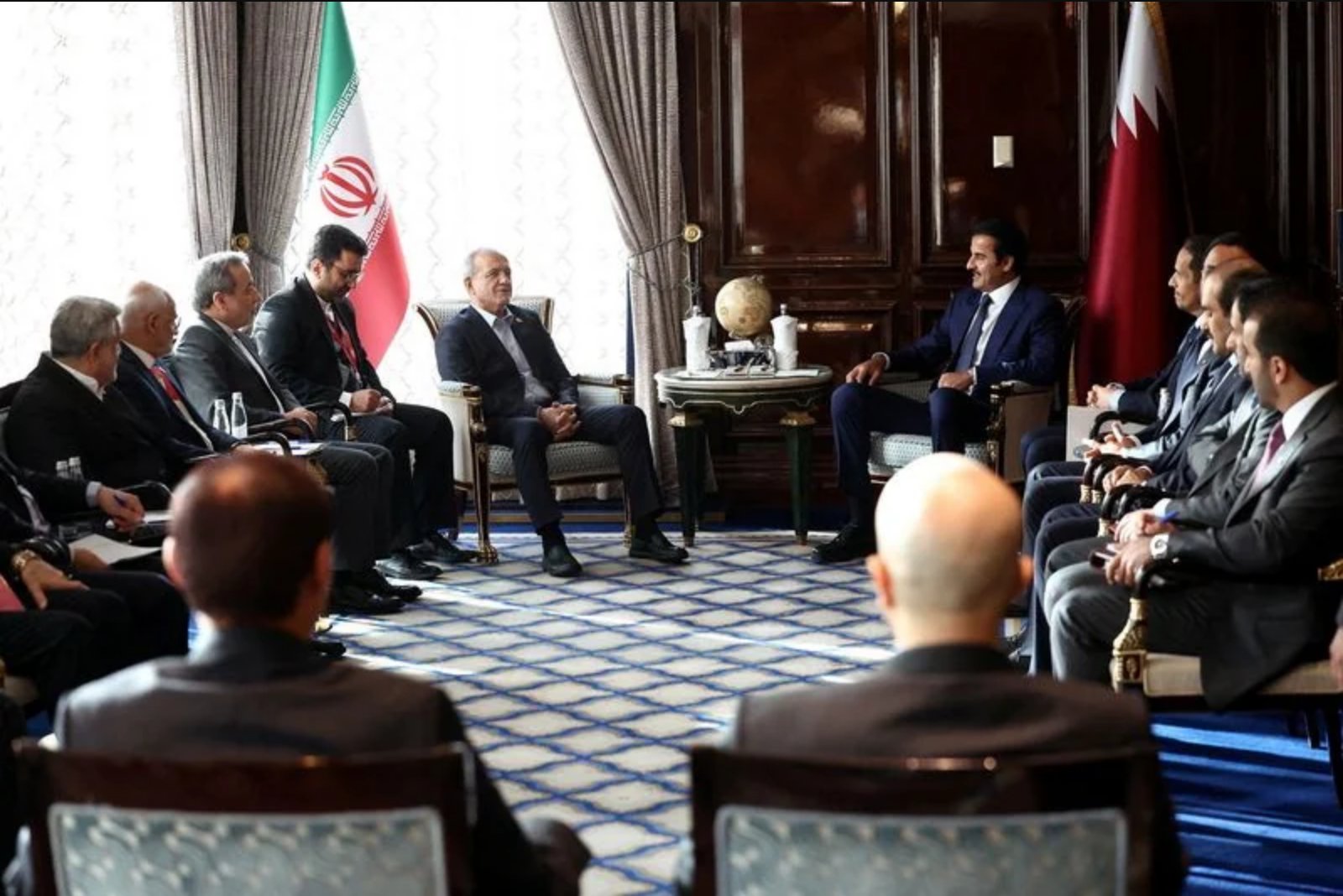
Qatari envoys have tabled a new draft agreement aimed at ending the eight-month conflict involving Iran, the United States and Israel, according to an official briefed on the negotiations who is not Iranian. The proposal, which was discussed in Tehran on Sunday, outlines a seven-day timetable intended to address the core concerns of both Tehran and Washington through daily confidence-building measures, the official said.
That official added that several nations would serve as guarantors for the plan and that the sequence could commence as early as early next week. Tehran is considering the proposal and a reply is expected by the end of the week, the source said.
Shortly after the draft reached Tehran, a senior Iranian official involved in the talks dismissed the Qatari proposals as "unacceptable ideas and not an offer," and reiterated that Iran would not bend on its position regarding its nuclear programme. Tehran continues to insist that its preconditions - including an end to what it terms the US blockade of Iranian ports and the lifting of sanctions on its oil exports - must be satisfied before it will enter wider negotiations. Washington, for its part, has said that Iran's nuclear programme should be part of any discussions to end the war from the outset. Iran rejects Western characterizations that its nuclear programme is military in nature.
This round of Qatari-led mediation follows earlier efforts by Qatar and Pakistan to broker a truce. Both states have played active roles in trying to de-escalate hostilities that have already disrupted global shipping and oil supplies and recently expanded to new theatres, including Saudi Arabia and Yemen.
The specific contours of the draft presented on Sunday were not disclosed in detail by the official briefed on the talks, who noted that the proposal differed from a previous seven-day package Iran had floated late in September. That earlier Iranian proposal, articulated by Foreign Minister Abbas Araqchi, suggested the Strait of Hormuz could be reopened under certain conditions. The earlier plan was rejected by the US President, prompting renewed Qatari mediation.
Previous attempts to mediate the conflict - including US and Israeli initiatives launched on February 28 - led to a short-lived interim peace accord in June, but that arrangement rapidly unraveled. In recent weeks the conflict has broadened: Yemen's Iran-aligned Houthi forces have repeatedly struck at Saudi Arabia, including an attack on the Ras Tanura refinery, and have advanced toward the Bab el-Mandeb Strait, creating a separate pressure point on maritime trade routes on the opposite side of the Arabian Peninsula from the Strait of Hormuz.
Market responses to the escalation have been visible. Oil prices climbed by more than 1% on Wednesday, trading above $115 per barrel after the Houthi attack on Ras Tanura raised fresh concerns about potential supply disruptions. The conflict has also put Gulf states under sustained bombardment at times and has reignited hostilities between Israel and the Iran-backed Lebanese armed group Hezbollah, amplifying regional instability.
Officials and analysts involved in the talks expressed concern ahead of Sunday’s meeting in Tehran that Israeli Prime Minister Benjamin Netanyahu - who is campaigning for re-election - could resume strikes against Iran this week. Also adding to the tension, the US President renewed public threats to strike Iran again on Friday, while Iranian security officials told negotiators that Tehran had drawn up detailed plans to target Gulf undersea cables if US and Israeli strikes resumed.
Diplomatic activity around the mediation continued beyond the Qatari initiative. On Monday, senior representatives from Saudi Arabia, Turkey and Pakistan met Iranian officials in Tehran as part of efforts to de-escalate the situation. Qatar publicly said on Tuesday that Tehran should cease threats against Arab Gulf states and reopen the Strait of Hormuz to demonstrate good intentions if mediation is to progress.
The tenor of the conversations illustrates a central, unresolved tension: Washington insists that Iran's nuclear programme be on the table as part of any settlement, while Tehran demands concrete relief from sanctions and an end to blockades before it will consider broader negotiations. The Qatari draft attempts to square those competing demands through a compressed, seven-day sequence of reciprocal steps, but Tehran's initial public posture indicates it regards what was presented as falling short of its conditions.
As the week progresses, markets and regional actors will watch for Tehran’s formal reaction to the Qatari proposal and for signs of whether guarantor states are prepared to implement and enforce the daily measures the draft envisages. The conflict’s continuing expansion - including repeated Houthi operations and the potential for renewed strikes by state actors - sustains the risk to shipping lanes, energy infrastructure and the stability of oil markets.
Summary
Qatari mediators have proposed a new seven-day draft to end the eight-month conflict involving Iran, the US and Israel, presenting daily confidence-building steps and relying on guarantor countries. Tehran described the ideas as unacceptable and maintained its intransigent stance on nuclear issues. The conflict has already affected global shipping and energy markets, with recent Houthi attacks pushing oil above $115 per barrel.
Key points
- The Qatari draft sets a seven-day timeline of reciprocal confidence-building steps addressing both Tehran's and Washington's concerns; responses from Tehran were expected by the end of the week.
- Tehran publicly rejected the proposals as "unacceptable ideas and not an offer," and reiterated it would not show flexibility on nuclear matters without preconditions being met - including ending the blockade of Iranian ports and lifting oil sanctions.
- Marketable sectors affected include energy (oil prices rose after Houthi attacks), shipping (threats to the Strait of Hormuz and Bab el-Mandeb), and insurance and trade finance given the disruption to key maritime routes.
Risks and uncertainties
- Renewed strikes by state actors - including potential Israeli operations - could further escalate the conflict and exacerbate supply risks for oil and maritime commerce, affecting the energy sector and global shipping.
- Iran's stated plans to target Gulf undersea cables if strikes resume present a non-traditional risk to regional communications and infrastructure; such actions could have knock-on effects for trade and services that rely on undersea connectivity.
- Repeated Houthi attacks and advances toward critical chokepoints like the Bab el-Mandeb Strait maintain the threat of additional interruptions to shipping and energy flows, increasing volatility for oil markets and raising costs for marine insurance and logistics.