
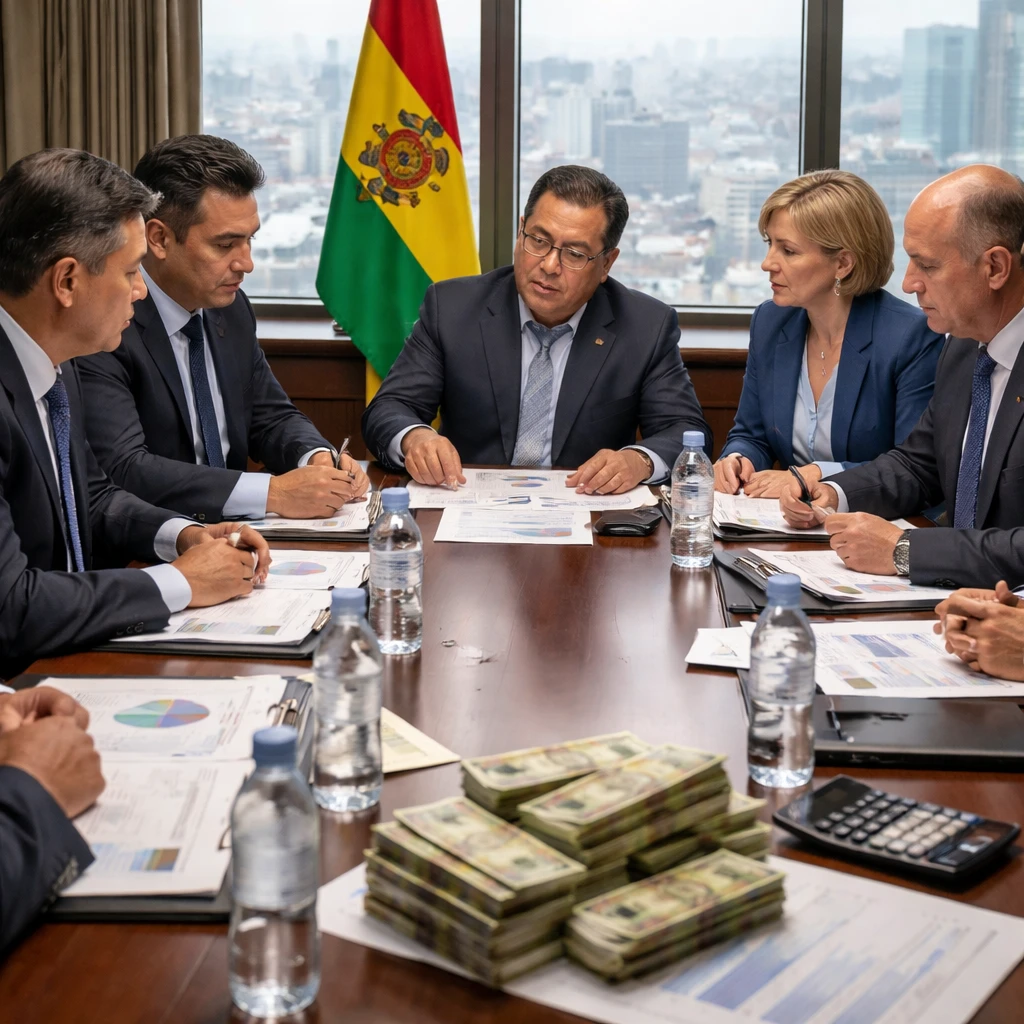
July 29 - The International Monetary Fund announced that its staff has reached agreement with Bolivia on a $1.9 billion financing program, a three-year arrangement designed to help stabilize an economy experiencing one of its most severe crises in decades.
The program, which still needs formal approval from the IMF’s Executive Board and Bolivia’s Congress, aims to provide the cash Bolivia needs to rebuild nearly exhausted foreign-currency reserves and alleviate a dollar shortage that has curtailed imports and contributed to inflationary pressures.
The IMF highlighted several structural strains in a 2025 review that have weighed on growth and balance-of-payments dynamics: falling natural-gas production, fiscal deficits that exceed 10% of GDP, and reserves that are close to depletion. Those factors, the IMF said, have left the country vulnerable and in need of external support to restore macroeconomic stability.
President Rodrigo Paz has implemented fiscal tightening measures, cutting fuel subsidies and trimming public spending as part of efforts to stabilize government finances. Those austerity measures prompted anti-government protests and roadblocks that disrupted economic activity for nearly two months earlier this year.
If Bolivia secures Executive Board and congressional sign-off, the three-year agreement would be the country's first multi-year IMF arrangement since 2006. The financing package, however, falls short of the Bolivian government's internal expectations for a program in the $2.5 billion to $2.8 billion range.
The IMF said the staff-level deal could catalyze further lending from other multilaterals - including the World Bank and the Inter-American Development Bank - taking total prospective financing beyond $5 billion. The availability of those additional funds would depend on continued policy implementation under the current administration.
"The new administration has launched a decisive reform plan to address these challenges and restore macroeconomic stability," the IMF’s Joana Pereira said in a statement. In a separate statement, the IMF added: "The IMF-supported program is designed to back these efforts, rebuild resilience, and help put the economy on a job-rich and sustainable growth path."
Bolivia’s Economy Ministry welcomed the staff-level agreement, saying it would support the government's program to restore stability, rebuild confidence and strengthen the growth outlook.
Markets showed limited immediate reaction. Bolivian dollar-denominated bonds were largely unchanged in price on Wednesday, with yields hovering between 8% and 9% depending on maturity.
The program still faces political uncertainty in Congress, where IMF borrowing has been politically sensitive. The memory of a 2020 episode remains relevant: the IMF approved more than $300 million in crisis financing during the COVID-19 pandemic under a transitional interim government, but Bolivia did not use the funds after Congress withheld authorization and the central government repaid the financing early, calling the operation irregular and costly.
Context and implications
The staff-level agreement moves Bolivia closer to securing external funding needed to replenish reserves and address immediate balance-of-payments pressures. Approval by the IMF’s Executive Board and Bolivia’s legislature will determine whether the country can access the financing and whether subsequent multilateral support materializes.