
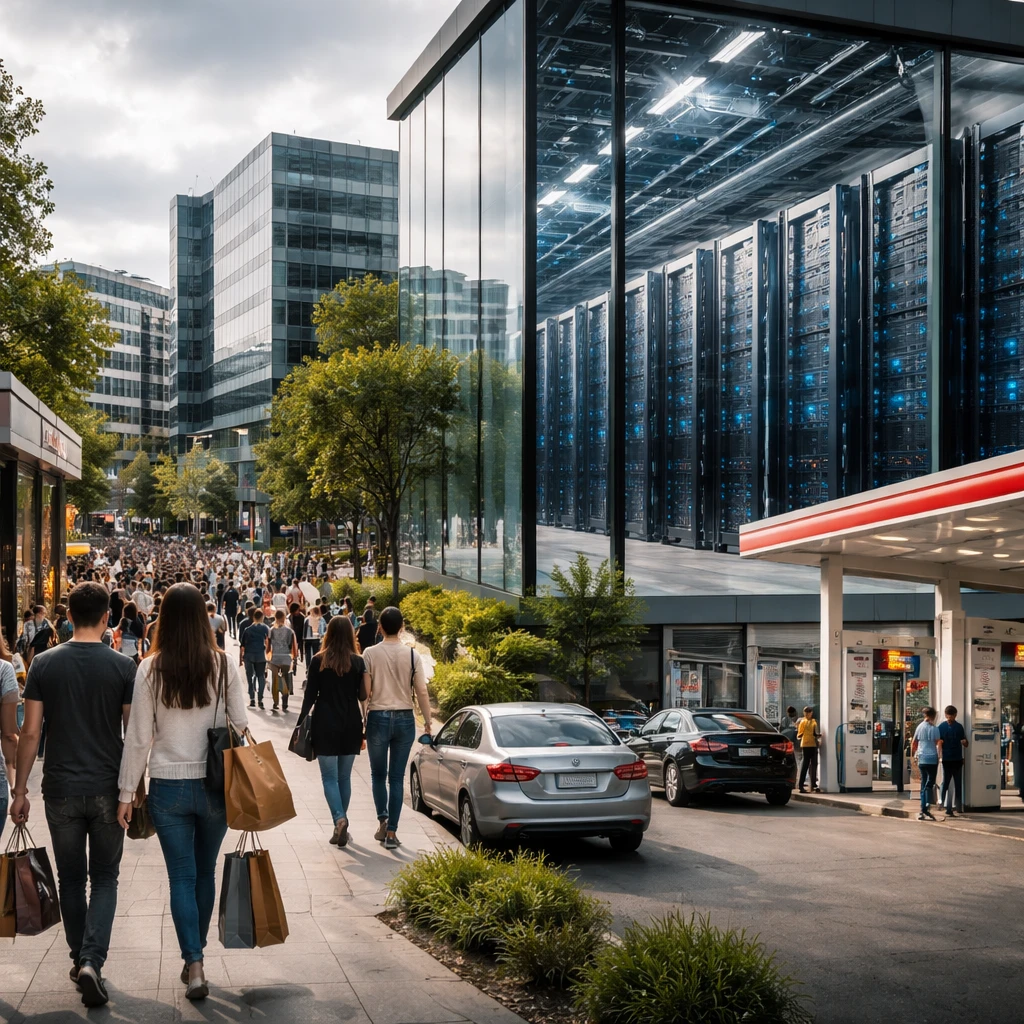
The U.S. economy appears to have maintained a steady growth pace in the second quarter, buoyed by stronger consumer spending and a surge in business investment in machinery and equipment associated with the buildout of artificial intelligence infrastructure. Analysts expect the Commerce Department's advance gross domestic product report for the quarter to show the economy largely withstanding disruptions related to the Middle East conflict, in part because larger tax refunds this year provided households with extra income to offset higher gasoline expenses linked to the war.
Economists cautioned, however, that the U.S.-led confrontation with Iran, now in its sixth month, represents a downside risk for growth in the second half of the year. "The U.S. has been much more insulated from the economic fallout from the conflict in the Middle East than other parts of the world have been," said James Knightley, chief international economist at ING. "The consumer is still spending and we have the ongoing frenzied tech investment cycle that we’re seeing."
A surveyed panel of economists forecasted that gross domestic product likely rose at a 2.1% annualized pace in the April-June quarter, matching the rate recorded in the January-March quarter. The range of estimates in the survey extended from as low as a 0.8% annualized rate to as high as a 2.9% pace. That survey was completed before the publication of June's advance economic indicators report, which recorded a moderate narrowing of the goods trade deficit and showed retail inventories unchanged.
Following the release of those June indicators, economists at JPMorgan lowered their estimate for second-quarter GDP growth to a 1.5% annualized rate, down from a prior 2.0% projection. Trade developments alone were estimated by some economists to have the potential to subtract as much as a full percentage point from GDP growth. Inventories remained an important and uncertain factor in calculating quarterly growth.
Consumer spending, which accounts for more than two-thirds of U.S. economic activity, is expected to have picked up after slowing sharply to a 0.5% growth pace in the first quarter. The lift for household outlays this year reflected a number of temporary and concentrated factors. Generous tax refunds tied to President Donald Trump's "One Big Beautiful Bill" provided a one-time boost to incomes, while higher-income households benefited from gains in asset prices that supported elevated spending. The recently concluded FIFA World Cup tournament also gave a temporary jolt to consumption, and nonprofit activity related to midterm elections added to spending in the quarter.
Still, forecasters warned that some of these tailwinds were likely to fade, which could slow consumer demand in coming quarters. Average gasoline prices have climbed back above $4 a gallon as hostilities in the Middle East intensified, eroding household purchasing power. To maintain spending, many households have been drawing down savings and increasing consumption as wages have struggled to keep pace with inflation. The personal saving rate is near a four-year low of 3.0%.
Joseph Briggs, an economist at Goldman Sachs, noted that higher tax refunds and lower tax payments appeared to have provided roughly a $140 billion boost to household income during the 2026 tax-filing season. He added that higher energy costs are expected to erode spending capacity for the remainder of the year, particularly for lower-income households that allocate a larger portion of their budgets to energy. Briggs projected the saving rate would rise to 3.5% by year-end as households adopt a stronger precautionary saving motive.
On business investment, the quarter likely saw another period of double-digit growth in equipment spending. The boom in investment tied to artificial intelligence projects showed no sign of abating, even as questions about stretched valuations in parts of the technology sector lingered among investors. This rapid increase in AI-related equipment spending contrasted with persistent weakness in investment in structures such as factories, which is expected to have contracted for a tenth straight quarter.
Overall, the strength of both consumer outlays and business equipment spending was expected to lift domestic demand in the April-June period. A closely watched gauge of domestic activity - final sales to private domestic purchasers, which strips out government, trade and inventories - rose at a 1.7% pace in the first quarter. Policymakers at the Federal Reserve follow this measure closely when assessing the underlying momentum of the economy.
In its most recent decision, the central bank left its benchmark overnight federal funds rate in a 3.50%-3.75% range. Three members of the Fed's policy-setting committee dissented, indicating they "preferred" a quarter-percentage-point hike. Economists broadly expect the Fed to raise interest rates as soon as September in an effort to rein in inflation. That anticipated tightening informs forecasts of slower economic growth in the second half of the year.
"The Fed is going to become increasingly impatient with inflation, thanks to this war," said Brian Bethune, an economics professor at Boston College. "We’ve already had an effective tightening of monetary policy because of the steepening of the (Treasury) yield curve and mortgage rates are up at least a half a point since the start of the war."
Residential investment, which includes home construction and transactions, is projected to have contracted for a sixth consecutive quarter. The housing sector's continued weakness contrasts with broader demand trends in other parts of the economy.
No significant increase in government spending related to the conflict was expected to have supported growth in the quarter. Defense expenditures were anticipated to be flat. "Action against Iran mostly has drawn on existing personnel and military assets, and running down pre-existing stockpiles of munitions, rather than on a widespread recruitment drive or heavy investment in new equipment," said Samuel Tombs, chief U.S. economist at Pantheon Macroeconomics. He compared the current impact on the national accounts to past conflicts, noting that even large-scale military operations in the past had minimal effect on headline economic measures.
While the second-quarter picture was shaped by a mix of supportive consumer and AI-driven business spending and offsetting forces from trade, inventories and housing, forecasters emphasized that several uncertainties - notably the persistence of higher energy prices and the stance of monetary policy - will be key determinants of growth in the months ahead.
Summary - The U.S. economy likely sustained steady growth in Q2, propelled by stronger consumer spending and continued double-digit business investment in equipment tied to AI infrastructure. Larger tax refunds and gains in asset prices helped households, while elevated gasoline costs and potential Federal Reserve rate hikes present downside risks for the remainder of the year.
Key points
- Consumer spending, accounting for more than two-thirds of GDP, likely accelerated following a weak first quarter and was supported by unusually large tax refunds and asset-driven gains for higher-income households.
- Business investment in equipment continued to grow rapidly, driven by spending related to artificial intelligence deployments, even as investment in structures remained weak.
- Monetary policy tightened effectively through market-driven higher borrowing costs, and the Fed kept rates at 3.50%-3.75% with three dissenters preferring an immediate hike.
Risks and uncertainties
- Escalation of the Middle East conflict poses a downside risk to growth, particularly through higher energy prices that reduce household purchasing power - a pressure on consumer-focused sectors and retail activity.
- Rising gasoline prices and falling household saving rates, near a four-year low of 3.0%, could undercut consumer spending if households further deplete savings or face income pressures - affecting retail and services sectors.
- Expected Federal Reserve rate increases to combat inflation may slow economic activity in the second half of the year, with notable implications for housing, auto lending and interest-sensitive business investment.