
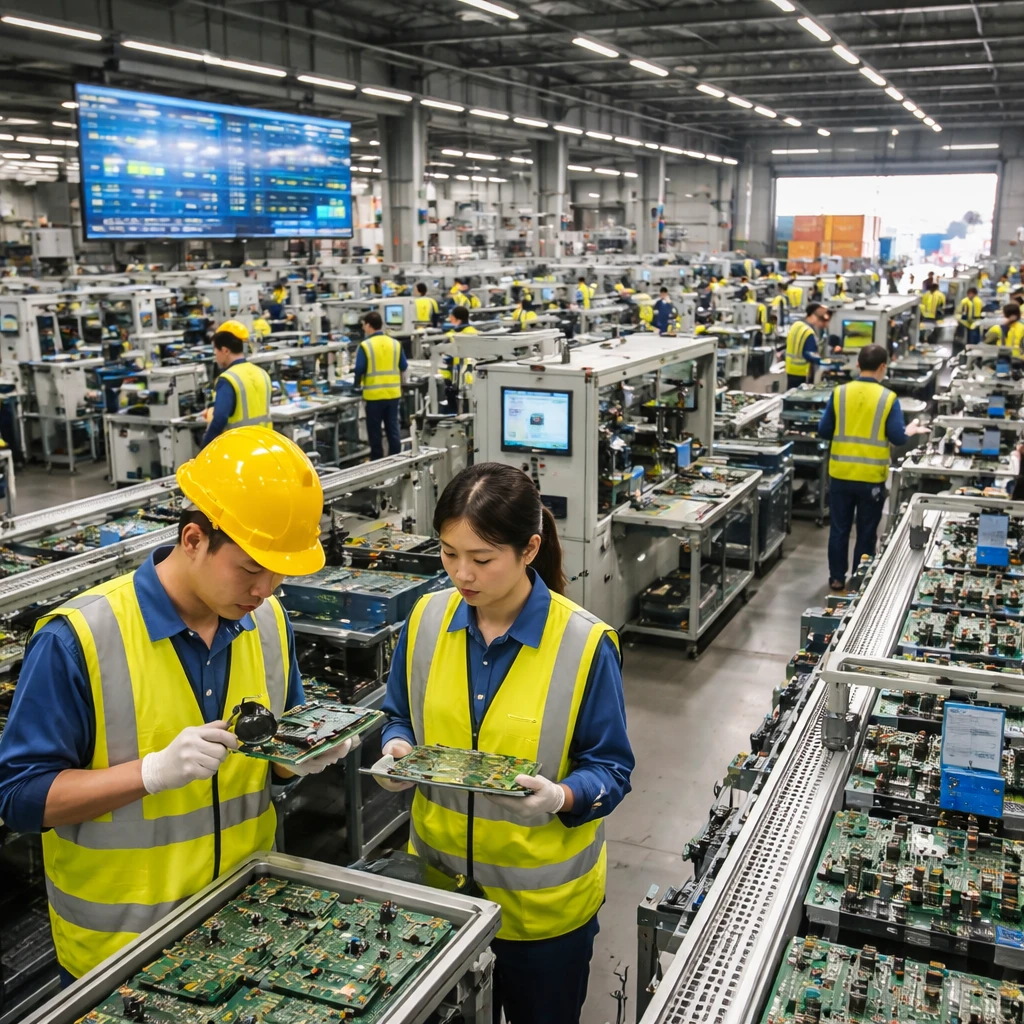
China's factory output growth appears to have lost momentum in July, with a consensus forecast pointing to stagnation at the boundary between expansion and contraction. A poll of 31 economists expects the official manufacturing purchasing managers' index (PMI) to slip to 50.0, the level that separates growth from contraction, down from 50.3 the month before. The National Bureau of Statistics will publish the actual figure on Friday.
Supply-side impulses from abroad have helped some sectors keep running: manufacturers tied to high-tech products, including items linked to artificial intelligence, have seen robust global demand this year. However, firms whose sales depend more heavily on the domestic market have been contending with muted consumer appetite at home.
The broader economic backdrop adds pressure on policymakers. Gross domestic product in the second quarter expanded at the slowest pace in more than three years, a slowdown attributed in part to soft retail sales and weak investment. Those dynamics have increased expectations that authorities will deploy policies aimed at supporting activity.
Credit conditions have done little to lift private demand. Growth in bank lending has been sluggish, leading the central bank to provide window guidance to lenders in recent months to encourage stepped-up lending. Still, measures to revive household spending face structural headwinds: a prolonged housing market slump and fragile job security have eroded household confidence, nudging savings higher and spending lower.
Policymakers are preparing for discussions at an upcoming Politburo meeting scheduled by the end of July to address economic issues. Observers note that while more supportive measures are anticipated, large-scale stimulus is seen as unlikely. Instead, authorities may prioritize fuller use of existing instruments, for example by accelerating funding for infrastructure projects already on the books.
Not all indicators point downward. Exports have surged and helped offset the domestic weakness: goods exports jumped 27% year-on-year in U.S. dollar terms in June, emerging as a principal engine of growth. Industrial profits continued to expand in June as well, rising 15.1% year-on-year, though that pace was slower than the 21.1% gain recorded in the prior month.
Market participants will also watch a private-sector manufacturing gauge due on August 3. The RatingDog manufacturing PMI is expected to ease to 51.5 from 51.7 in June, suggesting some cooling even within private industry measures.
In sum, China faces a mixed set of signals: external demand and improving profit metrics have supported the factory sector, while domestic demand constraints, subdued credit growth and lingering housing and employment challenges limit broader momentum. Policymakers appear likely to focus on implementing existing policy tools rather than launching major new stimulus programs.