
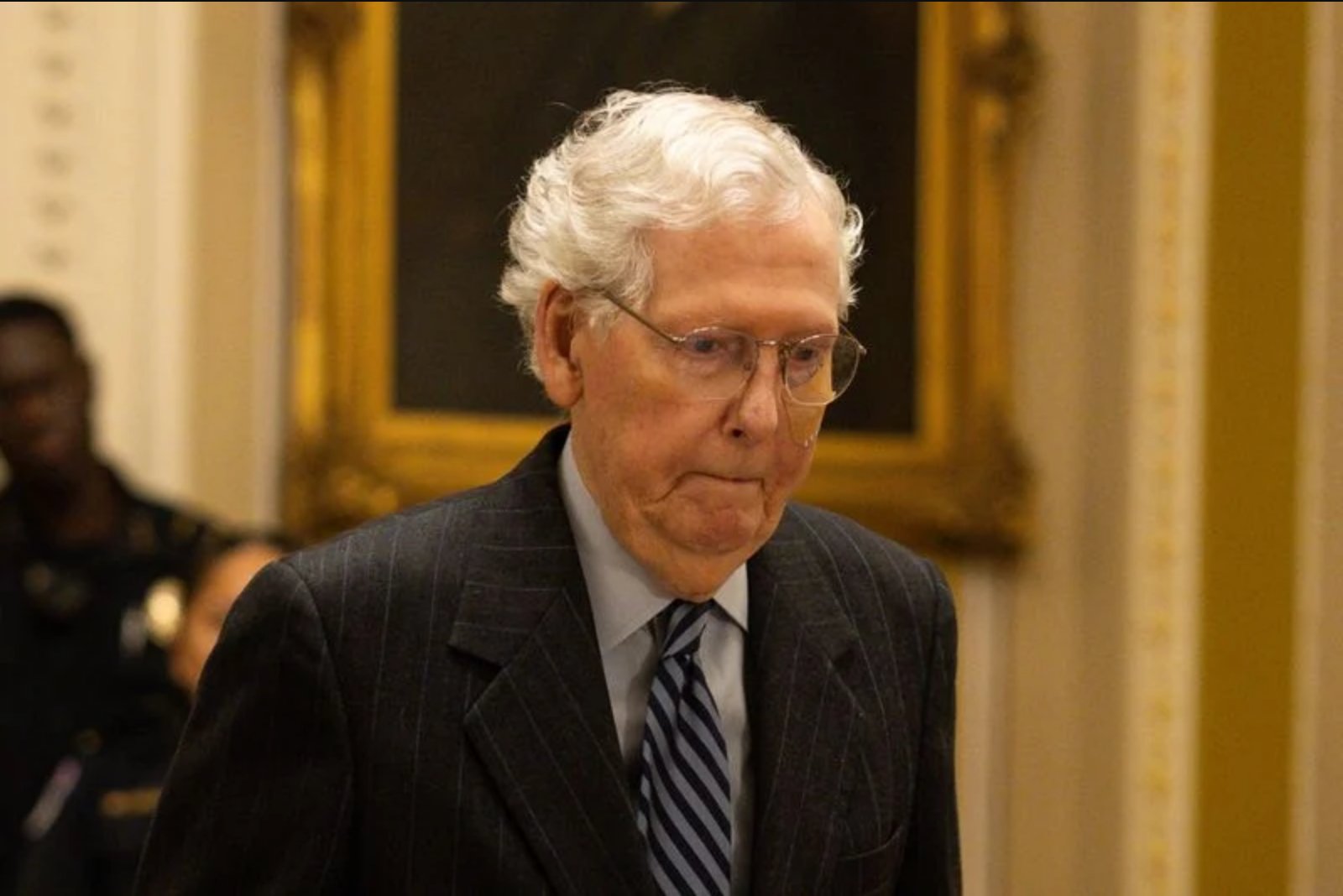
The U.S. Senate returns on Monday for a four-week span slated to include votes on defense and other national security legislation, but one of the chamber’s most influential Republicans remains absent while hospitalized for undisclosed health reasons.
Senator Mitch McConnell, 84, who has spent roughly half his life in Congress and serves as chair of the Senate Rules Committee as well as a defense appropriations panel, has not been in Washington since mid-June. His office says he was taken from his home to a hospital in the Washington area and has remained there as he recovers.
In a statement released on Tuesday, his office said: "Senator McConnell appreciates the outpouring of support he’s receiving while he continues his recovery in the hospital. The senator continues to improve, and is working closely with his staff on Kentucky and Senate matters while the Senate is out of session." The Senate has been on a July 4 break since June 24.
McConnell’s absence is expected to be most consequential on the Senate Appropriations Committee, where efforts to finalize annual funding for the Pentagon and other federal agencies have been slowed by partisan disagreement. Republicans hold a narrow 15-14 majority on that committee, and the absence of a senior Republican voice who chairs a defense appropriations panel is likely to complicate negotiations.
Current funding is scheduled to lapse when fiscal year 2027 begins on October 1. Lawmakers and party leaders have started to signal the potential need for a stopgap continuing resolution to maintain operations at federal agencies should negotiations not conclude before that deadline.
Beyond appropriations, McConnell’s role in broader GOP strategy has been the subject of attention. A Kentucky Republican, he has been a frequent target of criticism from President Donald Trump and MAGA-aligned allies, reflecting intra-party tensions. The senator has opposed a number of Trump administration positions, including tariff policies, certain cabinet nominees, efforts to eliminate the Senate filibuster, and the voter ID measure known as the SAVE America Act.
Lawmakers have also signaled interest in reviving a lapsed Foreign Intelligence Surveillance Act as they review the administration’s recent personnel moves. Republicans in Congress are scrutinizing the president’s appointment of Bill Pulte as acting director of national intelligence; Pulte has no intelligence background, according to reporting contained in the material provided with this story.
McConnell is the longest-serving party leader in Senate history and his health has been a matter of public record in recent years. Observers noted episodes in 2023 when he froze while answering reporters, and he was hospitalized for eight days in February with flu-like symptoms. This latest, unexplained hospitalization drew comparisons with the extended, initially undisclosed absence of Representative Thomas Kean, a New Jersey Republican who was out for nearly four months before stating he had been treated for depression.
Kentucky Governor Andy Beshear, a Democrat, has publicly asked McConnell to provide an update on his condition, saying continued speculation is unfair to both the senator and his constituents. The limited information released about McConnell’s health has fueled online rumors, and prompted comment from conservatives urging restraint in public discourse.
Commentator Mark Levin posted on X: "I was highly critical of Mitch McConnell over the years. But I hope he is getting better and hanging in there. I wish him well as he moves into retirement." Levin’s remarks were part of broader commentary reflecting both past criticism and current well-wishes amid the senator’s hospitalization.
As the Senate resumes its work on defense and national security legislation, the chamber will do so without clarity about when McConnell might return to the floor. His office’s statement that he is improving and remains engaged with staff offers some assurance, but the absence of further detail leaves several near-term procedural and political questions unanswered.