
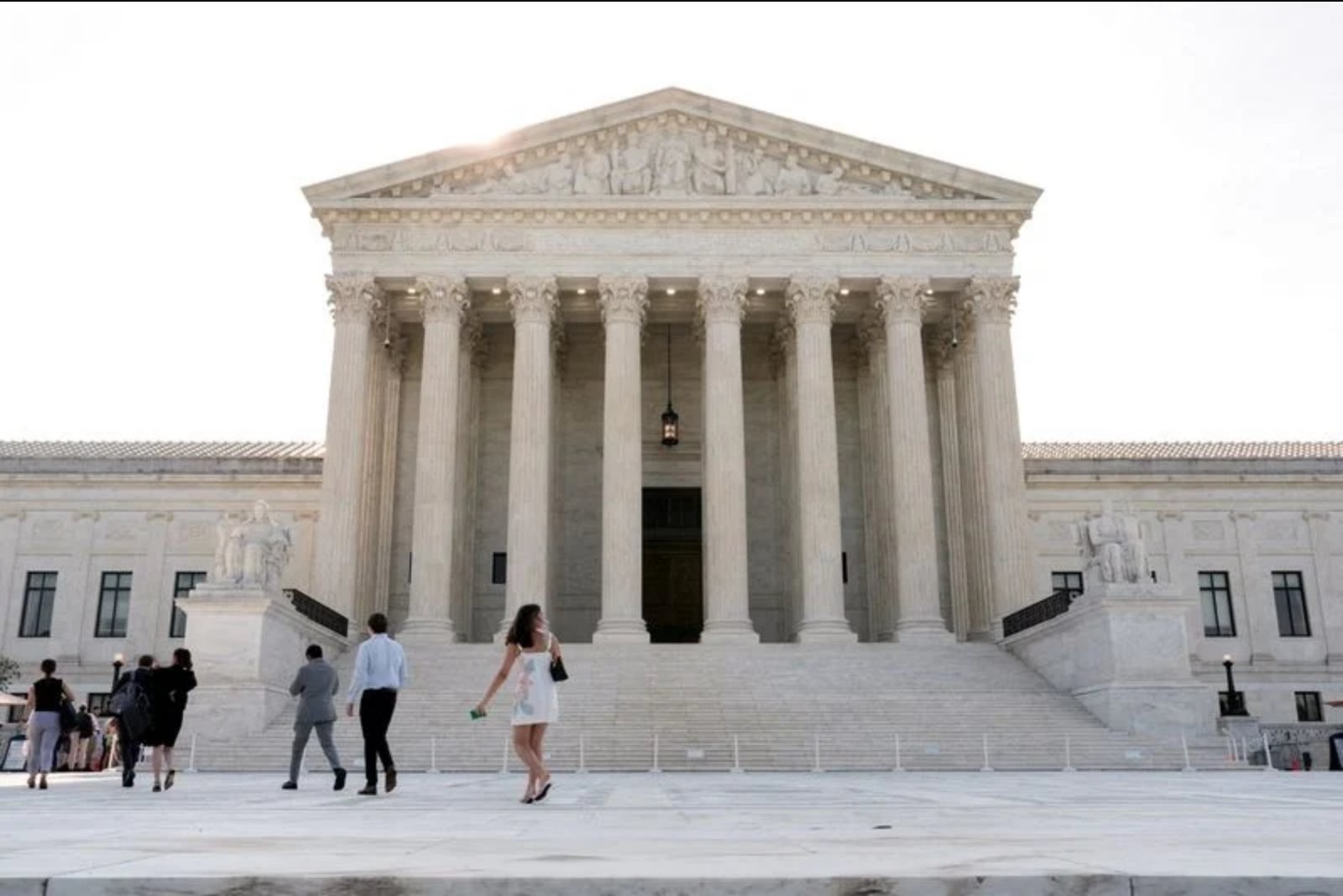
WASHINGTON, July 8 - President Donald Trump said on Wednesday he will ask the U.S. Supreme Court to rehear a legal challenge to birthright citizenship, following the court's recent refusal to uphold his administration's effort to restrict the constitutional guarantee.
The president expressed sharp disapproval of the court's decision, which was issued last month and sustained by a 6-3 vote. The majority opinion was written by Chief Justice John Roberts. The court configured a conservative majority of six justices, a bench that includes three justices appointed by Mr. Trump.
On his social media platform, the president framed the ruling in stark terms, calling it a "miscarriage of justice." He posted:
"AMERICAN CITIZENSHIP IS NOT FOR SALE! In fact, that is a crime, and therefore, the Supreme Court’s ruling is wrong,"
In the same post he added:
"I will be asking for a Rehearing by the United States Supreme Court, IMMEDIATELY."
The move to seek a rehearing follows an executive action Mr. Trump took last year on his first day back in the White House. That executive order sought to end birthright citizenship and was presented as part of a package of measures intended to crack down on both legal and illegal immigration.
The president has repeatedly tested the limits of presidential authority in both domestic and foreign policy, and his announcement on Wednesday continues that pattern by pursuing further judicial review of a contested policy. The request for rehearing is the next procedural step Mr. Trump announced after the Supreme Court's earlier decision to deny his restriction on birthright citizenship.
Summary
- President Trump will request a Supreme Court rehearing of the decision that rejected his attempt to end birthright citizenship.
- The court's decision was a 6-3 ruling authored by Chief Justice John Roberts; the majority includes three justices appointed by Mr. Trump.
- Mr. Trump said the ruling was a "miscarriage of justice," and reiterated that he issued an executive order last year on his first day back in office to end birthright citizenship as part of immigration measures.
Key points
- Legal action: The president announced an immediate request for the U.S. Supreme Court to rehear the birthright citizenship case, following the court's prior rejection.
- Court composition: The decision last month was decided 6-3, with the majority opinion authored by Chief Justice John Roberts; three members of the majority were appointed by the current president.
- Executive order context: The request follows an executive order issued last year on the president's first day back in office that sought to end birthright citizenship as part of a broader immigration enforcement package.
Risks and uncertainties
- Legal uncertainty: It is unclear how the Supreme Court will respond to a rehearing request after having issued a 6-3 decision last month.
- Policy durability: The president's executive order from last year remains a contested measure and its legal status is subject to further judicial review.
- Institutional friction: The president's characterization of the ruling as a "miscarriage of justice" signals ongoing tension between the executive branch action and the court's prior ruling.