
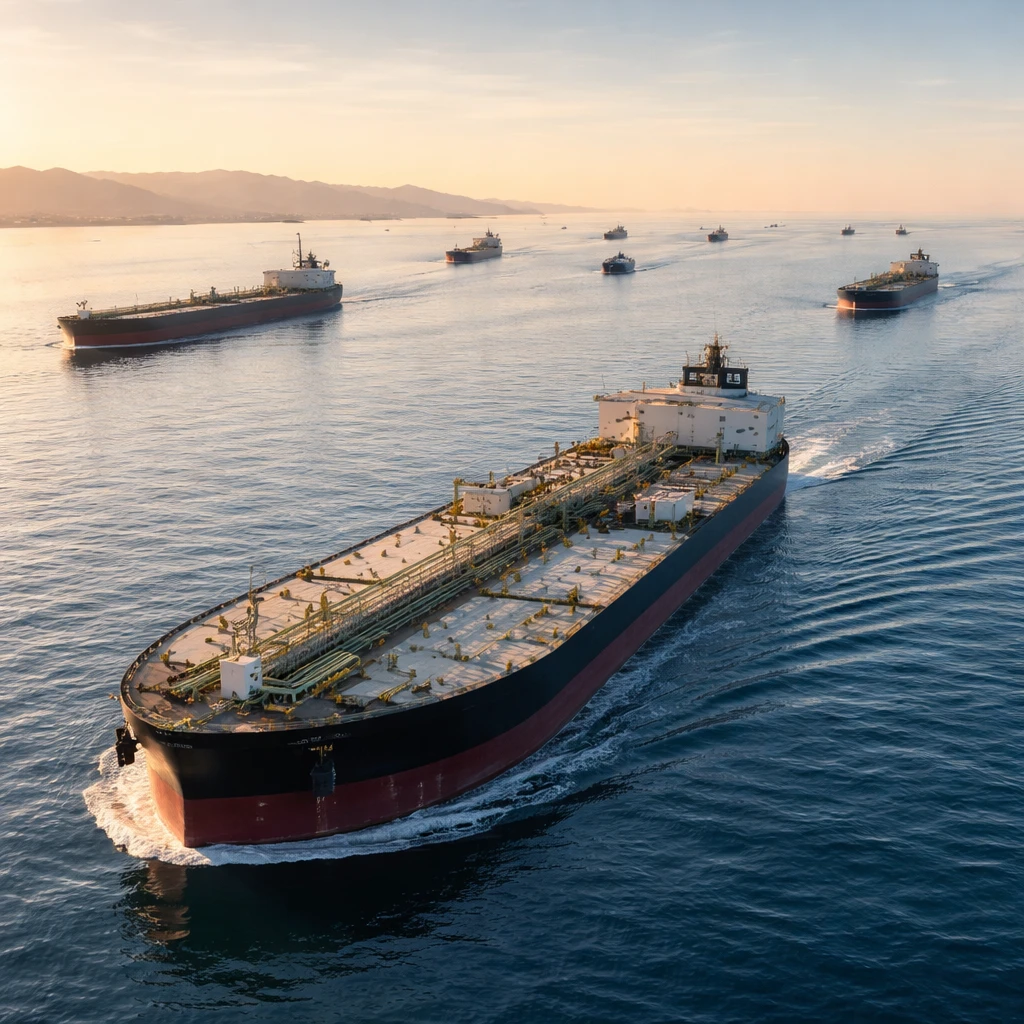
Oil markets held a steady line on Friday, with limited net movement for the week as traders continued to factor in incremental progress in talks between the United States and Iran that aim to reduce friction in the Middle East and reopen shipping routes.
Price moves and weekly performance
At 0932 GMT, Brent futures were 17 cents higher, at $71.97 a barrel, while West Texas Intermediate added 2 cents to trade at $68.71 a barrel. Over the course of the week Brent finished essentially unchanged, and WTI closed about 0.8% lower.
Drivers: diplomacy and shipping
Analysts at Commerzbank noted that oil prices came under downward pressure as market participants grew more hopeful that the Strait of Hormuz could be fully reopened if peace talks between Washington and Tehran succeed. That prospect has encouraged some buyers to anticipate easier flows from Gulf producers.
Markets in the United States were to be closed on Friday ahead of the U.S. Independence Day holiday on Saturday, removing a portion of trading liquidity from the session.
Earlier in the week, both benchmarks hit their lowest levels since before the U.S.-Israeli war on Iran began in late February, underscoring a sharp move lower as diplomatic momentum tempered risk premia that had built up around Gulf supply disruptions.
Citi strategists described the U.S.-Iran dealmaking process as fragile but still ongoing. They wrote that while the memorandum of understanding remains contentious - particularly over the question of tolls and administration of the Strait of Hormuz - they expect the MOU to hold because breaking it would offer poor incentives to both parties.
Some shipping has resumed through the Strait of Hormuz under the terms set out in the initial U.S.-Iranian agreement, though uncertainty remains high after the two countries exchanged strikes last weekend following an Iranian attack on a cargo ship.
Supply response from Gulf producers
With the prospect of increased shipping capacity, producers in the Gulf have moved to raise output. A source familiar with the matter said on Thursday that Kuwait's oil production rose sharply to 1.65 million barrels per day in June from 580,000 bpd in May.
At least five supertankers carrying a combined total of 10 million barrels of Saudi oil have exited the Strait of Hormuz, and Saudi Aramco has shifted to spot pricing from longer-term contracts to accelerate sales into Asian markets, according to trade sources and shipping data.
PVM analyst Tamas Varga cautioned that a sustained recovery in crude prices is more likely to occur only after oil currently stranded on tankers and held in storage has been absorbed by the market, and if the recovery in production is insufficient to offset volumes transiting the strait.
Market structure
As availability of supplies increases, the market structure has shifted from backwardation to contango, signaling a lower expectation of near-term shortages. The spread between front-month Brent and the six-month forward contract turned negative on July 1 for the first time in 2026.
Note: The article reports market data and quoted assessments present in market commentary and industry sources. Where attribution was given in source material, that attribution is preserved to the extent it was publicly stated.