
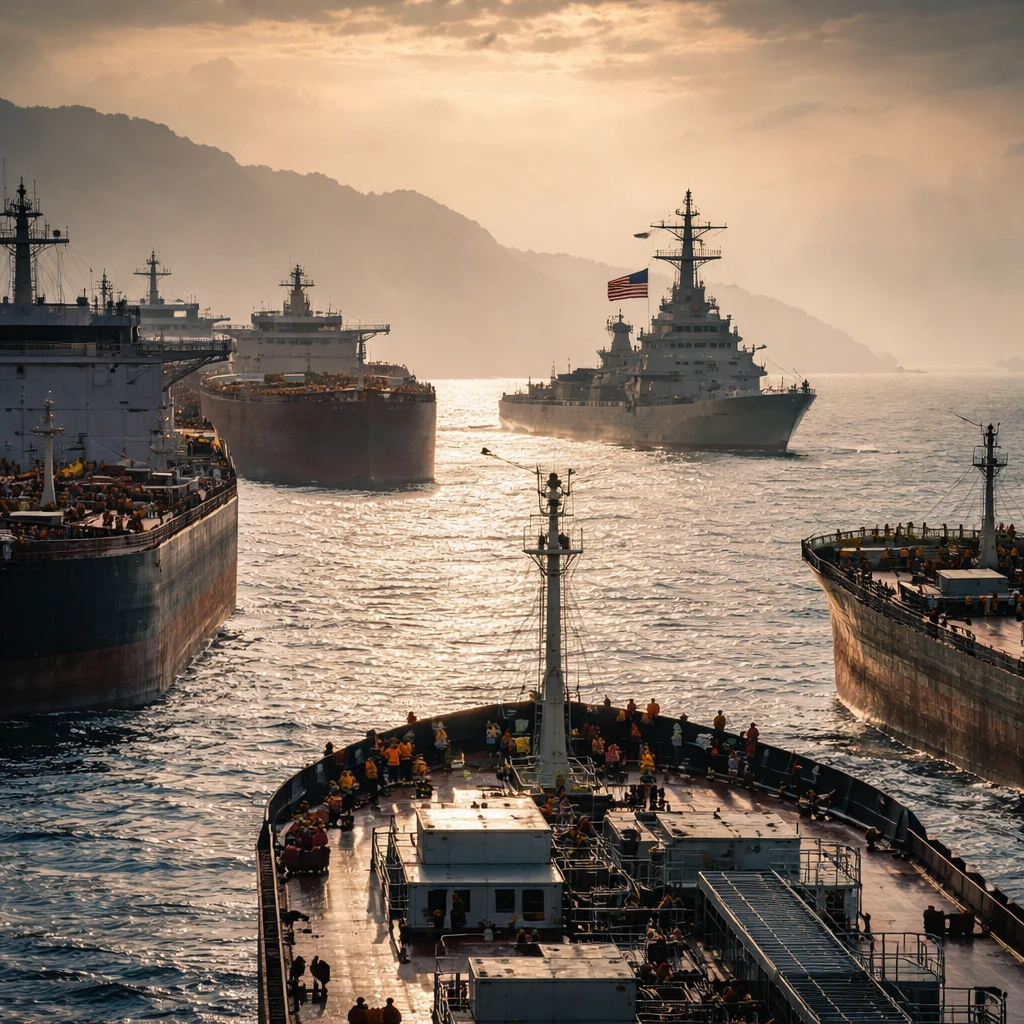
U.S. President Donald Trump on Sunday unveiled a program named "Project Freedom," intended to aid neutral commercial ships that have become stranded in the Strait of Hormuz amid heightened regional tensions.
According to the presidential statement, governments not party to the conflict in the Middle East have appealed for U.S. help after their vessels were left trapped in restricted waterways. The ships were described in the statement as "innocent bystanders" whose crews are reportedly experiencing shortages of food and basic supplies necessary for maintaining healthy and sanitary conditions on board.
In a post on Truth Social, Mr. Trump framed the initiative as humanitarian in nature, saying: "This is a Humanitarian gesture on behalf of the United States, Middle Eastern Countries but, in particular, the Country of Iran. Many of these Ships are running low on food, and everything else necessary for largescale crews to stay on board in a healthy and sanitary manner."
The post said the operation would commence Monday morning, Middle East time, and that its primary objective would be to safely guide vessels out of the area so they can resume normal trade activities. The administration presented the effort as aimed at supporting affected crews and at reducing interruptions to global commerce.
The statement also referenced ongoing diplomatic discussions with Iran, holding out the prospect of a constructive outcome while simultaneously issuing a warning that any attempt to interfere with the operation would meet a forceful response.
The Strait of Hormuz was noted in the statement as one of the world’s most important maritime transit routes, and the announcement characterized disruptions there as a matter of international concern. The statement further said the key oil supply route has been a focal point amid the Iran war and that the U.S. has created a blockade of the Strait in a bid to stop Iran from exporting its oil to other countries and to pressure its already weak economy.
Details on the operational conduct of Project Freedom were limited in the statement. The administration emphasized the humanitarian purpose of the mission and its intent to restore the flow of commercial traffic through the strait, while also warning of military consequences should the mission be obstructed.
As described, the initiative seeks to address immediate needs aboard the stranded vessels and to mitigate wider trade disruptions tied to the strategic waterway.