
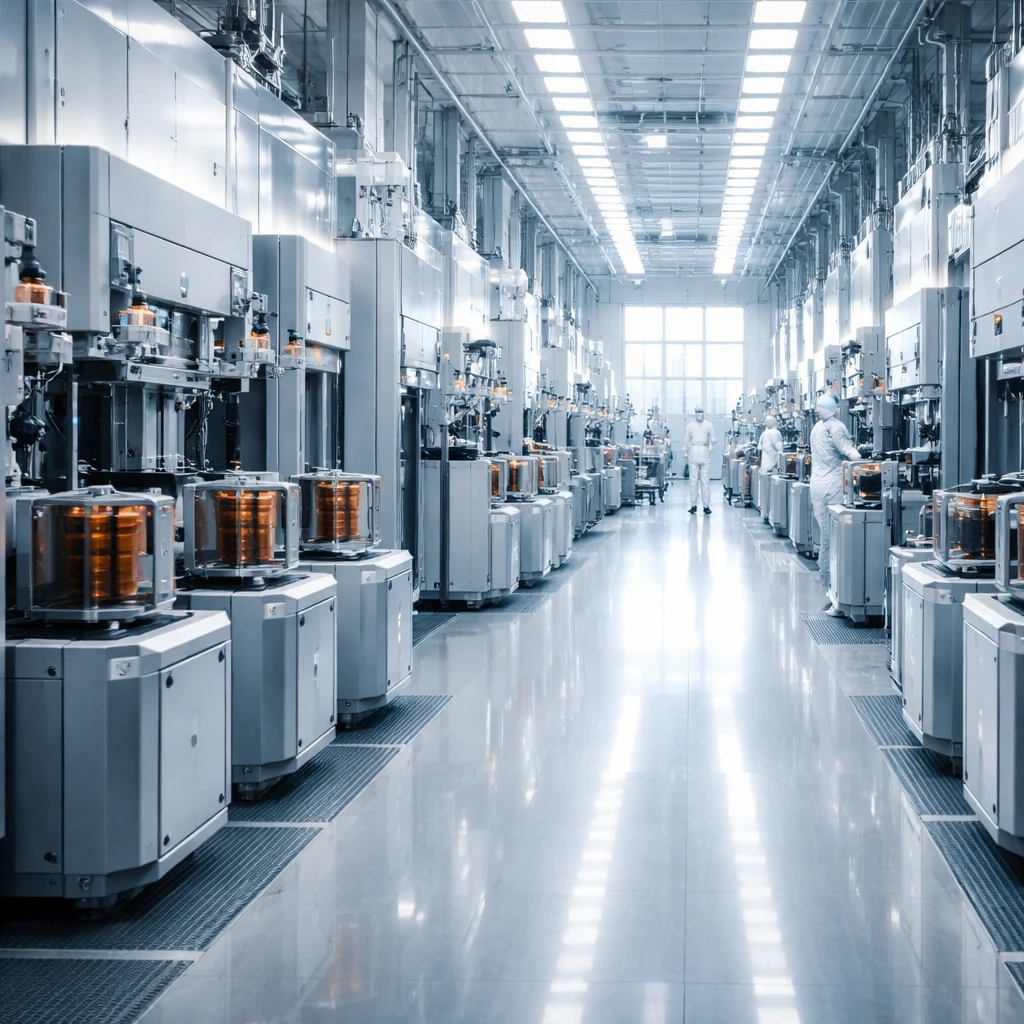
Bank of America has revised upward its capital expenditure projection for Taiwan Semiconductor Manufacturing Company (NYSE: TSM), raising its 2027 capex estimate to $75 billion from a previous $63 billion and above the consensus view of $65 billion.
The adjustment comes after TSMC's board approved capital appropriations totaling NT$31 billion. Of that approved amount, 53% is slated for expansion of advanced front-end node capacity - a marked increase from the 37% allocation for advanced front-end capacity seen across 2024-2025. The balance of the approved funds - 39% - will be used for fab construction, down from the 50% share allocated in the prior period.
Bank of America interprets the shift toward front-end spending as an indicator that TSMC is staging for equipment deliveries tied to advanced node production as facilities and clean rooms become ready for use. The analysts also expect TSMC to achieve its existing 2026 guidance of $56 billion in capital expenditure.
Demand underpinning the higher capex forecast is identified in the report as coming from several high-performance segments: high-performance computing applications, graphics processing units (GPUs), application-specific integrated circuits (ASICs), server central processing units based on x86 and ARM architectures, and networking switches. These end-markets are cited as supporting the case for expanded advanced node capacity.
Bank of America also reviewed financial contributions from TSMC's Arizona operations. In the first quarter of 2026, those operations produced NT$39 billion in sales and NT$19 billion in net profit, compared with NT$67 billion in sales and NT$16 billion in net profit for the entire 2025 calendar year. By contrast, the facilities had recorded net losses of NT$11 billion and NT$14 billion in 2023 and 2024, respectively.
The bank noted that, with limited government grants in the first quarter of 2026, Arizona operations achieved roughly 45% operating margins when excluding grants. That figure sits below the company's broader corporate operating margin of 58%.
Despite the revised capex outlook and the Arizona operating-margin differential, Bank of America left its recommendation unchanged, maintaining a Buy rating on TSMC. The firm set a price target of NT$2,560, derived from a valuation of 20 times projected 2027 earnings. At the time of the report, TSMC's shares were trading at about 17 times 2027 earnings, which the bank described as within the company's historical valuation range of 11 to 21 times 2027 earnings.
The report ties the upgraded spending expectation directly to the board-approved appropriations and the shift in the capital allocation mix toward advanced front-end node investment, while reaffirming the bank's view on the company's medium-term earnings multiple and rating.