
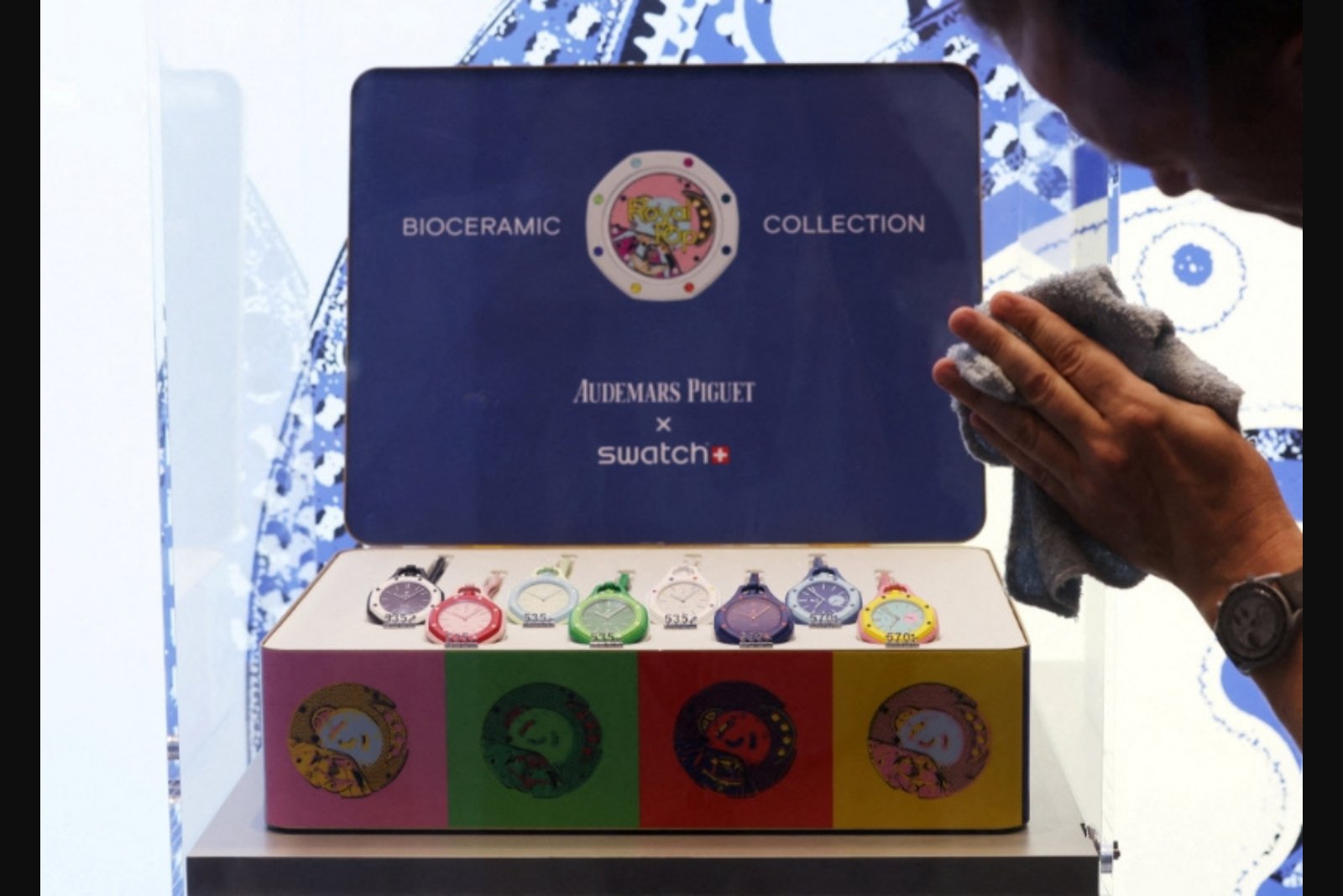
Swiss watchmaker Swatch’s launch of the Royal Pop pocket watch, made in collaboration with luxury maker Audemars Piguet, produced chaotic scenes at retail locations over the weekend and pushed resale prices up sharply.
The timepieces, which pair Swatch’s 1980s pop-art aesthetic with Audemars Piguet’s recognisable octagonal bezel, carry a retail price of $400 to $420. That pricing sits well below the typical valuations of Audemars Piguet’s luxury wristwatches, and it has created an incentive for some buyers to purchase Royal Pop pieces and immediately list them on secondary marketplaces.
Video and social media posts showed long lines and crowded storefronts in cities including New York, London, Barcelona and Dubai. Some incidents escalated into disturbances that required police intervention. Footage circulated online captured a physical altercation outside a Swatch store in Milan among other confrontations.
Faced with safety concerns stemming from intense consumer traffic and disorderly scenes, Swatch moved to limit the risk at retail locations. In a public statement over the weekend the company asked customers not to rush to stores in large numbers in order to protect the safety of staff and shoppers. The firm also temporarily closed outlets and capped queues where necessary to restore order.
A Swatch spokesperson said on Monday that roughly 20 stores experienced launch-day challenges out of a global network of 220 locations. The company attributed the problems to exceptionally long queues and what it described as insufficient organisation in certain shopping centres. According to the spokesperson, the situation has since normalised.
Swatch also reported significant digital engagement related to the collaboration. The company said its website has attracted millions of clicks since the launch and that social media exposure has reached 11 billion views. The firm has not yet released specific sales figures for the Royal Pop collection.
On the aftermarket, demand has translated into steep mark-ups. A complete set of the eight Royal Pop models sold for more than $25,000 on the live marketplace StockX on Sunday. Separately, unofficial vendors have been offering custom bracelets that convert the pocket-watch pieces into wristwatches for prices starting at about $50.
Jon White, director at British precious metals dealer Gold Traders, said there appears to be a narrow opportunity for resellers to profit from the current interest in the Royal Pop models. He cautioned, however, that whether elevated resale values persist over time is uncertain. "It’s bonkers, absolutely bonkers," he said.
The collaboration starkly contrasts with Audemars Piguet’s usual pricing: its higher-end watches can command sums in the hundreds of thousands of dollars. Auction house Sotheby’s noted that a 1921 Grosse Pièce astronomical pocket watch achieved $7.7 million at auction last December.
Market reaction to the collaboration has been visible in Swatch’s share price. The stock rose almost 18% in the week after the group first signalled the partnership earlier this month. Since peaking on May 8, shares have retreated by more than 7% amid investor response to the decision to sell the collection exclusively as pocket watches rather than wristwatches.
Summary: The Royal Pop pocket-watch collaboration between Swatch and Audemars Piguet generated large, sometimes disorderly crowds at select stores worldwide, triggered temporary closures and queue limits, produced significant web and social media engagement, and resulted in steep resale prices on secondary marketplaces.
Key points:
- The Royal Pop models retail at $400 to $420 but are appearing on resale platforms at markedly higher prices.
- Swatch temporarily closed outlets and capped queues after overcrowding and incidents in multiple cities; about 20 stores experienced problems out of 220 globally.
- Digital attention has been substantial: millions of website clicks and 11 billion social media views reported; Swatch has not disclosed Royal Pop sales figures.
Risks and uncertainties:
- Public safety and store operations - continued overcrowding or poorly managed launches could prompt further closures or enforcement actions, affecting retail and mall operations.
- Aftermarket price sustainability - inflated resale values may prove temporary, creating volatility for secondary-market participants and potential reputational risks for brands involved in collaborations.
- Share price volatility - investor reactions to product format decisions (pocket watch versus wristwatch) have already contributed to share moves and could continue to influence market sentiment.