
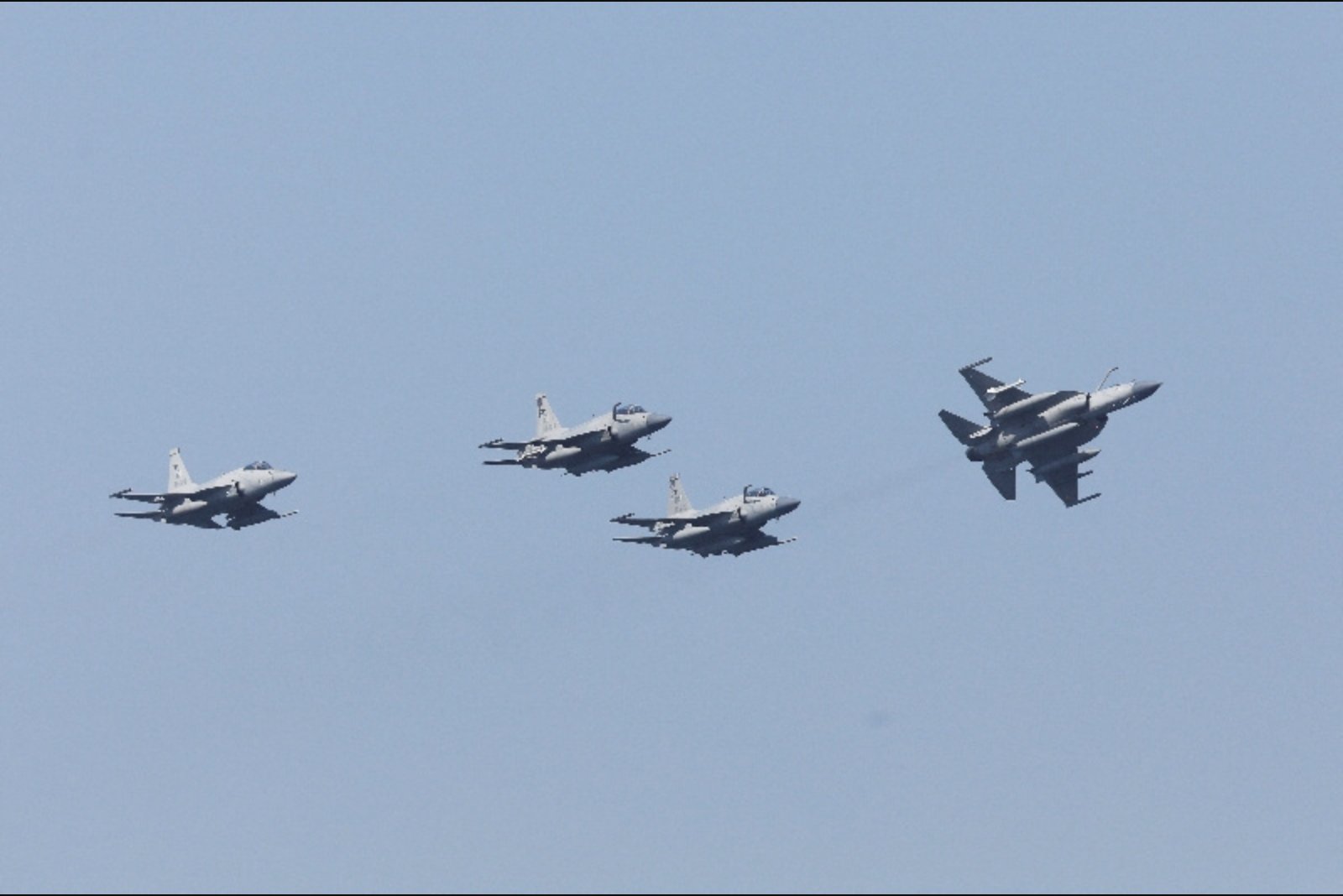
Pakistan has moved a sizeable, combat-ready military contingent to Saudi Arabia under a bilateral defence agreement, according to multiple security officials and government sources. The deployment comprises approximately 8,000 troops, a full squadron of around 16 combat aircraft - mostly JF-17 fighters co-developed with China - two squadrons of drones, and a Chinese HQ-9 air defence system, the sources said.
The full terms of the defence pact that governs the deployment remain confidential. Both governments have publicly asserted that the agreement obliges each country to come to the other's defence in the event of an attack, and sources familiar with the document described the current movement of personnel and equipment as a substantial, combat-capable contribution intended to support Saudi Arabia should it face further strikes.
Scale and composition of the deployment
Sources who have reviewed deployment documents or exchanges between Pakistani and Saudi officials confirmed that a complete fighter squadron - roughly 16 aircraft, primarily JF-17s - was sent to Saudi bases in early April. Two of the security officials further indicated that Pakistan had also dispatched two squadrons of drones. All five sources spoke of the presence of around 8,000 troops, with officials noting a pledge to provide additional forces if required.
Included within the deployment is a Chinese HQ-9 air defence system. The equipment is being operated by Pakistani personnel and, according to the sources, financed by Saudi Arabia.
Roles and existing forces
Two security officials who reviewed exchanges and documents said that the Pakistani military and air force personnel currently in the kingdom during the Iran conflict will primarily be assigned advisory and training roles. At the same time, the composition - combat aircraft, air defences and thousands of troops - indicates the mission extends beyond a purely symbolic or limited advisory presence, the sources emphasised.
Officials also said the newly deployed personnel add to thousands of Pakistani troops already stationed in Saudi Arabia under prior agreements that involved combat roles. One government source who has seen the confidential pact said it allows for the possibility of deploying as many as 80,000 Pakistani troops to Saudi territory to help secure borders alongside Saudi forces.
Naval element and operational questions
Two security officials said the agreement also envisions the deployment of Pakistani warships as part of the mutual defence relationship. It was not possible to confirm from the sources whether any Pakistani warships had arrived in Saudi waters.
Requests for comment to Pakistan's military and foreign ministry offices and to the Saudi government media office were not answered, the sources said.
Diplomatic context and recent developments
The movement of forces followed earlier instances in which Pakistan sent jets to Saudi Arabia after Iranian strikes hit key energy infrastructure and killed a Saudi national, events that raised concerns in Riyadh about possible heavy retaliation and a wider regional conflagration. Pakistan subsequently emerged as a central mediator in the conflict between the United States and Iran, hosting the only round of U.S.-Iranian talks so far and helping to broker a ceasefire between Washington and Tehran that, according to sources, has held for the past six weeks. Further rounds of talks that had been planned were later called off.
Separately, the sources noted that Saudi Arabia has conducted a number of unpublicised strikes on Iran in retaliation for attacks carried out inside the kingdom. Pakistan's long-standing military partnership with Saudi Arabia has included training and advisory deployments in the past, and Riyadh has at times provided financial support to Islamabad during economic strains.
Operational financing and command
All five sources stated that Saudi Arabia is financing the deployed equipment, while Pakistani personnel operate the systems. Defence Minister Khawaja Asif has previously suggested that the defence pact places Saudi Arabia within Pakistan's nuclear umbrella, a description that has been publicly referenced by officials in relation to the agreement.
The officials who confirmed the deployment characterised it as a significant commitment rather than a limited advisory mission, highlighting the presence of combat aircraft, air defences and thousands of troops capable of supporting Saudi forces if further attacks take place.
Reporting on diplomatic talks, military exchanges and the contents of confidential agreements was based on information provided by three security officials and two government sources with direct knowledge of the deployment and related documents.