
World May 18, 2026 06:17 AM

U.S. Conducts Additional Airstrikes on Islamic State Targets in Nigeria's Borno State

Follow-up strikes in Metele kill more than 20 ISWAP fighters as joint operations with Nigeria continue

By Nina Shah

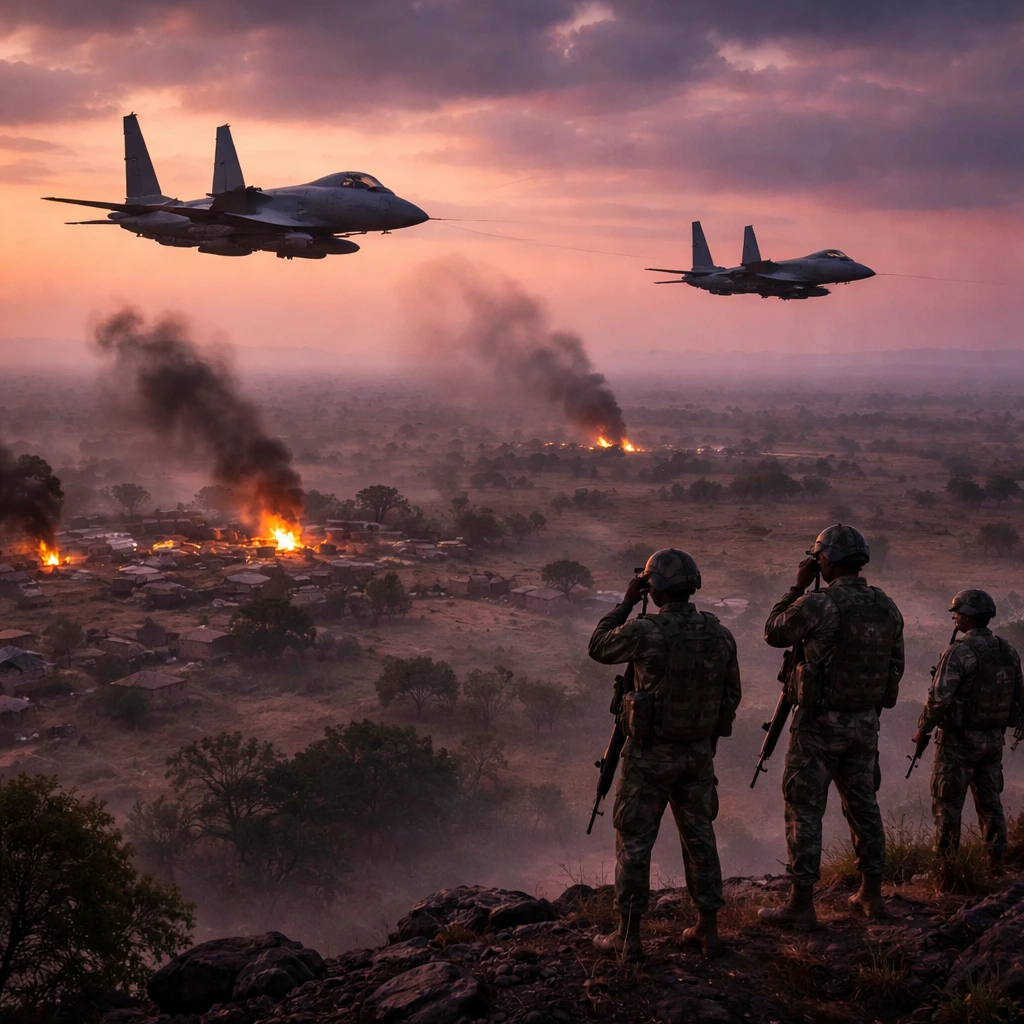
U.S. Africa Command said it carried out further airstrikes in northeastern Nigeria in coordination with Nigerian authorities, targeting Islamic State West Africa Province fighters who had reportedly converged in the Metele area of Borno State. Nigerian military statements say more than 20 militants were killed and no allied personnel were harmed. The operation followed a separate joint mission the previous day that killed Abu-Bilal al-Minuki, described by both governments as the Islamic State's second in command, which leaders from both countries called a significant blow to the group.

U.S. Conducts Additional Airstrikes on Islamic State Targets in Nigeria's Borno State

Key Points

  • Coordinated U.S.-Nigerian airstrikes targeted fighters in the Metele area of Borno State and reportedly killed more than 20 ISWAP militants.
  • The strikes followed a joint mission the previous day that killed Abu-Bilal al-Minuki, described by both governments as Islamic State's second in command; leaders called that operation a major setback.
  • No U.S. or Nigerian personnel were reported harmed during the follow-up operation; Nigerian authorities said these strikes are part of sustained efforts to disrupt insurgent networks and deny them safe haven.

Overview

U.S. Africa Command (AFRICOM) reported that additional airstrikes were carried out on Sunday against Islamic State-affiliated targets in northeastern Nigeria in coordination with the Nigerian government. The strikes were focused on the Metele area in Borno State after Nigerian defence officials said intelligence indicated a convergence of fighters there.

Operational details and results

Nigeria's Defence Headquarters said the operations involved multiple airstrikes in the Metele area and that the strikes killed more than 20 militants belonging to the Islamic State West Africa Province (ISWAP), according to an official statement. AFRICOM said in its announcement that neither U.S. nor Nigerian personnel were injured in the course of the operation.

Context within recent joint missions

The follow-up strikes came one day after a separate U.S.-Nigerian joint mission that resulted in the death of Abu-Bilal al-Minuki. Both the U.S. and Nigerian governments have described al-Minuki as the second in command of Islamic State globally. Leaders in both countries characterized that earlier operation as a major setback for the militant organisation.

Reactions from leadership

Nigerian President Bola Ahmed Tinubu said Nigerian forces cooperated closely with U.S. military personnel in what he called a daring joint operation that inflicted a heavy blow on Islamic State leadership. U.S. President Donald Trump confirmed the development and thanked the Nigerian government for its cooperation; he has previously criticised Nigeria over security issues.

Stated objectives and broader effort

The Nigerian military described the recent strikes as part of sustained efforts to disrupt insurgent networks, remove fighters from the battlefield and deny them safe haven. Borno State, in Nigeria's northeast, has been the epicentre of a long-running insurgency led by Boko Haram and its splinter group ISWAP. The conflict has killed thousands and displaced about 2 million people, according to the information provided by officials cited in the statements.

Implications

Officials framed the combined operations as continuing, coordinated efforts by Nigerian and U.S. forces to degrade the operational capacity of Islamic State affiliates in the region. Statements from the defence authorities and AFRICOM emphasised the casualty figures among militants and the absence of allied casualties in the recent action.


This article presents official accounts and statements released by U.S. and Nigerian authorities regarding the operations. Where details were limited in the statements, those limitations are reflected rather than supplemented.

Risks

  • Ongoing insurgency in Borno State presents continued operational and security risks for civilians and forces operating in the region - this affects regional security and humanitarian response sectors.
  • Limited public detail in official statements leaves uncertainties about the broader operational tempo and future engagements - this bears on defence planning and government communications.
  • The protracted nature of the conflict, which has killed thousands and displaced about 2 million people, implies sustained humanitarian and economic strains in the affected areas - this impacts humanitarian aid and local economic recovery efforts.

More from World

Estonian Spy Chief: Putin Confronted by Limited Military Options as Sanctions Bite May 18, 2026 Andalusia vote hands PP victory but forces deal with far right to govern May 18, 2026 Trump’s Hard-Line Diplomacy With Iran Stalls Negotiations and Raises Risks for Global Energy May 18, 2026 Overnight Russian Strikes Kill One, Wound Dozens Across Multiple Ukrainian Cities May 18, 2026 Aaron Rai’s Rally Ends Century-Long English Drought at PGA Championship May 17, 2026