
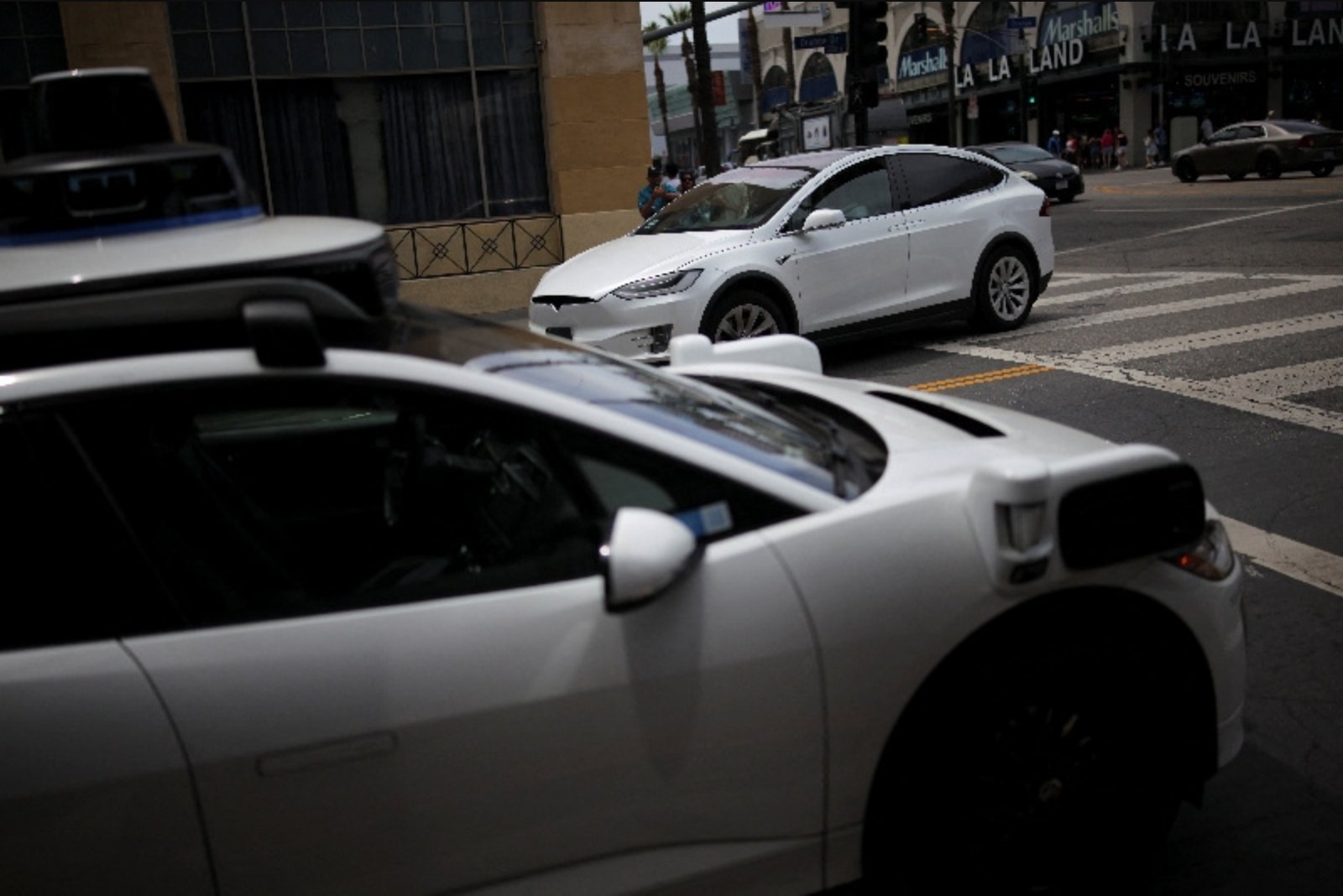
Elon Musk said at a mobility conference on Monday that Tesla has begun operating cars that do not require human safety monitors in Texas and that he expects this mode of operation to become more widespread across the United States later this year. He stated the vehicles are already running in certain locales and that the program would expand nationwide within the year.
Musk noted that Tesla runs robotaxi services in Austin, Dallas and Houston. Independent tests of those services have reported operational problems including lengthy waits, occasional complete unavailability of rides and drop-off points located some distance from passengers' intended destinations. Musk also referenced a regulatory milestone from last November when Tesla obtained a permit to operate a ride-hailing service in Arizona.
Despite a history of ambitious timelines for autonomous vehicles that have at times slipped, Musk expressed confidence about the technology's trajectory. He forecast that in five to ten years the vast majority of miles driven will be handled by artificial intelligence in self-driving cars. "Five years from now and certainly 10 years from now ... probably 90% of all distance driven will be driven by the AI in a self-driving car," he said. "So overwhelmingly, it’ll be quite a niche thing in 10 years to actually be driving your own car."
At the same event Musk touched on several safety-related matters affecting the industry. He noted a current U.S. recall covering 218,868 Tesla vehicles due to delayed rearview camera images that could raise crash risk, a recall action identified by the National Highway Traffic Safety Administration. He also referenced a separate recall by Waymo of about 3,800 robotaxis after the company identified a risk that vehicles could enter flooded roads with higher speed limits, a matter that raised safety concerns for that fleet.
Beyond automotive ambitions, Musk discussed progress at his rocket and satellite company. He described advances toward reusable rocket launch systems that, if achieved, would reduce the cost of spaceflight. "We might succeed in doing that this year," he said, adding that mastering such reuse would represent a major inflection point for humanity's ability to become a space-bearing civilization.
Musk also provided updates on Neuralink's development plans. He said that later this year the company intends to perform its first implant of the Blindsight device for people born without sight or with impaired vision. He described the initial outcome as limited vision with the prospect of improving to very precise, potentially even "super, super human vision" over time. He further said Neuralink is working on technology aimed at enabling people who are paralysed to walk again.
Looking further ahead, Musk predicted that humanoid robots will be "pretty much everywhere" within about a decade and suggested that robot-driven productivity gains could contribute to higher economic output and the possibility of "universal high income."
Context and implications
The statements cover several technologies at differing stages of rollout and regulation: production and deployment of driverless vehicles, vehicle safety recalls, reusable launch systems in spaceflight, and human neural implants. Each topic carries separate operational, regulatory and safety considerations that will influence timelines and market responses.