
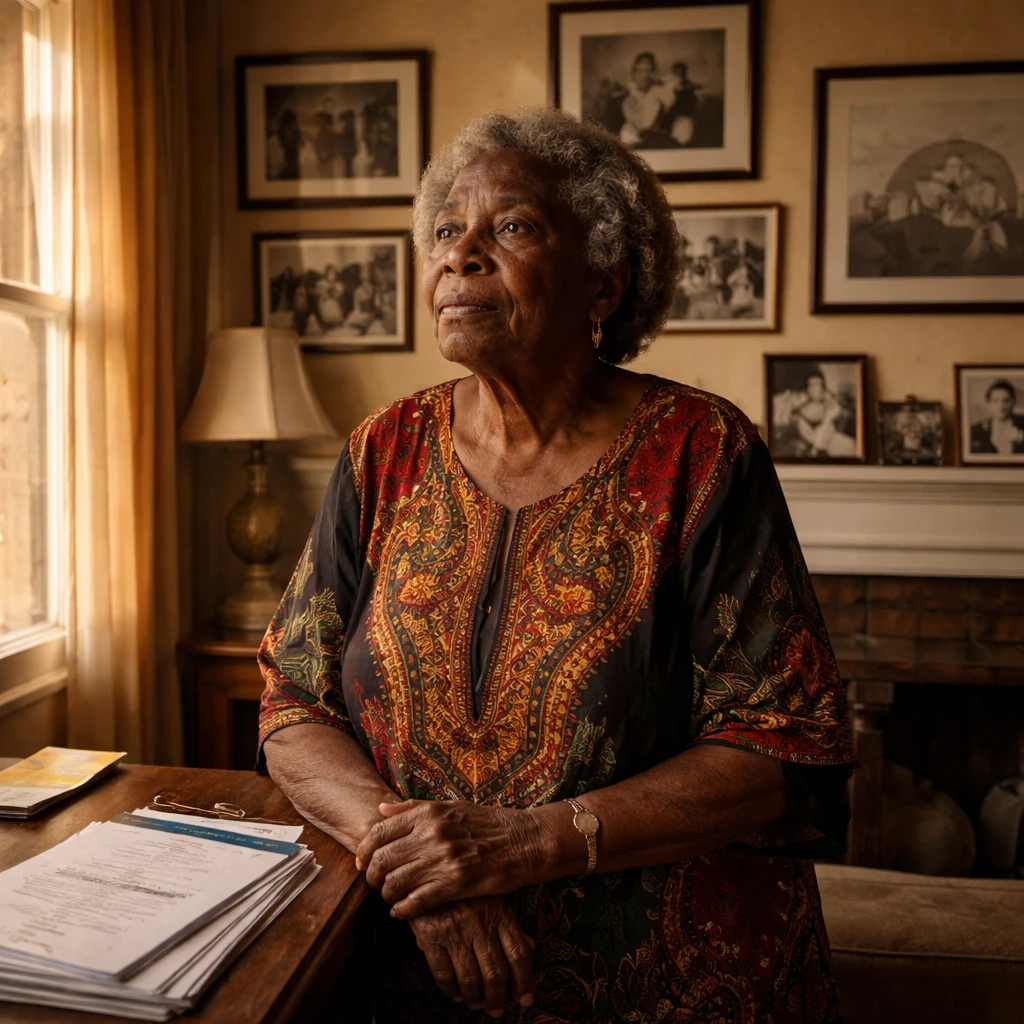
SELMA, Alabama - May 18 - Betty Strong Boynton, who as a teenager was among the hundreds of nonviolent demonstrators beaten by state troopers on Bloody Sunday, returned this spring to retrace the Selma-to-Montgomery march and to join protests against moves by Alabama lawmakers to erase one of two congressional seats currently held by Black representatives ahead of the November midterm elections.
Boynton, now 77, said the recent Supreme Court ruling that removed key protections in the Voting Rights Act has created a renewed sense of urgency among those who lived through the 1960s struggle for voting rights. Standing in her Selma home, surrounded by photographs from the civil rights era, she urged activists and ordinary citizens alike to increase outreach and turnout.
"We re going to have to get out there in the streets. We re going to have to go door-to-door," she said, describing the response she believes is necessary in the wake of the court's decision.
Bloody Sunday and the Voting Rights Act
The violence of March 7, 1965 - captured in footage that reached audiences worldwide - prompted then-President Lyndon B. Johnson to send troops to Alabama to protect marchers as they completed the 54-mile journey to Montgomery. Boynton was 16 on Bloody Sunday and says she narrowly escaped a man on horseback wielding a whip near the Edmund Pettus Bridge. Another marcher, Amelia Boynton Robinson, was photographed beaten and unconscious that day; she later became Boynton's mother-in-law.
Four months after Bloody Sunday, Johnson signed the Voting Rights Act, noting what he called "the outrage of Selma" and predicting political realignments that would follow. For decades, Section 2 of that law served as a legal tool to challenge voting maps that had racially discriminatory effects.
That legal framework was changed last month when the Supreme Court, in a majority opinion written by Justice Samuel Alito, removed protections in Section 2 that had been used to overturn maps deemed to dilute minority voting power.
"The history of struggle for voting rights is personal," said Bryan Stevenson, who founded a human rights organization in Montgomery in 1989. He emphasized the depth of exclusion felt by those who grew up in communities where access to the ballot was constrained.
Veterans say they will continue to fight
The court's ruling initially left some civil rights veterans feeling as if decades of work had been erased. Barbara Barge, who participated in Selma protests leading to Bloody Sunday and now works as a tour guide at civil rights sites, said the ruling briefly made her feel that the sacrifices of the 1960s had been for naught.
Barge recalled a decades-old encounter with an elderly Mississippi man who, upon seeing her Selma license plate, put her hand over his heart and thanked her for the right to vote before he died. That memory reinforced her commitment to ongoing work to protect voting rights.
Faya Rose Toure, who moved to Selma in the 1970s to establish a law practice drawn by the legacy of the movement, described how her office is actively engaged in voter outreach. Selma, a city of roughly 18,000 people that is more than 80% Black, features a law office reception desk stocked with voter registration forms and sample ballots.
Toure pointed out a nearby cemetery shaded by live oaks that includes a Confederate memorial with secessionist flags. She characterized those symbols as representing the persistence of white supremacist ideas and said she encourages Black residents to coordinate with national groups concerned about the state of American democracy.
"Prior to the passage of the Voting Rights Act, there was no democracy in America," Toure said.
State politics and the redistricting push
Black voters comprise about one quarter of Alabama's electorate, yet the state currently has no Black officials holding statewide office. In 2024, however, Alabama voters for the first time elected two Black members to the U.S. House of Representatives: Terri Sewell, whose district includes Selma and parts of Birmingham, was returned for an eighth term, and Shomari Figures, a newcomer whose district includes Montgomery, won a seat. Both are Democrats. The state's five other House seats are held by white Republicans.
Alabama Attorney General Steve Marshall, a Republican, said that the Supreme Court decision acknowledged changes in the South and that laws created for a different era do not reflect present realities. He has framed his role as assisting the legislature to adopt maps that are legally defensible in the post-ruling environment. In a video statement on May 11, he said his job was "to put the legislature in the best possible legal position to draw a congressional map that favors Republicans 7-0." Marshall did not respond to requests for comment.
Republican officials in Alabama have targeted the seat held by Representative Shomari Figures as part of a broader redistricting effort ahead of the midterms, a strategy civil rights leaders and experts warn could reduce Black political influence across the southern states. If Alabama, Louisiana and South Carolina join Tennessee in approving new maps, the redistricting that follows the Supreme Court ruling would eliminate at least four districts with a majority or plurality of Black voters.
Voices from the Capitol steps
Figures, speaking within sight of the Capitol steps where Martin Luther King Jr. addressed the 1965 marchers, said Alabama has made progress since that era but that those gains are not guaranteed without the protective mechanisms previously provided by the Voting Rights Act.
"Martin Luther King used to always warn that progress never rolled in on the wheels of inevitability," Figures said. "It was something that happened because people pushed, people fought, people asked for it, people demanded, people stood up, people protested."
What veterans say needs to happen next
Across Selma, civil rights veterans and current activists described a dual strategy in response to the court decision and state-level redistricting initiatives: intensify grassroots outreach to register and educate voters, and pursue legal and political channels to contest maps and preserve representation where possible.
Those efforts reflect the immediate concerns of many in Selma who link the 1960s campaign for enfranchisement to the present moment. With the Voting Rights Act's Section 2 protections curtailed by the Supreme Court, the activists argue, decisions about electoral maps and voter access largely return to state legislatures and courts under a new legal landscape.
The activists' accounts underline both their sense of continuity with the 1960s movement and the novel legal and political challenges they now face. As Boynton and others prepare to intensify volunteer outreach, legal challenges and public demonstrations, the central question they present to voters and officials is whether these gains in political representation will be consolidated or rolled back in the months ahead.