
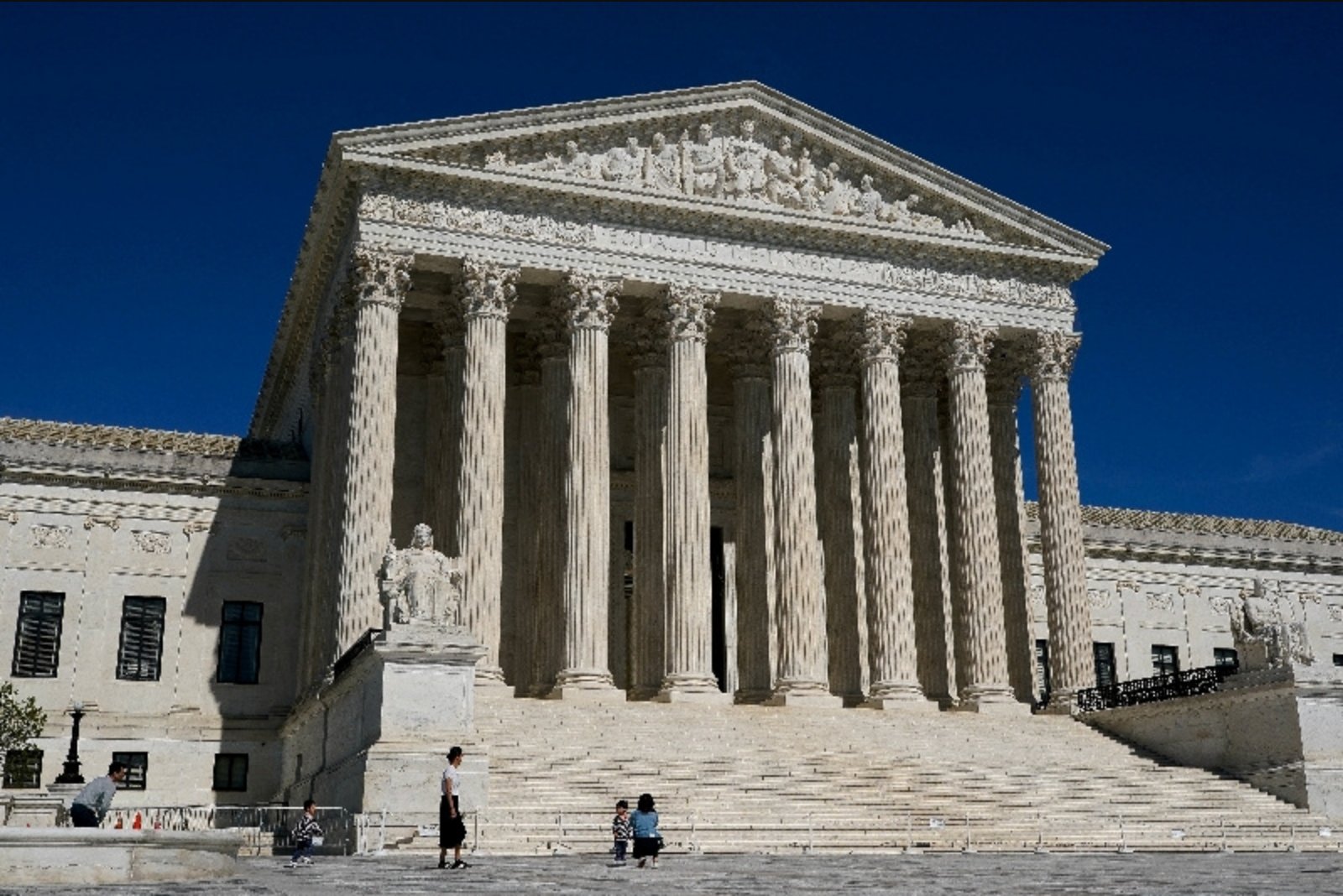
The U.S. Supreme Court on Friday refused a request from Virginia Democrats to reinstate a congressional map approved by voters that state justices overturned earlier this month. The contested map had been designed to shift four Republican-held U.S. House seats to Democratic control in advance of November’s midterm elections.
Virginia’s highest court, in a 4-3 decision on May 8, nullified the voter-approved map after finding procedural problems in how state lawmakers advanced the referendum last year. The state court concluded that Democratic legislators accelerated the process to appear on the ballot ahead of the midterms without following required procedures, and Republicans challenged the outcome.
Following the Virginia decision, Don Scott, the speaker of the Virginia House of Delegates, together with other Democratic legislators, sought emergency relief from the U.S. Supreme Court. They asked the high court to stay the state court’s ruling, arguing that it had "deprived voters, candidates and the Commonwealth (Virginia) of their right to the lawfully enacted congressional districts." The petition also cited a 2023 U.S. Supreme Court statement that state courts "may not transgress the ordinary bounds of judicial review such that they arrogate to themselves the power vested in state legislatures to regulate federal elections."
The conservative-majority U.S. Supreme Court declined the request, leaving intact the Virginia Supreme Court’s decision that set aside the map voters approved in an April 21 special election by a 51.7% to 48.3% margin, with roughly 3.1 million ballots cast. That referendum was the culmination of a tactical legislative maneuver intended to bypass a 2020 constitutional amendment that gave redistricting authority to a bipartisan commission.
The Virginia case unfolded against a backdrop of intense, nationwide redistricting fights. The Supreme Court’s action came after it allowed Alabama Republicans earlier in the week to pursue a congressional map more favorable to their party. The issue of who controls the lines for U.S. House districts has become a major political flashpoint, with Republicans and Democrats both seeking advantages ahead of the midterms.
Redistricting ordinarily occurs once a decade following the national census, and is traditionally carried out by state legislatures. This year’s battles include several atypical, mid-decade efforts to redraw maps; in some instances those efforts have been advanced at the urging of national political figures. The article’s source material cites that Republican-led Texas redrew its map last year to pursue five Democratic-held seats, while Democratic-controlled California altered its map to target five Republican-held seats. Multiple other states have engaged in similar contests.
The stakes are significant: control of Congress is in play for the midterms, with both chambers of the legislature held by narrow Republican majorities. Virginia itself holds 11 seats in the 435-member U.S. House, and the disputed map was tailored to shift four of those from Republican to Democratic representation.
Another consequential development noted in the record was the U.S. Supreme Court’s April decision, by a 6-3 conservative majority, to strike down a key provision of the 1965 Voting Rights Act. That ruling, according to the material, has enabled Republican-led states in the South to move to dismantle majority-Black and majority-Latino districts, groups that the material indicates tend to support Democratic candidates. Legal scholars and political observers have framed that ruling as opening the door for more aggressive redistricting by partisan state governments ahead of the November elections.
The Virginia referendum campaign underscored the high financial and political stakes of the battle over district lines. Groups aligned with both parties reportedly spent close to $100 million on the referendum campaign, underscoring the resources major players are committing to influence the shape of congressional representation.
Context and mechanics
Redistricting, the process of redrawing legislative boundaries to reflect population shifts captured by the census, is normally a decennial process. The recent spate of mid-decade mapmaking, as documented in the material, represents an atypical series of interventions driven by partisan objectives. The Virginia situation highlights procedural questions about how maps are advanced through state legislatures and placed before voters, and whether such maneuvers adhere to statutory and constitutional requirements.
What happened next
With the U.S. Supreme Court declining to intervene, the state court’s ruling remains in place and the voter-approved map will not be used for the upcoming midterm elections unless additional legal developments occur. The decision in Virginia adds another chapter to a season of high-stakes redistricting litigation that has implications for control of the U.S. House and the broader political balance ahead of the midterms.