
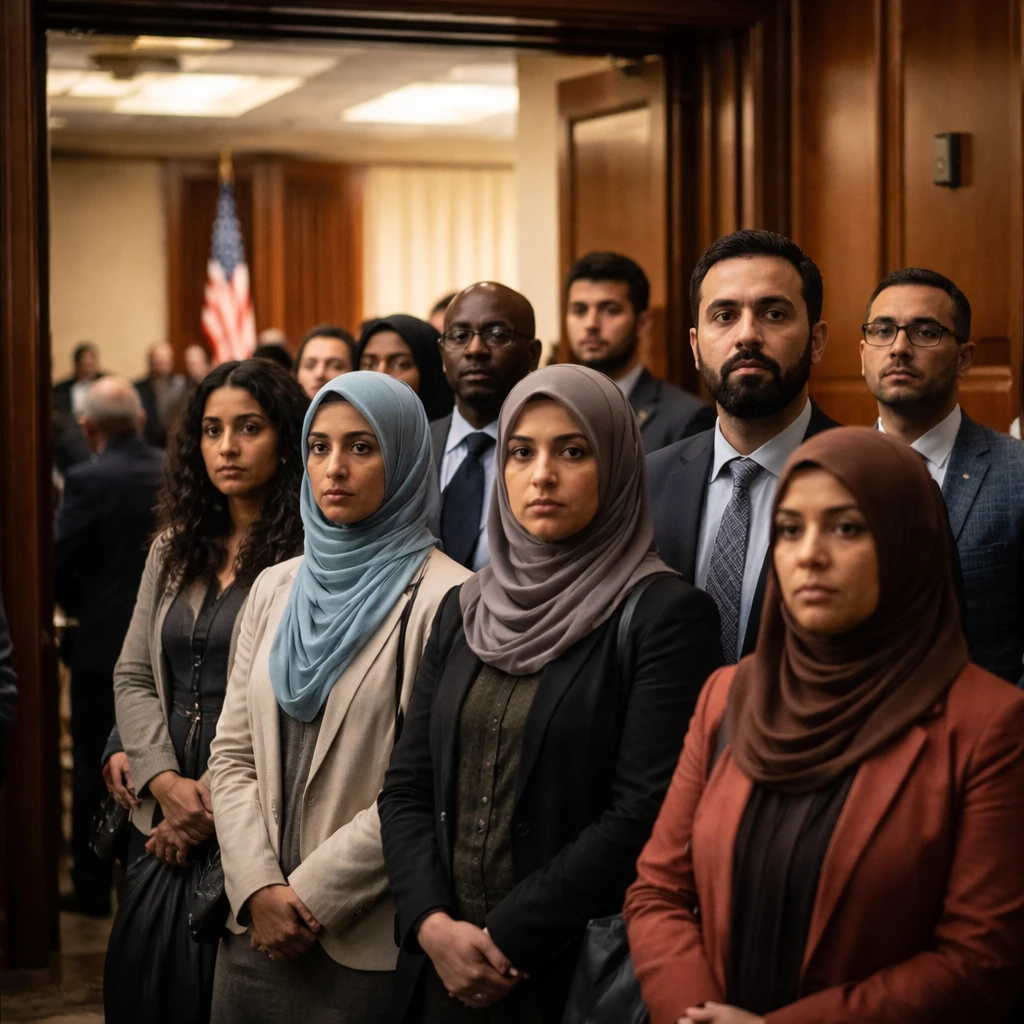
WASHINGTON, May 14 - Muslim American organizations said hearings convened by Republican members of Congress under the banner of preventing "Sharia" in the United States are being used to vilify Muslim minorities and amplify fear of their communities.
Republicans, who lead both chambers of Congress, held a House Judiciary Subcommittee hearing on Wednesday titled "Sharia-Free America: Why Political Islam and Sharia Law are Incompatible with the U.S. Constitution." A similar session took place in February.
At the hearing, Republican Representative Chip Roy stated: "The radicals pushing political Islam do not want to coexist with America’s culture and political order. They want to replace it." Supporters of the hearings say they are intended to defend constitutional norms, but critics dispute that premise.
Critics' response
Advocates and civil rights organizations described the panels as targeting Muslims for ridicule and reintroducing long-standing tropes and conspiracy theories. They argue the hearings are unnecessary because U.S. law governs on American soil and there is no evidence that mainstream Muslim organizations seek to impose sharia in the United States.
Sharia, as noted by community leaders, is a set of legal and moral principles that is interpreted in diverse ways across the Muslim faith. Community leaders and observers say there is little support for installing sharia in the U.S. among American Muslims.
The U.S. Council of Muslim Organizations, representing more than 50 Muslim groups, condemned what it called the "weaponization of government against American Muslims," saying the hearings deploy "the politics of fear."
Zainab Chaudry, the Maryland director of the Council on American-Islamic Relations, said: "Anti-Sharia hearings are not about protecting the Constitution. They are about demonizing Islam and portraying Muslim Americans as perpetual outsiders."
Political and legal pushback
Democratic Representative Jamie Raskin, ranking member of the House Judiciary Committee, described the hearings as a diversion and said they undermine religious liberty.
U.S. rights advocates have pointed to a broader rise in Islamophobia over the years, tracing some of that increase to the aftermath of the September 11, 2001 attacks and more recent political dynamics, including anti-immigration policies, white supremacy, and tensions related to the war in Gaza.
Data cited by advocates
The Council on American-Islamic Relations reported 8,683 anti-Muslim and anti-Arab complaints in the United States in 2025, marking its highest annual total since it began publishing data in 1996.
A study released in April by the Center for the Study of Organized Hate indicated a surge in anti-Muslim rhetoric from Republican elected officials beginning in early 2025, documenting more than 1,100 online posts by Republican members of Congress and governors.
State-level actions and rebuttals
Republican governors in Florida and Texas have labeled the Council on American-Islamic Relations as a "terrorist" organization amid its opposition to President Donald Trump’s immigration policies and its response to pro-Palestinian protests. CAIR and other civil rights groups have denied those characterizations and condemned the attempts to portray them as extremist.
Community leaders, civil rights advocates, and some lawmakers argue the hearings serve to inflame divisions and distract from constitutional protections and public policy debates rather than address verifiable threats.
Conclusion
The dispute over the hearings reflects broader tensions in U.S. politics about how to balance national security, religious liberty, and the rights of minority communities. Muslim American groups maintain that the recent panels do more to marginalize and stigmatize their communities than to address real legal or constitutional issues.