
Politics May 14, 2026 05:20 PM

House Deadlocks on Measure to Restrict Military Action in Iran

212-212 tie defeats Democratic bid to require congressional authorization for operations against Iran

By Hana Yamamoto

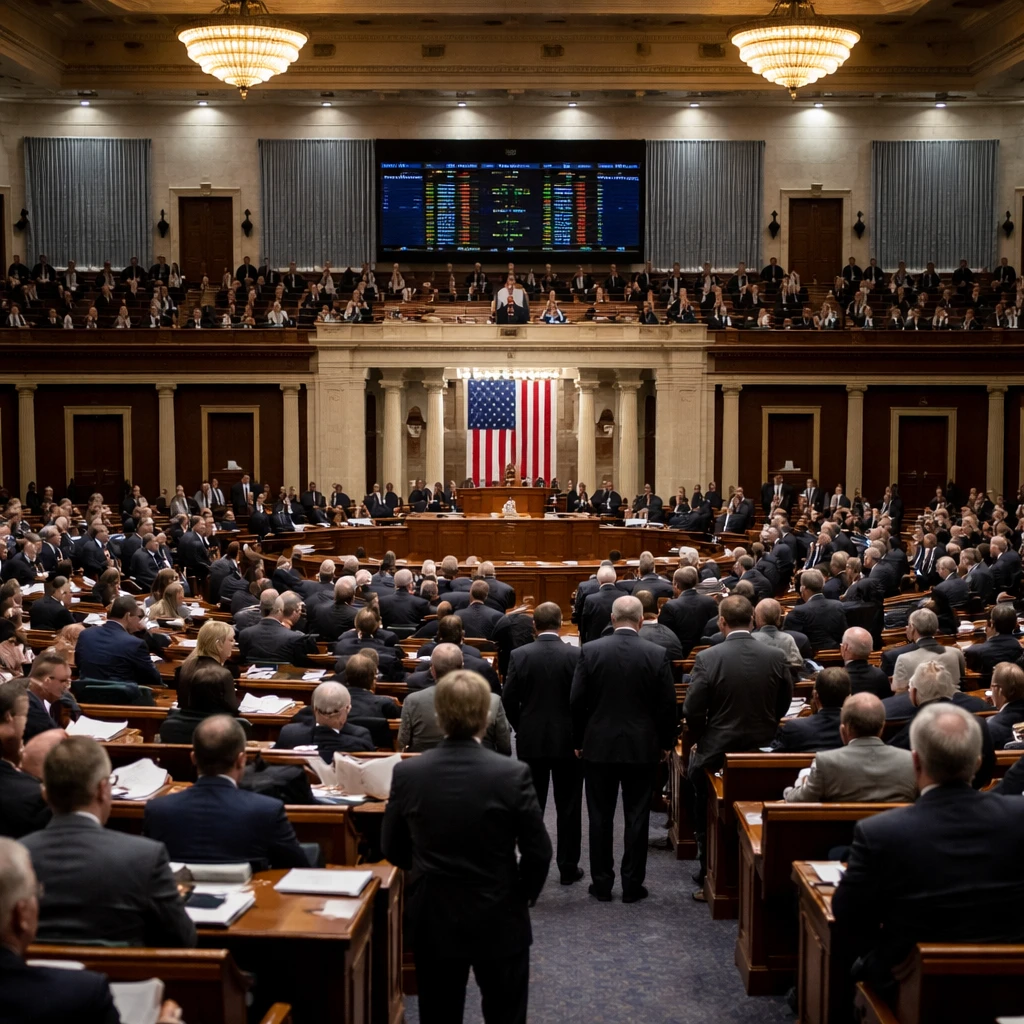
The U.S. House of Representatives on Thursday produced a 212-212 tie on a Democratic-led resolution that sought to bar military actions in Iran without congressional approval. Because the measure required a simple majority, the tie caused its defeat. The vote was the third in the House this year on an Iran war powers resolution and the first since a 60-day deadline tied to President Trump passed on May 1.

House Deadlocks on Measure to Restrict Military Action in Iran

Key Points

  • House vote ended in a 212-212 tie, which defeated the Democratic-led resolution because a simple majority was required - sectors to watch include defense and energy.
  • This was the third House vote this year on an Iran war powers measure and the first since a 60-day deadline passed on May 1 tied to presidential authorization for hostilities - relevant to government and defense contracting sectors.
  • A closely divided Congress is reflected in recent ballots: an April 16 House vote failed 213-214 with one present, and the Senate blocked a related measure 50-49 where three Republicans joined all but one Democrat to advance the motion - markets monitoring political risk may include defense and commodities.

The U.S. House of Representatives on Thursday failed to approve a Democratic-led war powers resolution intended to prevent unilateral military action against Iran without congressional authorization, with the chamber deadlocking 212 to 212.

The resolution required a simple majority to pass. The evenly split vote resulted in the measure falling short and being defeated.

This was the third occasion this year that the House took up an Iran-related war powers resolution. It was also the first such vote since a 60-day window tied to the conflict expired on May 1, a deadline after which President Donald Trump would have been expected to seek congressional approval for continued hostilities. At that point, the president had said a ceasefire had "terminated" hostilities against Iran.

House votes on the issue have become progressively closer over the course of the year, a trend taking place while Republicans maintain only a slim majority in the chamber. An earlier House effort to advance a similar resolution failed on April 16 by a vote of 213-214, with one member recorded as voting "present."

The upper chamber also saw a tight standoff earlier in the week. On Wednesday, the Senate blocked a war powers resolution by a 50-49 margin. In that vote, three Republicans joined every Democrat except one in supporting advancement of the measure.

The narrow margins in both chambers underscore how closely divided congressional opinion is on curtailing presidential authority to conduct military operations against Iran without a fresh authorization from Congress. The House outcome means the specific Democratic-led restriction will not take effect following Thursday's vote.


Context and procedural notes

Because the House required only a simple majority for passage, an exact tie automatically results in defeat. The episode represents the third House action on this question in the current year and comes after the May 1 60-day benchmark tied to presidential reporting or authorization requirements.

What happened previously

On April 16, an earlier House war powers resolution failed by one vote, 213-214, with one representative voting "present." The Senate vote the day before Thursday's House vote saw a 50-49 rejection of a related measure to advance the question, with a small bipartisan group crossing party lines in the procedural tally.

Risks

  • Narrow and closely split votes increase legislative uncertainty over limits on presidential military authority - could affect defense procurement planning and contractor revenues.
  • The Senate's near-even procedural result and the House tie leave ambiguity about whether future measures will secure the majorities required to change war powers practice - this uncertainty may influence government-related capital allocation decisions.
  • The passage of the May 1 60-day threshold and the lack of a binding congressional restriction add unpredictability about oversight timing and potential future floor battles - this could weigh on sectors sensitive to geopolitical risk, such as energy and defense.

More from Politics

Louisiana Senate Approves Map That Removes One Majority-Black U.S. House District May 14, 2026 House Deadlocks on Democratic Bid to Pause Iran Hostilities Pending Congressional Authorization May 14, 2026 Historic Black Cemetery in Palmetto Damaged; Graves Defaced with Political Graffiti May 14, 2026 Federal Court to Hear Challenge to Trump Order Tightening Mail-In Voting Rules May 14, 2026 Senate Banking Committee to Mark Up Clarity Act in Key Test for Crypto Regulation May 14, 2026