
Democrats aiming to retake one or both chambers of Congress this November have focused fresh scrutiny on Republican backing for a proposed White House ballroom, framing the effort as evidence of a political disconnect with voters grappling with higher everyday costs.
At the center of the dispute is President Donald Trump’s plan for a 90,000-square-foot ballroom. Republicans are advancing legislation under which roughly $1 billion would be allocated to presidential security improvements, including about $400 million tied to the White House complex. Democratic leaders, candidates and allies have used that package to highlight a list of rising expenses they say matter more to ordinary Americans than a new ceremonial space.
Democrats point to a span of consumer pressures, including what they describe as a greater than 50% rise in gasoline prices since the administration launched a war with Iran, along with increasing healthcare, fertilizer and electricity costs. Those trends are at the forefront of attacks by Democratic lawmakers and challengers who argue voters are focused on basic needs rather than the president’s construction projects.
"It’s a perfect storm of ugly," Democratic Senator Amy Klobuchar of Minnesota told reporters, repeating a farmer’s characterization of the economic squeeze in her state. Outside Washington, the message has been amplified by candidates who cast the ballroom as an indulgence at odds with household budgets.
Brian Poindexter, a Democratic candidate in northeastern Ohio, described the ballroom as "a vanity project that we don’t need" in an interview, adding that his prospective constituents are chiefly concerned about food, utilities and rent. Incumbent Republican Representative Max Miller did not reply to a request for comment on the project.
Republicans responding to the criticism say the ballroom and related upgrades are necessary for an aging White House complex and are not directly connected to broader economic policy. "It’s hard to make that connection there. It doesn’t fit," Representative Daniel Webster of Florida said, arguing that the ballroom issue does not logically explain macroeconomic complaints.
Yet some Republicans concede the optics are problematic with control of the House and Senate at stake in November. "We’re talking about building a ballroom, and we’re trying to get the economy squared away. Timing is bad," Senator Thom Tillis of North Carolina told CNN, indicating unease among GOP lawmakers about public perceptions.
Republicans have pointed to tax cuts enacted last year as evidence they have addressed affordability concerns, even as President Trump’s own remarks have sometimes departed from that message. Asked about rising costs connected to the Iran conflict, Trump told reporters, "I don’t think about Americans’ financial situation. I don’t think about anybody." He said his principal focus was preventing Tehran from acquiring a nuclear weapon.
White House spokesman Davis Ingle responded that the administration is working to make healthcare and other costs more affordable. Ingle also framed the legislative proposal as a necessary step for security. He said funds under consideration would allow the Secret Service "to properly address the ever growing threats of political violence in this historically heightened threat environment."
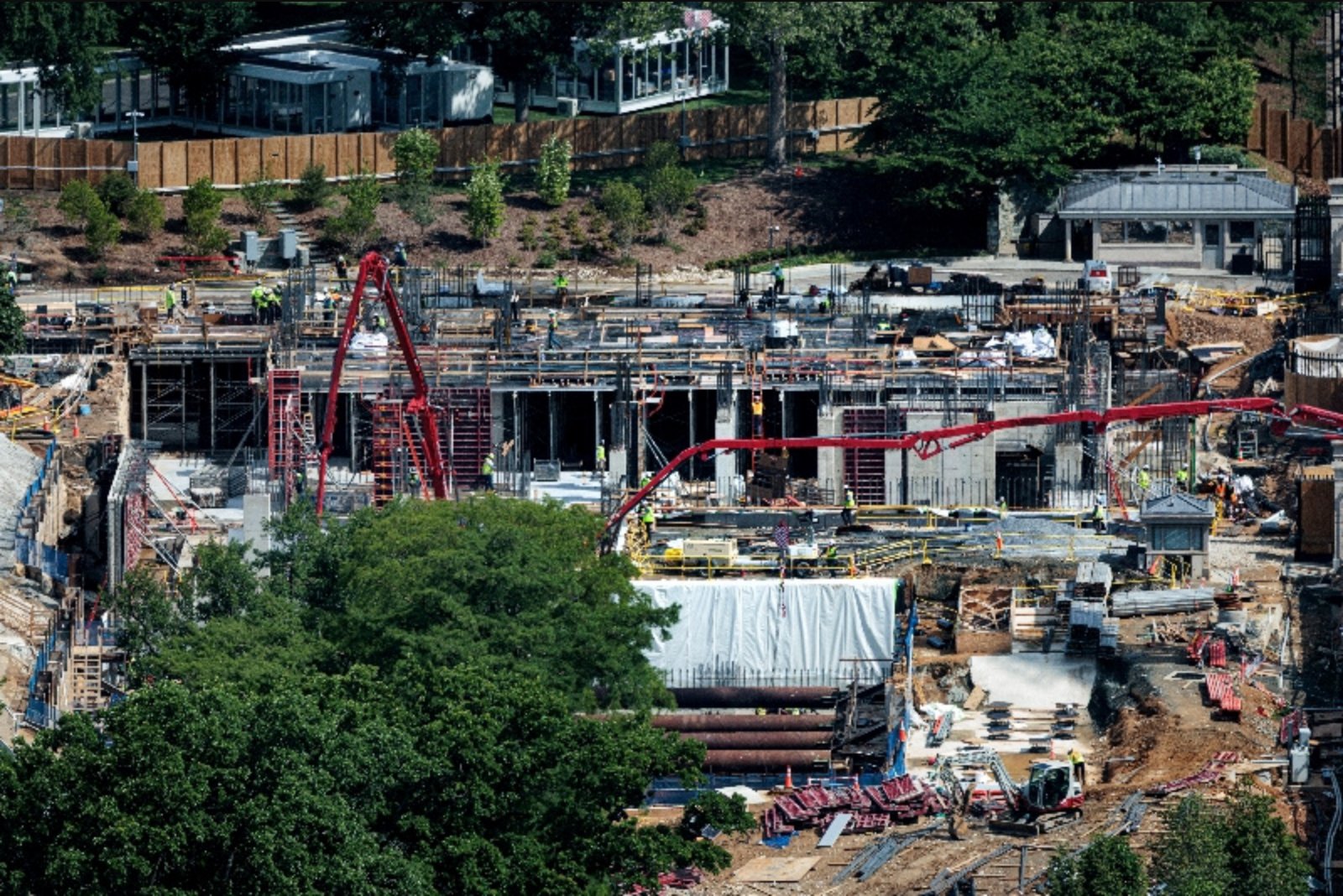
Trump has already taken steps on the project, including demolition of the East Wing, as work proceeds on the ballroom that supporters say would allow large state events now held in tents on the South Lawn to move indoors. The planned space would sit above a fortified underground military complex, and its size and fundraising approach have drawn scrutiny from watchdog groups concerned about transparency, donor influence and compliance with established ethics norms.
The president has said roughly $300 million has been raised for the ballroom, though detailed information about the origin of those funds has not been released. Trump has repeatedly asserted the ballroom would not cost taxpayers, citing private donations and money from his own pocket.
Security concerns entered the funding debate after a gunman attempted to storm a black-tie gala that featured the president in April at a Washington hotel. Following that incident, Senator Lindsey Graham of South Carolina called for Congress to approve $323 million in taxpayer funds for the ballroom, citing the need for enhanced protection.
Legislative efforts among Republicans now include a package that would earmark approximately $1 billion for presidential security, with about $400 million aimed at the White House complex. Senate leaders have said a vote could occur as soon as next week, though the text of the legislation has not been publicly released and it remains unclear whether the bill would directly fund ballroom construction.
"We want to protect our presidents no matter who they are, what party they’re in," Representative Glenn Thompson of Pennsylvania said in defense of bolstering security resources. Senate Majority Leader John Thune has said the $1 billion is needed to strengthen the Secret Service and harden the White House complex, and emphasized that "the ballroom is being financed privately."
Democrats counter that the legislation lacks explicit protections preventing taxpayer dollars from being used for the ballroom. "If it’s not for the ballroom, they should write that right into the bill," Democratic Senator Jeff Merkley of Oregon told Reuters, calling for a clear prohibition if lawmakers intend to separate security spending from the construction project.
Public opinion has been unfavorable toward the ballroom effort, adding political pressure. A Washington Post-ABC News poll released this month found 56% of Americans opposed the ballroom project while 28% supported it. That sentiment, coupled with broader disapproval of the administration’s handling of the economy, immigration policy and the Iran war, has Democrats optimistic about leveraging the issue in midterm messaging.
The narrow partisan margins in Congress may complicate Republican efforts to enact the $1 billion package. In the Senate, Republicans hold a 53-47 majority; in the House, their 217-212 edge leaves them little room for defections.
Democratic candidates running in competitive districts are seizing on the controversy. Bob Harvie, a Democratic contender for a Pennsylvania House seat, said constituents do not want tax dollars diverted to a ballroom and cited incumbent Representative Brian Fitzpatrick’s votes supporting the Iran war and tariffs. Fitzpatrick’s spokesperson, Casey-Lee Waldron, stated: "Congressman Fitzpatrick is opposed to taxpayer money being used to pay for the ballroom, and he will be voting accordingly."
Key takeaways
- Democrats are using GOP support for the president’s proposed White House ballroom to argue Republicans are out of step with voter concerns about affordability - sectors affected include energy, healthcare, agriculture and utilities.
- Republicans contend the funds would bolster security and modernize an aging White House complex, while some GOP senators say the timing of the proposal is politically awkward ahead of November.
- Public opposition is significant, with a recent poll showing 56% of Americans oppose the ballroom project and 28% in favor.
Risks and uncertainties
- Legislative uncertainty - It is unclear whether the proposed $1 billion security package would fund ballroom construction directly, leaving the outcome of votes and the use of funds unresolved - this affects federal spending and security contractors.
- Political backlash - Strong public opposition and narrow congressional majorities create a risk that the proposal could harm Republican prospects in competitive races and derail the funding measure - this has implications for political risk in markets.
- Transparency concerns - Questions about the sources of the roughly $300 million Trump says has been raised and watchdog scrutiny over fundraising and ethics raise uncertainty over funding arrangements and donor influence.