
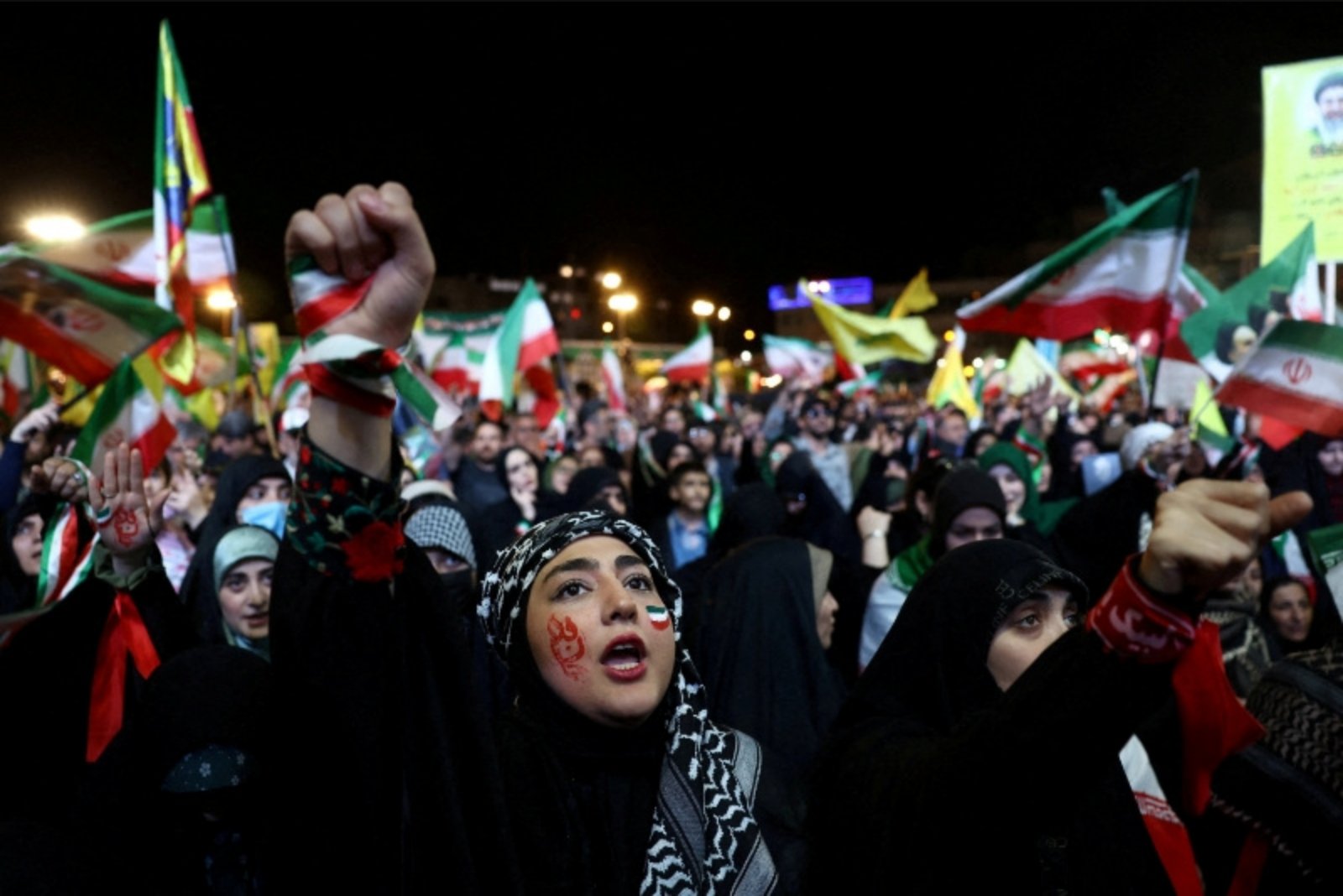
Over the past year the U.S. president's aggressive bargaining tactics won concessions from a range of counterparts on matters from trade to regional conflicts. But when it comes to Iran, that same approach - characterized by public threats, insults and hardline ultimatums - appears to have reached a limit and may be undercutting efforts to end a crisis that has unsettled the world economy.
As the confrontation with Iran enters its 11th week, both sides remain essentially stalemated. The president has expressed mounting frustration with the impasse yet shows little sign of abandoning the combative diplomatic posture toward Iran's leadership that has defined his campaign to extract a decisive outcome. Analysts warn that this combination of intransigence and belligerent rhetoric reduces the prospect of a swift negotiated settlement and raises the chances that the current standoff - and its unprecedented shock to global energy supplies - could persist with recurring episodes of brinkmanship.
Two central obstacles stand out. First is Tehran's political calculus: rulers in Iran face domestic pressures to preserve honor and legitimacy after having lost senior commanders and seen significant damage to military capabilities from U.S.-Israeli strikes. Even while Iran has exerted substantial control over the strategically vital Strait of Hormuz - a leverage point that has heightened its bargaining power - its leadership appears determined not to accept a settlement that can be portrayed at home as capitulation.
Second is the Trump administration's negotiating posture. Officials and analysts describe a playbook built around maximalist objectives, unpredictability, mixed signals and harsh language. A crucial element of that posture is the president's insistence on emerging from any deal claiming absolute U.S. triumph while demanding Iran's total defeat - a condition Tehran is unwilling to accept.
Rob Malley, who negotiated with Iran for the U.S. government in the past, summed up the predicament succinctly: "That inevitably gets in the way of reaching a reasonable deal because no government, not just Iran's, can afford to be viewed as having capitulated." His observation underscores a basic diplomatic reality - the optics of surrender are politically toxic for any ruling authority.
The diplomatic stalemate unfolds against a backdrop of domestic political pressure for the U.S. president. Rising gasoline prices and low approval ratings are complicating his political standing as he pursues a war that polls indicate is unpopular ahead of November's midterm elections. The Republican Party is confronting a difficult fight to retain control of Congress, and the political cost of a protracted confrontation is tangible.
In public statements the White House has defended the administration's approach. White House spokeswoman Olivia Wales cited what she described as a "proven track record of achieving good deals" under the president and argued that Iran was increasingly "desperate" to reach an agreement. She added, "President Trump is a master negotiator who always sets the right tone." That defense frames the president's tactics as effective leverage despite mounting signs of diplomatic exhaustion.
At times the president's rhetoric has escalated to an apocalyptic tenor. Last month he wrote on social media that he could wipe out Iran's civilization unless it agreed to a deal - a post that administration officials later described as improvised and not a vetted element of national security strategy. Following that exchange the president did step back and accepted a truce.
Yet incendiary language has endured. Since a profanity-laced Easter Sunday comment in which he threatened to damage Iran's bridges and power grid, he has repeated stern warnings, including to reporters on Air Force One. On one occasion he said reporters would know the ceasefire had failed if they observed "one big glow coming out of Iran," a phrase some interpreted as an allusion to nuclear weapons - although he has repeatedly stated he would never deploy such armaments.
The president has singled out Iran's leaders with particularly tough language, calling them "crazy bastards," "lunatics" and "thugs." Tehran has responded with its own campaign of taunts, circulating graphic memes and social media posts lampooning the U.S. leader. The White House has claimed Iran has been "completely crushed" and suggested Iranian officials were "begging" for a deal - claims Tehran has denied. The administration's public stance has swung between demands for "unconditional surrender" and expressions of willingness to negotiate.
From Tehran's perspective, simply surviving the military campaign has been presented as a victory. Iranian leaders point to their ability to inflict economic pain and to maintain leverage over oil shipping routes as evidence they can resist U.S. pressure.
Within the White House there have reportedly been no concerted efforts to moderate the president's public messaging on Iran, according to two sources who spoke on condition of anonymity about internal deliberations. While the president's core political movement has largely stuck with him, some prominent past supporters have criticized the war and condemned the more extreme threats.
Observers note a pattern in the timing and tone of the president's most strident remarks. Several of his harshest comments have appeared on his Truth Social platform in the late hours, often at critical moments in the crisis. One such overnight announcement last month, introducing a blockade of Iranian ports, was followed by an Iranian retaliation that imperiled an already fragile ceasefire.
Responding to a fresh Iranian peace proposal, the president dismissed it as a "piece of garbage," a remark emblematic of his blunt public posture. Dennis Ross, a former Middle East adviser, warned that "the lack of strategic patience and inconsistency of the president's rhetoric undercuts whatever message he wants to send." Ross's assessment highlights the potential diplomatic cost of off-the-cuff declarations and fluctuating signals.
During a recent visit to Beijing the president refrained from public attacks on Iran while diplomatic attention was concentrated on relations with China - a key oil customer for Tehran. Nonetheless, analysts suggest that sustained restraint in public remarks would be advisable if the administration genuinely seeks an off-ramp from the conflict. Iran's Deputy Foreign Minister Saeed Khatibzadeh bluntly advised the president to speak less, asserting last month that "He talks too much."
The president, a former real estate developer who frequently describes himself as a master dealmaker, has long defended unpredictability as a negotiating tool designed to unsettle counterparts. That style has produced concessions in some arenas, such as tariff negotiations and certain conflict resolutions the administration cites as precedents. But officials who previously negotiated with Iran caution that the same tactic is unlikely to produce the desired outcome in Tehran.
Former U.S. negotiators point to the entrenched nature of Iran's clerical and military institutions and the country's historical emphasis on dignity and resilience. They argue the president's threats may have the opposite of the intended effect - solidifying resolve among Iran's more hardline leaders, who harbor deep mistrust after U.S. strikes during periods when talks were ongoing. Nate Swanson, who served on a U.S. Iran negotiating team until July, stated plainly: "There's been this false perception that if you just put enough pressure on Iran, they'll capitulate, but that's just not how it works with Iran."
Barbara Leaf, who served as a Middle East envoy under the previous administration, added that the president's campaign against Iran is also hampered by what she termed "a giddy assumption that Iran was a Venezuela-like problem for resolution (and) wholesale misunderstanding of the regime's inherent resilience." Her comments underscore the view among some analysts that the administration misread the nature of Iran's political and social cohesion.
Some experts warn the administration's combination of military pressure and coercive diplomacy could be counterproductive with respect to one of its declared aims: preventing Iran from moving down a path to nuclear armament. There is concern among analysts that heavy-handed measures may encourage Tehran to pursue an eventual nuclear deterrent, hoping to secure itself in the manner of other states whose nuclear status has complicated outside intervention. Iran, for its part, continues to assert a right to enrich uranium for peaceful purposes.
An additional friction point is the difference in tempo between the two capitals. The president, often impulsive in style, tends to favor quick, decisive outcomes. Iranian delegations historically take longer in negotiations, extending timetables and testing patience. Analysts say this mismatch in expectations further complicates prospects for a rapid agreement.
Abdulkhaleq Abdullah, a scholar in the United Arab Emirates, acknowledged the president could reduce tensions by moderating rhetoric, but he emphasized that Tehran's refusal to yield is a major contributor to the deadlock. "Iran's intransigence is more to blame for the current stalemate than Trump's threats and bombastic comments," Abdullah said.
For his part, Trita Parsi of the Quincy Institute for Responsible Statecraft suggested Tehran's leaders may interpret the president's erratic conduct as a sign of weakness or desperation, electing to wait him out. "In some ways, Trump plays right into their hands," Parsi observed, arguing that the U.S. leader's unpredictability can be an incentive for Iran to stall until political conditions shift in its favor.
At this stage the path to de-escalation appears narrow. The entrenchment of positions on both sides, the continuing economic and strategic leverage Iran holds over oil transit routes, and the U.S. president's public insistence on an unequivocal American victory all point to a protracted stalemate rather than an imminent negotiated resolution. The global economy, especially energy markets, remains exposed to the consequences of that impasse.
Summary
President Trump's confrontational negotiation style, which has delivered results in other contexts, is facing limits in dealings with Iran. Tehran's leaders seek to preserve domestic legitimacy and will not accept total defeat. The president's public demands for absolute U.S. victory, combined with incendiary rhetoric and inconsistent signals, are reducing the prospects for a quick settlement and increasing the risk of prolonged disruption to global energy supplies.
Key points
- Iran resists demands for unconditional surrender and has used leverage over the Strait of Hormuz to influence negotiations - sectors affected: energy, shipping.
- The president's maximalist demands and volatile public messaging have limited diplomatic flexibility and undercut strategic patience - sectors affected: diplomacy, political risk for markets.
- The stalemate raises the possibility of prolonged instability in oil markets due to periodic brinkmanship and disrupted shipping flows - sectors affected: energy, commodities markets.
Risks and uncertainties
- Protracted conflict could sustain high volatility in global energy markets, impacting oil prices and downstream fuel costs.
- Inflammatory public rhetoric and unpredictable signals may trigger further retaliatory moves or miscalculations, raising regional security risks - sectors affected: defense, insurance.
- Domestic political pressures in the United States, including rising gasoline prices and low approval ratings, could constrain policy options and complicate prospects for negotiated compromises - sectors affected: political risk, consumer markets.