
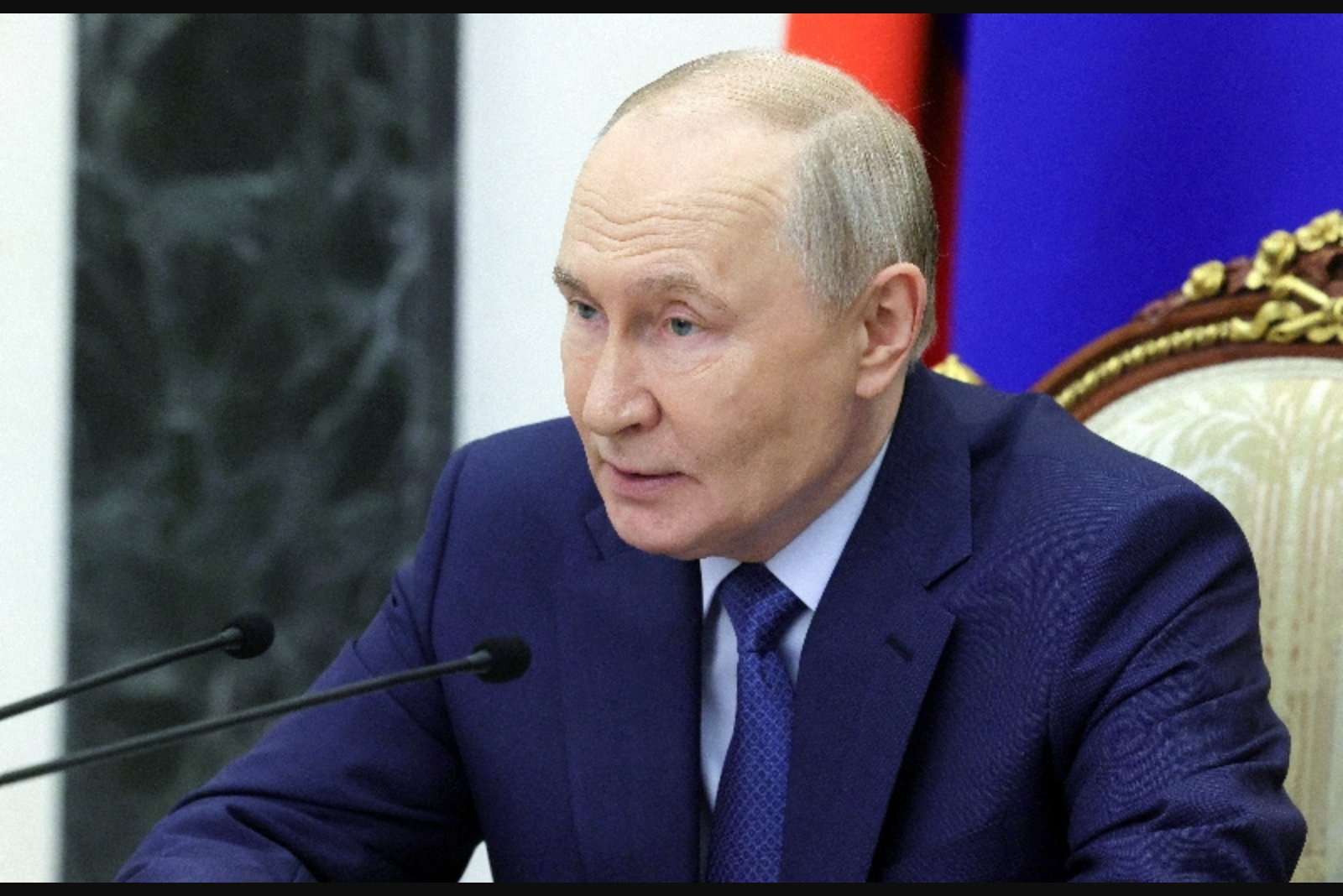
Tallinn - Estonia's foreign intelligence chief has cautioned that Russian President Vladimir Putin faces a narrow range of effective options in Ukraine, as Russia's armed forces have shown only limited battlefield progress while international sanctions constrain key revenue streams.
Kaupo Rosin, the head of Estonia's foreign intelligence service, told Reuters that Russia is now losing more personnel than it is able to replenish in the fifth year of its full-scale war in Ukraine, and that the prospect of a general mobilisation would be deeply unpopular and could threaten internal stability.
Rosin said these pressures are being factored into decision-making at the highest levels, though he acknowledged it is difficult to say precisely what Putin himself is thinking. "All these factors together are creating a situation where some people in Russia including in the higher levels understand that they have a big problem. Hard to say what Putin thinks about it, but I think all these factors are starting to float into his decision-making," he said in an interview in Tallinn.
Recent months have seen Russian ground forces advance at some of the slowest rates recorded since 2023, the year following the full-scale invasion. At the same time, Rosin highlighted the economic strain: Russia's roughly $3 trillion economy contracted by 0.3% in the first quarter. While President Putin has argued that state measures to support the economy are beginning to show positive effects and has said Russian forces will continue fighting until they meet all stated objectives, Estonia's spy chief described the country’s financial situation as "so bad" largely due to measures targeting Russia's financial sector.
Rosin pointed to sanctions on banking and financial institutions as particularly damaging, adding that punitive steps affecting Russia's oil exports have limited income further. "I think it’s very difficult choices for them now. It’s hard to predict what they will decide in this current situation," he said.
Estonia's stance and calls for continued pressure
Estonia, which shares a land border with Russia, has been a leading advocate within NATO and the European Union for sustained support to Ukraine and for continued pressure on Moscow. Rosin urged allies not to ease off, telling Reuters: "So my message is let’s push forward with (sanctions). This is not the time to hesitate, just let’s keep going."
Intelligence assessment - no immediate sign of a strategic shift
In separate comments, another European intelligence official, speaking on condition of anonymity, said there are growing signs that Russia is under pressure, but that these signals do not yet indicate a change in Moscow's wartime objectives. "It’s very difficult for me to see that they (Russia) would get rid of their objective to get the whole Donbas area... and Russia is in no hurry, basically," the official said.
The official noted that Russia has consistently demanded, during U.S.-brokered peace talks, that Ukraine withdraw from the eastern Donbas region as part of any negotiated settlement - a condition Kyiv has rejected. The Donbas region comprises the Russian-occupied province of Luhansk and part of Donetsk, areas where Ukrainian forces have defended against a sustained Russian offensive.
Rosin said it does not appear that Russia is softening its objectives or that a "big breakthrough" toward peace is imminent. He described Russian society as resilient and warned against assuming the Kremlin's leadership is eroding or that President Putin faces significant domestic challenge. "It is wishful thinking that now Russia’s leadership is in some way eroding, or Putin is somehow challenged (domestically)..." the official said.
Long-term military ambitions and risks of sabotage
The Estonian intelligence chief predicted that while Putin remains in power, Russia will not abandon its aim of subordinating Ukraine. He said Moscow is likely to maintain a substantial military presence along Ukraine's borders even after active hostilities end, and when the conflict concludes, Russia will seek to expand its military posture along NATO's frontiers. "The military ambition is very, very big on the Russian side," Rosin said, adding that Moscow will pursue military dominance "from the Arctic until the Black Sea."
Rosin also warned that Russia is likely to continue conducting sabotage operations in the West, actions he said Moscow regards as limited in their potential to trigger wide-scale war despite risks to civilian lives. Russia has consistently denied involvement in planning or carrying out sabotage and rejects such accusations as alarmist. "Russia sees this (such attacks) as something which doesn’t ignite a big war," Rosin said.
Conclusion
Estonia's top spy paints a picture of a constrained Russian state - facing military stagnation on Ukraine's front lines and economic pressure from sanctions - yet retaining ambitious strategic aims and social resilience. Intelligence assessments cited by Rosin and an anonymous European official reflect growing stress on Moscow's capabilities but stop short of predicting an immediate change in Kremlin strategy.
Key takeaways
- Russia's military advances in Ukraine have slowed to among their lowest rates since 2023, while manpower losses exceed recruitment in the fifth year of the war.
- Sanctions, especially those targeting the financial sector and oil exports, are constraining Russia's economy, which contracted by 0.3% in the first quarter.
- Intelligence assessments indicate pressure on Moscow but do not show a shift away from its objectives in Donbas or broader military ambitions.