
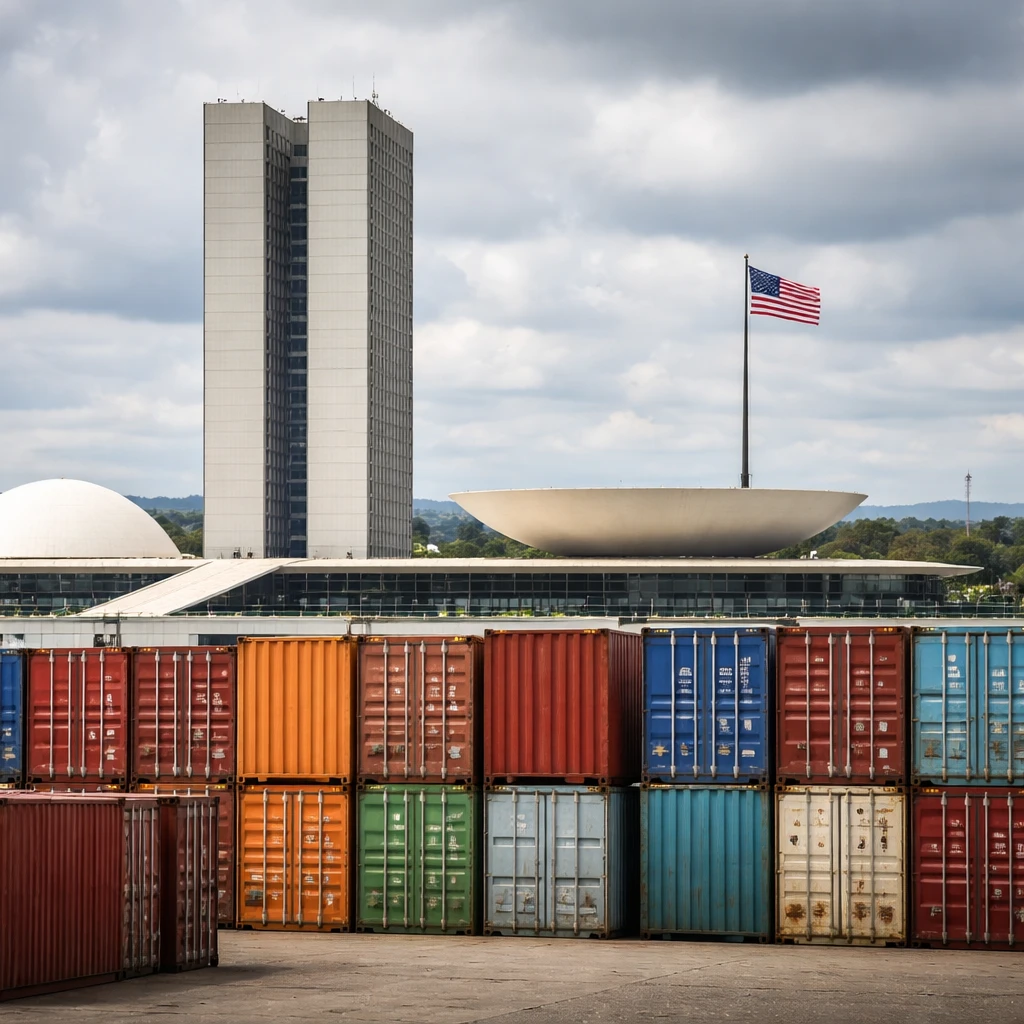
The imposition of 25% tariffs by the United States on thousands of Brazilian products has rapidly become a defining topic in Brazil’s run-up to the October presidential election. Announced by U.S. trade officials, the measures have prompted a flurry of political exchanges in Brasilia and a fresh debate about the role of foreign policy and trade friction in domestic politics.
U.S. Trade Representative Jamieson Greer defended the tariffs as a response to what he described as unfair trade practices. The levies follow months of negotiations between the two countries that included dozens of meetings, signaling a prolonged period of diplomatic engagement prior to the announcement.
On social media, U.S. Secretary of State Marco Rubio placed responsibility for the outcome on Brazil’s president, saying in a post on X that "President Lula and his government have not negotiated with the US in good faith." The comment fed into public sparring between Brazil’s two leading presidential contenders.
Senator Flavio Bolsonaro, the right-wing candidate and son of former President Jair Bolsonaro, directly blamed President Lula for the tariff increase. "The blame for the tariff hike is on Lula," he said, echoing a line of criticism that frames the levies as the result of Brazil’s trade posture under the incumbent government.
President Lula rejected that account and pushed back at the role of the Bolsonaro family in the dispute. He accused them of collaborating to produce the tariff outcome driven by electoral motives, saying the result "is part of the plot built with the active collaboration of the Bolsonaro family" and that they were "false patriots who orchestrated and publicly defended actions against our country, driven by electoral objectives." The family has denied those charges.
The tariffs have also highlighted connections between U.S. politics and the Bolsonaro family. Former U.S. President Donald Trump tied levies imposed last year on Brazilian products to what he described as a "witch hunt" against Senator Bolsonaro's father. Separately, Senator Bolsonaro’s brother, former lawmaker Eduardo Bolsonaro, claimed last year to have lobbied the White House to raise tariffs on imports of Brazilian goods in response to a criminal case against his father.
Both presidential candidates have taken their cases to Washington. The dispute evolved into a political flashpoint when, at separate times, President Lula and Senator Bolsonaro traveled to the Oval Office to press their positions with the U.S. president.
Public opinion has shown immediate effects. A poll released this week by Quaest indicates 42% of respondents said the levies made them more likely to back Lula, compared with 27% who said the tariffs swayed them toward Senator Bolsonaro. Moreover, 63% of those surveyed felt the tariffs would harm them or their families, signaling broad economic concern among voters.
Analysts in Brasilia note that foreign policy can be decisive in a tight race, and that swing voters on polarizing topics can determine the outcome. Lucas de Aragão, a partner at consultancy Arko Advice, said that on the tariffs specifically "it seems to be a victory of Lula’s narrative over Flavio’s narrative," pointing to the apparent sway among undecided or moderate voters.
The episode underscores how trade actions by an external government can ripple into domestic electoral politics, influencing perceptions of economic vulnerability and national interest. For political strategists and market observers alike, the tariffs have created a new variable in an already contested campaign.
Key takeaways
- U.S. officials imposed a 25% tariff on thousands of Brazilian products, citing unfair trade practices.
- Brazil's two leading presidential candidates have traded public accusations, and both have lobbied in Washington over the issue.
- Polls indicate the tariffs may shift voter preferences - with a plurality saying the levies increase support for Lula - and a majority believing the tariffs will harm them or their families.