
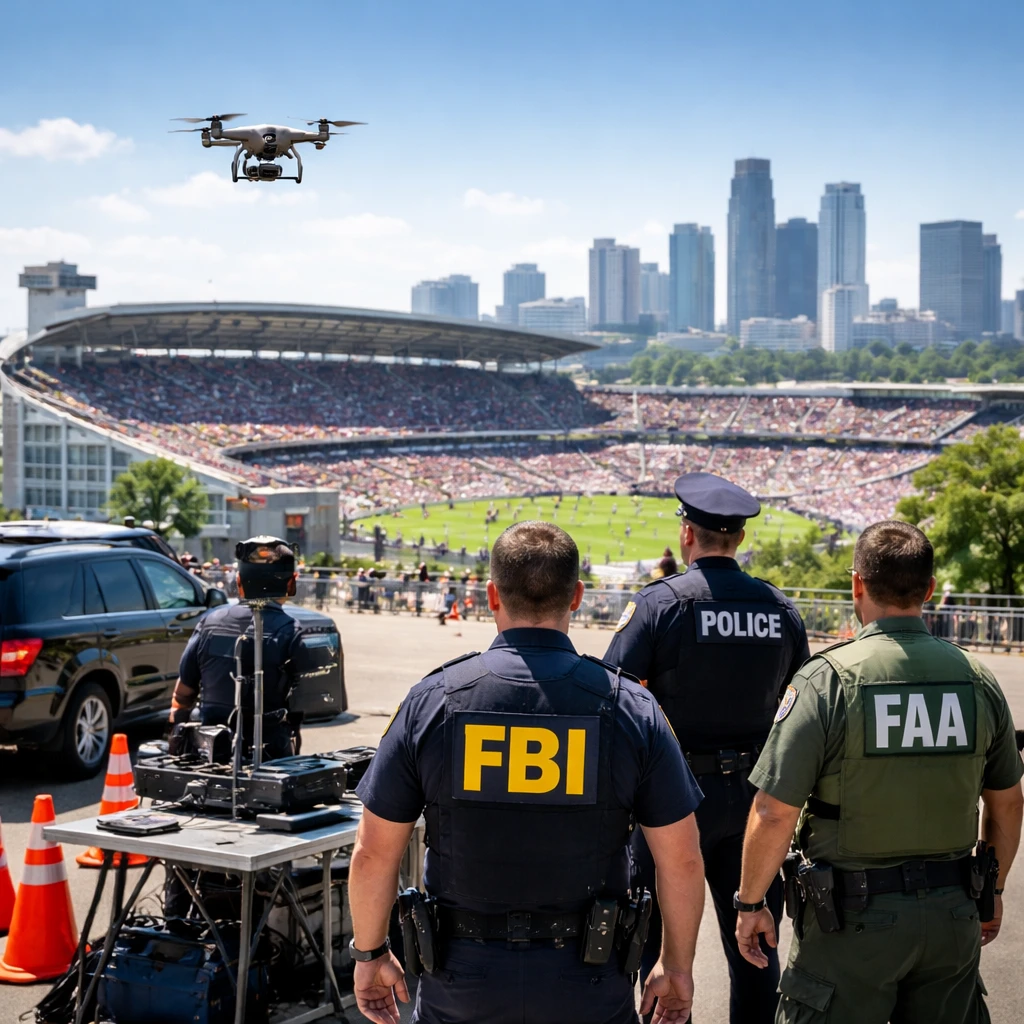
U.S. federal agencies have taken custody of in excess of 700 drones near FIFA World Cup stadiums and fan zones since the tournament opened on June 11, officials said. Authorities report seizures across all 11 host cities and have made several arrests in connection with flights into restricted areas.
On match days, the Federal Aviation Administration has prohibited all aircraft operations, including drones, within a radius of three nautical miles and as high as 3,000 feet above ground level around the stadiums unless individual operators receive explicit authorization from air traffic controllers. For fan gatherings outside stadiums, the FAA set a smaller no-fly zone of one nautical mile and up to 1,000 feet above ground level.
The FBI said operators whose drones enter those restricted zones without approval face a range of penalties. Civil fines can reach up to $100,000, and violators may also face criminal prosecution and have their aircraft confiscated. The bureau has deployed teams around stadiums to detect and disable unauthorized drones.
FAA Administrator Bryan Bedford highlighted the operational gains from the enforcement activity in an interview, saying the seizures show the government "can actually identify the users and identify people who are in airspace where they’re not supposed to be." Bedford also noted the FAA is proposing a process that would allow owners of critical infrastructure to petition for limits on drone operations above sensitive sites, and that the agency will begin cataloguing sensitive locations - including "power plants, utility plants, infrastructure" - for potential restrictions.
The FAA has issued dozens of temporary flight restrictions to bar drones around World Cup venues. The agency also reports that it receives more than 100 reports each month of drones operating near airports. Officials noted that drone incidents at major U.S. sporting events are not unprecedented; the article cites a prior case in which, in 2025, a man pleaded guilty after being charged with violating defense airspace by flying a drone over an NFL playoff game in Baltimore.
Authorities emphasize that the temporary restrictions and enforcement measures are intended to protect public safety and event security. The combination of no-fly zones, detection teams, seizure authority and potential penalties forms the current framework for deterring and responding to unauthorized drone operations in proximity to World Cup events.