
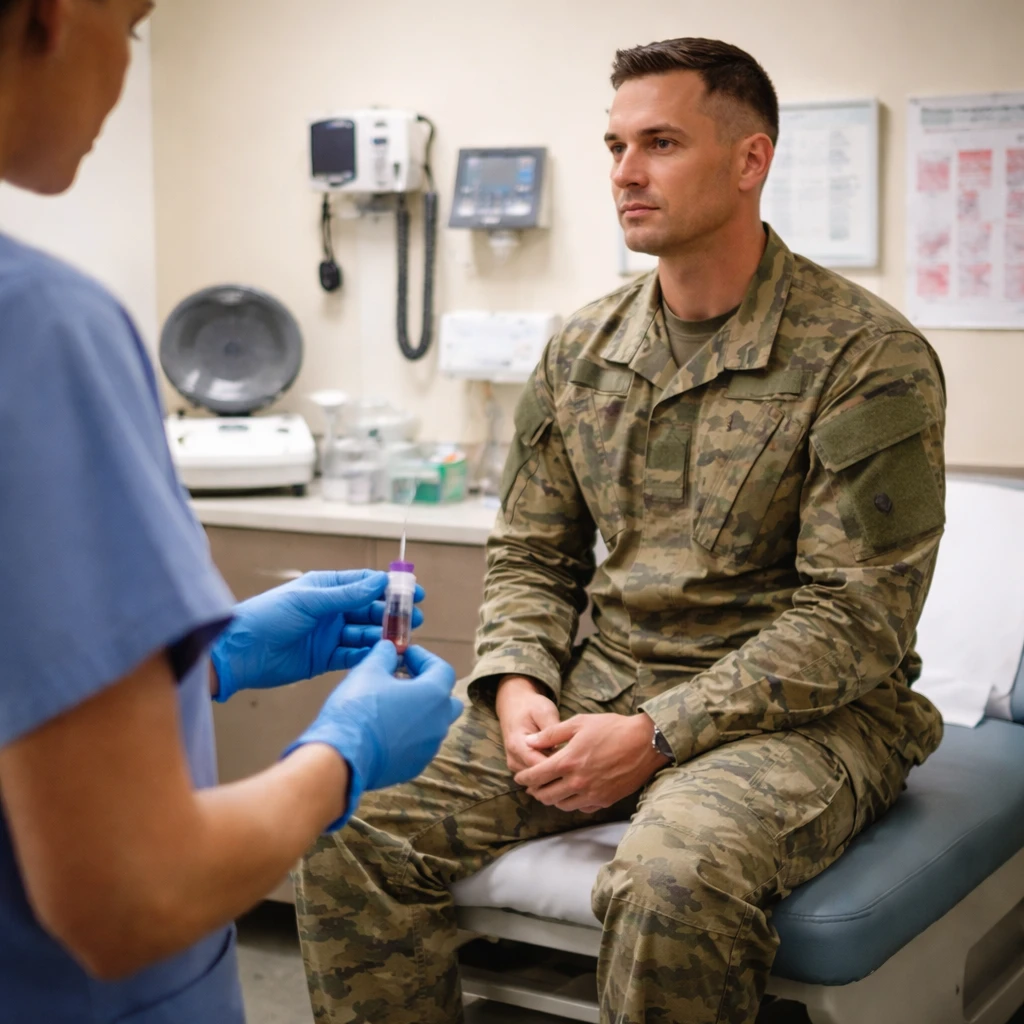
WASHINGTON - U.S. Defense Secretary Pete Hegseth on Wednesday announced that service members 30 years of age and older will undergo mandatory annual screening for testosterone levels, a policy he describes as intended to address testosterone deficiency that can affect health and performance.
In a recorded message, Hegseth framed the program as part of medical oversight to "ensure you have the right testosterone levels to operate at your absolute best." He noted the scientific observation that "as we age, testosterone levels often naturally drop," presenting the screening as a routine part of health maintenance for mid-career and senior enlisted and officer personnel.
The new requirement will be incorporated into the annual medical testing regimen for troops 30 and older. For those diagnosed with low testosterone, medical staff could offer testosterone replacement therapy, but acceptance of any prescribed hormone treatment will be voluntary. Service members younger than 30 will have the option to request testing if they choose.
Hegseth's move follows recent action by the U.S. Department of Health and Human Services, which has begun easing certain restrictions on testosterone replacement therapies. The department announced last month that it would pursue removing limits on the use of such therapies in men diagnosed with age-related low testosterone.
Political reaction
The announcement prompted immediate criticism from some Democratic lawmakers who questioned the decision in light of the administration's stance on transgender service members and access to hormone therapies. Representative Summer Lee said, "So now y'all support gender-affirming care?" Senator Tammy Duckworth commented, "Sounds like gender-affirming care to me." These responses pointed to perceived inconsistency between the new screening policy and the ban on transgender individuals serving who often rely on hormone therapy.
Implementation notes
- The screenings will be mandatory for personnel aged 30 and above as part of their annual medical tests.
- Treatment recommendations following diagnosis of low testosterone will be optional for service members.
- Service members under 30 may request testing but are not required to undergo it.
Implications
Officials portray the policy as a clinical measure aimed at maintaining force health and readiness by identifying a treatable condition that becomes more common with age. The announcement intersects with recent federal regulatory shifts easing access to testosterone replacement therapy, but it has also exposed tensions in defense medical policy that have political and social dimensions.
This report reflects the information provided in the official announcement and public responses; it does not include new or unreported details.