
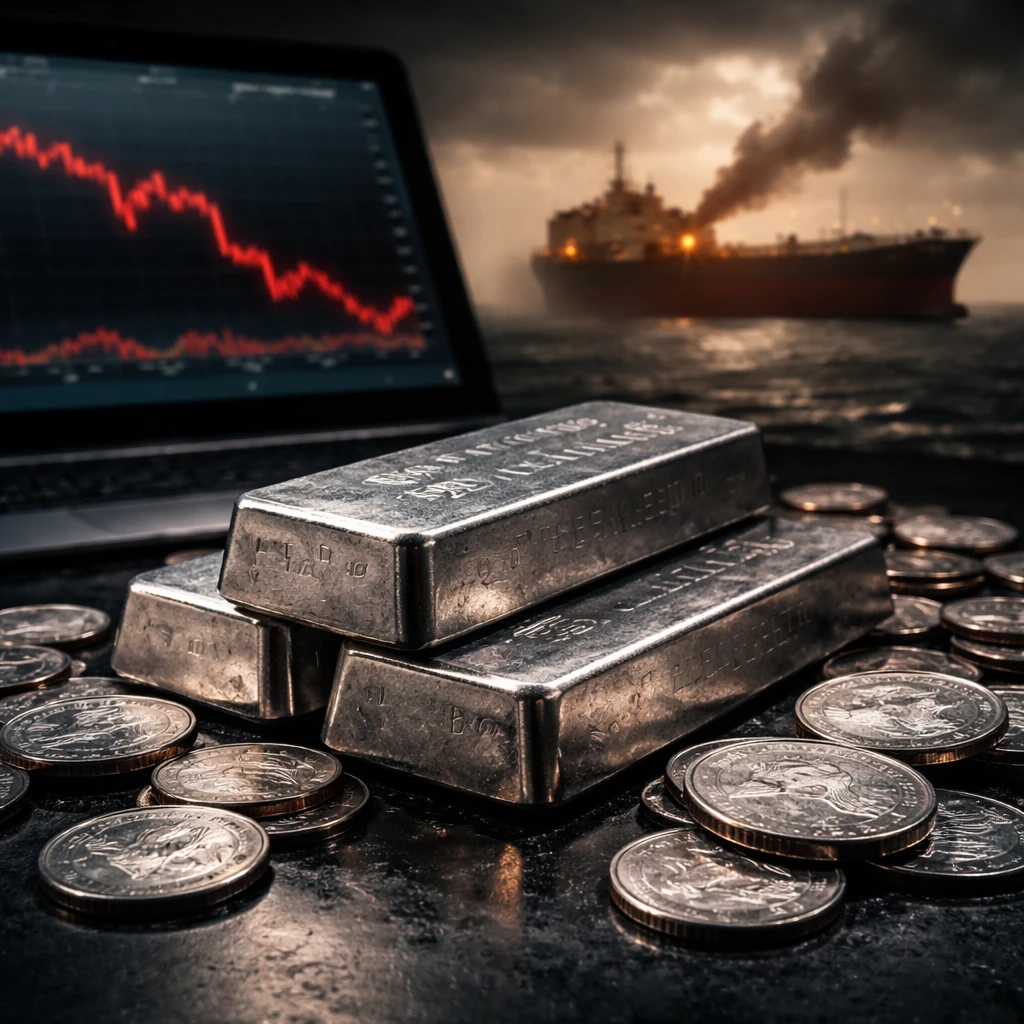
Spot silver dropped 1.7% to $56.82 per ounce on Thursday, a decline that coincided with a surge in geopolitical risk and a renewed market focus on inflation and rate tightening. The move in the metal translated into sharp losses for U.S.-listed silver miners, whose earnings are sensitive to silver prices.
Among the casualties were Hecla Mining (HL), Coeur Mining (CDE), Endeavour Silver (EXK) and Silvercorp Metals (SVM), all of which fell in Thursday's trading session. The shares underperformed the metal itself because miners' revenue and profit profiles are amplified by operating leverage to the price of silver.
Analysts revised expectations for at least one major producer. Scotiabank reduced its price target on Hecla to $21 from $25, citing ongoing pressure on silver prices. That downgrade is notable given Hecla's revenue mix: approximately 73% of its Q1 2026 revenue comes from silver, which makes the company especially exposed to moves in the metal.
Coeur Mining has lost more than 6% across recent sessions, a slide that is magnified by cost dynamics in the industry. The company's all-in sustaining cost (AISC) is in the range of $15 to $16.25 per ounce. As silver approaches the mid-$50s per ounce, that cost structure compresses potential margins and leaves less room for price deterioration.
Thursday's decline extends a broader downturn for silver that began earlier in the year. The metal is down roughly 52% from its January 2026 peak of $121.62 per ounce. The gold-silver ratio has widened to about 69:1, a relationship that market watchers interpret as silver underperforming gold.
Futures market dynamics reflect the same weakness: September silver futures fell to levels not seen since December 9, 2025, when they opened at $57.95 on Tuesday, July 14, a period that coincided with reports of intensifying conflict in Iran. That geopolitical backdrop helped push oil prices higher and reintroduced inflation concerns to the markets.
The macroeconomic channel is direct. Recent U.S. strikes on Iran's coastal defenses and the reimposition of a naval blockade have been associated with higher oil prices. Higher energy costs feed an inflation narrative that is unfavorable for non-yielding assets such as silver, driving a portion of the move. At the same time, CME FedWatch data showed traders pricing roughly a 51% chance of a Federal Reserve rate hike in September - a measure that acts as an additional headwind for precious metals and the equities tied to them.
Niko Tzabouras, senior market analyst at Tradu.com, noted that gold is being driven by inflation and geopolitics. He said continued U.S. strikes and disruptions in key shipping lanes have supported oil and sustained inflationary pressures. While recent softer CPI and PPI prints removed some immediate urgency for tightening and could allow bullion to rebound, Tzabouras warned that any renewed oil-driven inflation could shorten that reprieve. He added that de-escalation or renewed talks would be the best-case scenario for bullion.
The weakness in precious metals is not limited to U.S. equities. London's FTSE 100 precious metals miners sub-index fell 2.7% on Wednesday, reflecting the same Middle East-driven inflation narrative that pressured gold and silver markets globally. The broader U.S. metals and mining sector, tracked by the SPDR S&P Metals and Mining ETF, has given back nearly 25% in recent weeks. Technical work has identified structural support near the ETF's low of 99.95 and a possible bull-flag pattern forming, though the near-term picture remains stressed.
For miners, the damage is twofold. Falling silver prices shrink top-line revenue while many operating costs remain relatively fixed, squeezing margins for producers already enduring a difficult pricing environment. Coeur's reported AISC of $15 to $16.25 per ounce is manageable against current spot levels, but with silver's trajectory having moved sharply lower since January, the margin story is precarious.
Looking ahead, market participants will be watching central bank speakers for potential catalysts. Dallas Fed President Lorie Logan and Fed Vice Chair Philip Jefferson are scheduled to speak later in the trading day. Any shift in the perceived tone around the September rate decision could prompt re-pricing of rate-hike odds and, by extension, move the rate-sensitive metals complex. A more dovish tone could ease pressure on silver and miners; a hawkish tone would likely extend selling pressure.
Investors in Hecla, Coeur and their peers will be monitoring both metal price action and upcoming Fed commentary closely as they gauge the path for margins and revenue in a market now dominated by geopolitics and inflation expectations.