
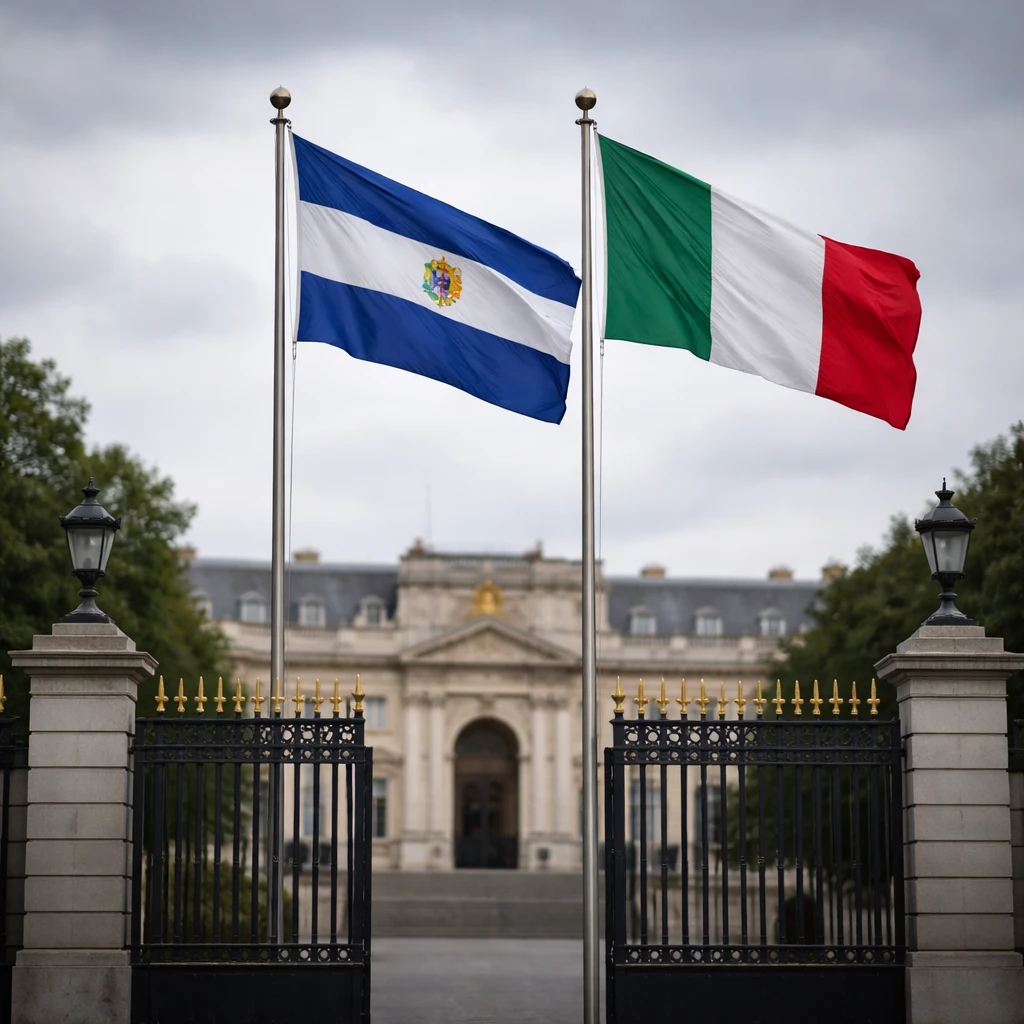
July 16 - Nicaragua has officially broken off diplomatic relations with Italy, the Central American country's foreign ministry said on Thursday, citing comments from Italy's foreign minister about a high-profile 1978 murder case.
The ministry said the rupture was prompted by remarks from Italian Foreign Minister Antonio Tajani, who criticized Nicaragua for providing citizenship to Alessio Casimirri. Casimirri is a former member of the far-left Red Brigades and was convicted in connection with the 1978 assassination of Aldo Moro, a former prime minister of Italy.
Tajani publicly questioned Nicaragua's move to grant Casimirri citizenship and pressed for his extradition. Italy's foreign ministry, when asked to comment, reiterated Tajani's demand that Casimirri be returned to Italy to face the consequences of his conviction. Tajani has been quoted as saying: "We tell Nicaragua that granting immunity to a criminal is unacceptable."
The case at the center of the dispute dates to March 1978, when Moro, who led Italy's Christian Democrats and had served as prime minister, was kidnapped by the Red Brigades. The group sought the release of imprisoned members in exchange for Moro's freedom. Approximately two months after his abduction, Moro's body was discovered in the trunk of a car.
The Nicaraguan foreign ministry framed its decision to sever ties as a response to Tajani's criticism of its citizenship decision. Italy, through its foreign ministry, reiterated its call for extradition and described the granting of immunity to a convicted individual as unacceptable, underscoring the diplomatic clash between the two governments.
Beyond the immediate statements from both sides, the move represents a concrete diplomatic response by Nicaragua to public reproach from an Italian government minister. The available information does not detail further steps by either government beyond the break in diplomatic relations and Italy's renewed call for extradition.
Background of the case
The articles of record indicate that the kidnapping of Aldo Moro by the Red Brigades occurred in March 1978, and that demands for the release of imprisoned members of the group were central to the abduction. Moro was later found dead in the trunk of a car about two months after his kidnapping, an outcome central to Casimirri's conviction.
Official positions
Nicaragua's foreign ministry said the decision to cut relations was triggered by Tajani's comments. Italy's foreign ministry, when prompted for a response, emphasized Tajani's call for Casimirri's extradition and reiterated the position that granting immunity to a convicted criminal was unacceptable.
Information currently available is limited to the statements and positions described above and does not specify additional diplomatic measures, timelines for any legal actions, or further developments that may follow.