
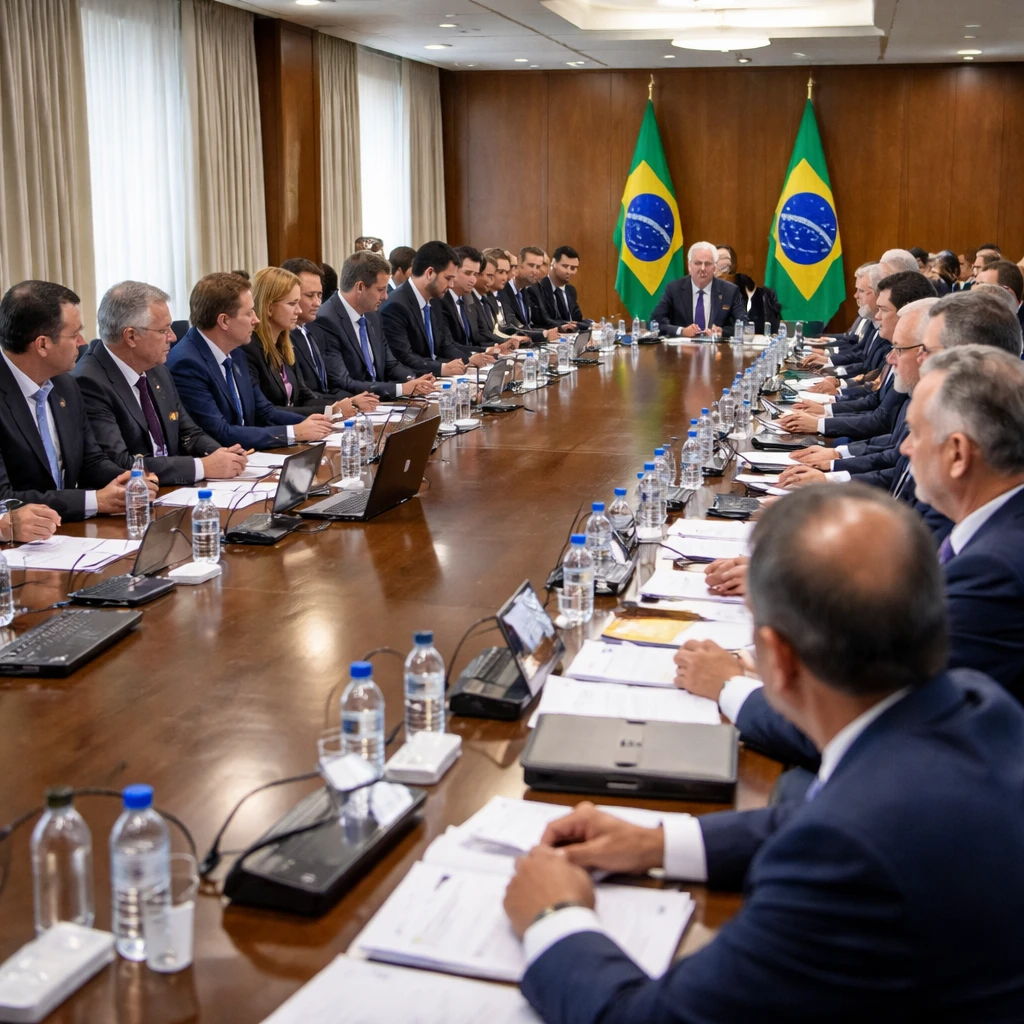
Brazilian President Luiz Inácio Lula da Silva's government gathered top ministers and senior staff at the presidential palace to map out a response to Washington's newly announced tariffs, three people who attended the meetings said. Those participants described a package of measures under review that would align with Brazil's reciprocity law, which the president pledged to invoke after the United States imposed a 25% tariff on a range of Brazilian products.
Officials at the sessions discussed a range of options, many of them non-tariff in nature, that could target the audiovisual sector and intellectual property protections for pharmaceuticals and agricultural seeds. One of the meeting attendees said that the precise course will depend on presidential instructions, but added that it is "highly unlikely there won't be a tough response."
Sources briefed on the deliberations said Brasília plans to revisit countermeasures that were examined last year under the reciprocity law. Those measures include restrictions on dividend and royalty remittances by U.S. audiovisual companies operating in Brazil. The government is also contemplating suspending patent protections for certain pharmaceutical products and for agricultural seeds as part of its toolkit.
Officials indicated they favor these kinds of non-tariff measures over imposing tariffs on U.S. imports. The rationale cited is that targeted measures are less prone to disrupt Brazilian supply chains or to stoke domestic inflation, risks that can arise when import tariffs are raised.
U.S. officials have warned that Washington would "review its actions" if Brazil were to retaliate. That warning has heightened concern among Brazilian exporters, some of whom have already begun diversifying away from the U.S. market. Reported trade data show shipments to the United States fell 13% in the first half of the year, even as Brazil's total exports increased by 5.1% over the same period.
In parallel with the domestic policy deliberations, Brazil will renew the World Trade Organization dispute it launched last year concerning customs duties for electronic transmissions, a person familiar with the matter said. Reviving that WTO case is intended to accelerate the establishment of a dispute settlement panel. Should the WTO rule in Brazil's favor, officials say it would bolster the legal justification for any retaliatory measures taken under international trade rules.
The meetings in the presidential palace brought together senior policymakers to calibrate options that would be legally defensible under Brazil's reciprocity framework while aiming to limit collateral effects on local markets. How the government ultimately acts will hinge on directives from the president and on the evolution of diplomatic exchanges with the United States.