
Overview
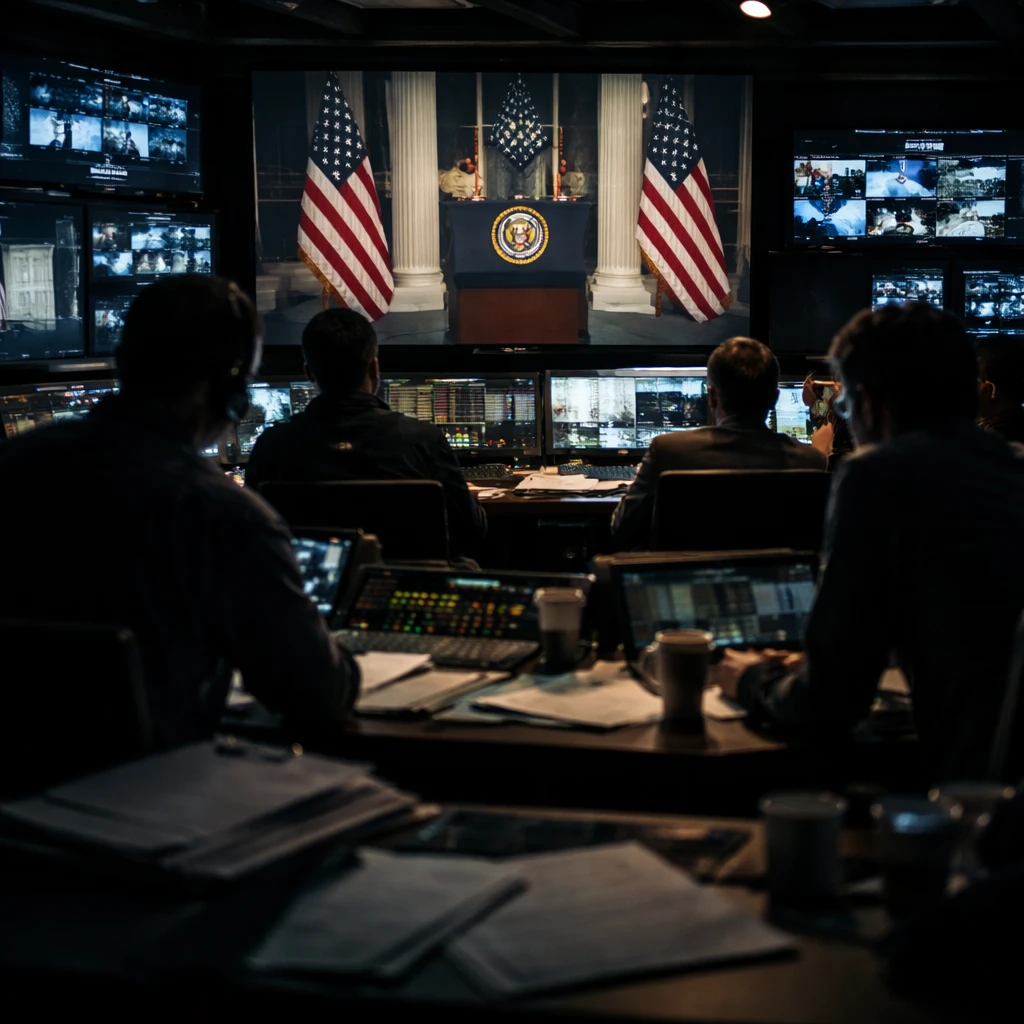
Major U.S. television networks are assessing whether to air a Thursday primetime speech by President Donald Trump that is expected to center on election security, roughly four months before the midterm elections. Historically, networks have often televised such addresses on the basis that they serve the public interest. The current decision comes amid reports that the White House may use the address to present sensitive intelligence related to China's alleged intention or capacity to interfere in the 2024 U.S. election.
Content concerns and political reaction
The potential use of classified or sensitive intelligence in a high-profile presidential address has prompted internal concern within the administration about the accuracy and presentation of the material. Meanwhile, some Democrats, including Representative Alexandria Ocasio-Cortez, have publicly urged broadcasters not to air the speech, warning that it may contain repeated assertions that have been previously debunked.
President Trump has, over several years, cast doubt on electoral outcomes. He has stated that his 2020 loss to Democrat Joe Biden was the result of rigging, and has made claims without evidence regarding widespread fraud in mail-in voting, vulnerabilities in voting machines, and extensive non-citizen voting. Those assertions are part of the broader context in which networks must judge whether to provide a live platform.
Industry responses and silence
Spokespeople for the three principal broadcast networks - ABC, CBS and NBC - did not provide comment when asked whether they would carry the address live. Cable outlets CNN and Fox News also did not respond to requests for comment. The lack of public statements underscores the sensitivity of the choice: refusing to air the address could provoke the administration at a time when relations between the White House and major broadcasters are already strained.
Regulatory and corporate pressures
Broadcast groups have recently faced unusual regulatory scrutiny and internal turmoil that complicate the decision. Walt Disney-owned ABC is managing two pending Federal Communications Commission inquiries, one of which examines whether the daytime program "The View" violated equal-time rules by interviewing a Democratic Senate candidate in Texas. The company is navigating those inquiries even as it confronts broader political scrutiny.
President Trump has repeatedly criticized NBC and its parent, Comcast, using pejorative labels and, in one notable instance, walking out of an interview after accusing the network of biased coverage. Comcast recently announced plans to split into two publicly traded companies by spinning off NBCUniversal and Sky, a transaction that analysts have said could make NBCUniversal an acquisition target.
At CBS, the takeover of Paramount by David Ellison - whose father Larry Ellison is politically allied with the president - has unsettled newsrooms and coincided with the departure of senior staff from the news magazine "60 Minutes." Some employees have alleged political interference in editorial decisions, which the network has denied. David Ellison is awaiting Federal Communications Commission approval for Paramount’s proposed acquisition of Warner Bros. Discovery, a deal that could place CNN under his control. The U.S. Justice Department's Antitrust Division provided approval to that transaction last month.
Fox News and prior litigation
Fox News, a conservative-leaning cable outlet owned by Rupert Murdoch, has generally carried President Trump's speeches in the past but may approach this address with caution. In 2023, the network settled a defamation lawsuit for $787 million related to its coverage of false claims about the 2020 election, a legal and financial outcome that factors into editorial calculations.
What is at stake
Networks face a decision that intersects editorial judgment, regulatory exposure and corporate strategy. The choice to broadcast or withhold the speech involves weighing the public's interest in direct communication from the president against the risk of amplifying potentially misleading claims and inflaming already tense relations with the administration.
Note on limitations
If further details about the speech content, network decisions or regulatory outcomes become available, they will provide additional context for how broadcasters balance public-interest obligations, newsroom independence and corporate considerations.