
FIFA’s recent push to broaden the remit of technology in officiating has not quelled disputes over match decisions at the World Cup. Instead, the tournament has repeatedly placed video review and ball-sensor data at the center of contentious rulings, prompting criticism from coaches, former players and national federations.
Questions about the reach, consistency and fairness of technology-driven decisions have surfaced across multiple high-profile matches. The controversy has encompassed everything from VAR overturns to red cards issued after review, and even prompted intervention attempts by political figures in response to disciplinary rulings.
Disallowed goals, unchecked appeals and a growing tide of criticism
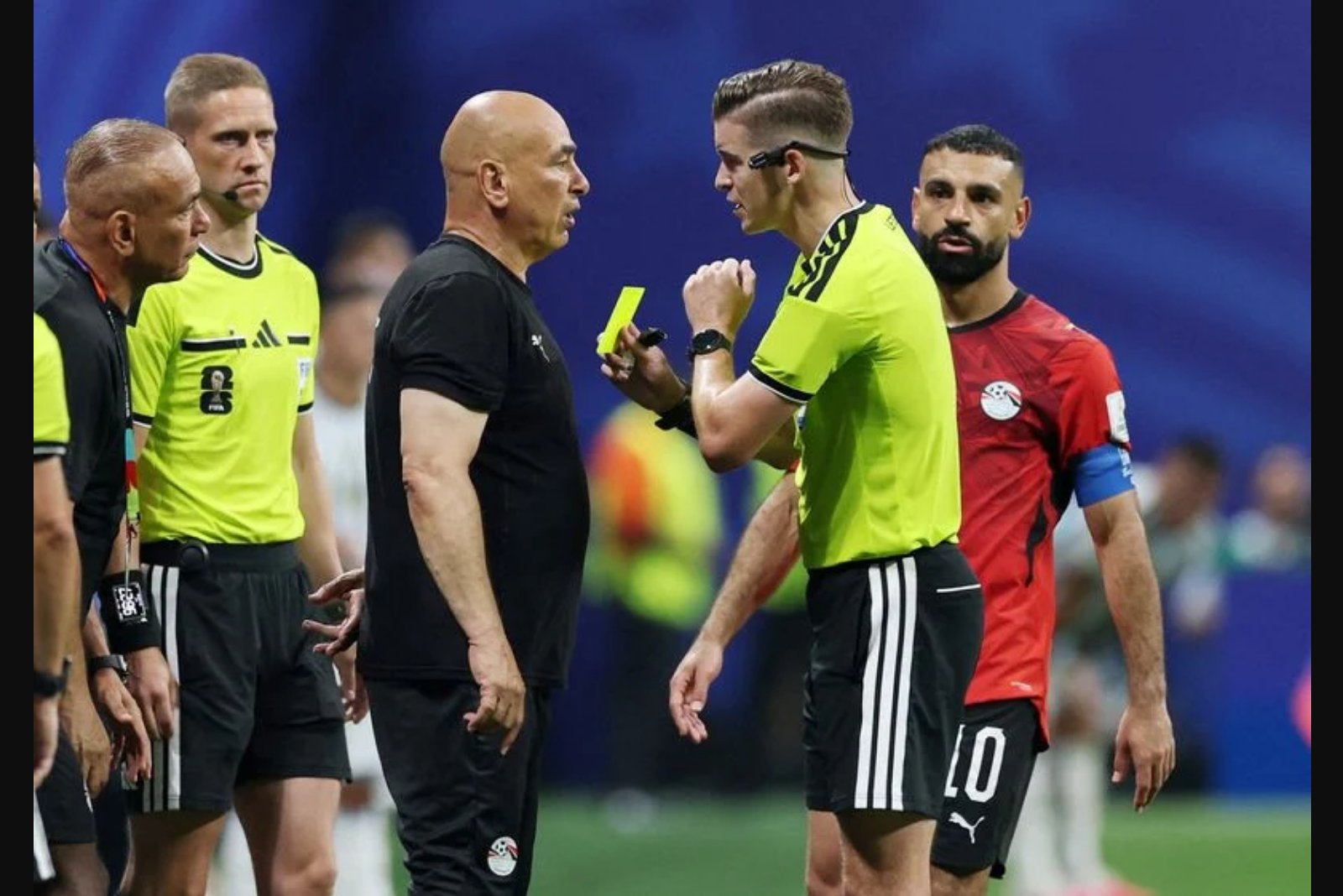
Egypt’s exit in the last 16 against Argentina crystallized many of the complaints aimed at technology. Coach Hossam Hassan publicly denounced the officiating after his side had a goal struck from the record by VAR for a foul that occurred at the opposite end of the pitch, while a separate penalty appeal went unacted upon. "What’s happening isn’t fair," Hassan said following the 3-2 defeat.
In defense of the ruling to annul Egypt’s goal, FIFA referees’ chief Pierluigi Collina told media that he was satisfied with how the tournament’s refereeing was operating and specifically supported the VAR decision. He wrote that "There is no defined limit regarding either the distance from goal or the amount of time between the incident and the goal." Collina added: "We believe that a foul is a foul. Regardless of whether the foul appears ’obvious’, if the referee did not see it on the field of play, the VAR can intervene."
VAR’s stated purpose and rapid expansion
The Video Assistant Referee was introduced to address clear and obvious errors on the field - instances similar to the famous 1986 handball that VAR’s proponents often cite as illustrative of the type of mistake the system was meant to prevent. While FIFA’s previous leadership resisted VAR, the system was adopted more broadly under new leadership beginning in 2016.
Usage of VAR interventions at past tournaments numbered in the tens: there were 20 interventions across 64 matches at the 2018 World Cup and fewer than 30 in 64 matches at the 2022 tournament. Those totals were quickly eclipsed at the opening stages of this World Cup, which will feature a total of 104 matches after an expanded tournament format.
The increase in reviews has been intentional. Collina’s approach for this World Cup included a strengthened role for an expanded team of match officials operating from the television booth, and in coordination with the International Football Association Board - the custodians of the Laws of the Game - four additional categories of incidents were added to the list of situations in which VAR may intervene.
Academic analysis and fan reaction
Not all commentators see an inevitable slide toward complete technological adjudication, but researchers monitoring the competition say fans are increasingly demonstrative in their displeasure. Brennan Klein, a network scientist whose team at Northeastern University has been analyzing World Cup data, said that while an omnipresent array of cameras and artificial intelligence could theoretically adjudicate matches in real time, widespread fan resistance makes that outcome unlikely.
"This kind of dystopian future of over-refereeing everything kind of fails to address what it’s originally designed to intervene on," Klein told reporters. He added that stadium spectators have largely rejected the expanded approach and are expressing that displeasure audibly. "I think fans seem to be voting with their boos."
High-profile incidents spotlight new technology
Several individual episodes have crystallized the debate. In the round-of-32 match between Croatia and Portugal, a late equalizer by Josko Gvardiol in the 13th minute of stoppage time was ruled out after VAR review determined the ball had grazed teammate Igor Matanovic prior to reaching Gvardiol, placing Matanovic in an offside position.
The contact was not apparent to the naked eye and the ball did not visibly alter its trajectory. FIFA noted on social media that an embedded sensor in the ball registered the contact, possibly from Matanovic’s hair, and stated that "(The sensor) is capable of determining any slight contact ... allowing officials an unprecedented level of data to make fast, accurate decisions."
Croatia midfielder Luka Modric, whose World Cup career concluded with the 2-1 defeat, questioned the consistency of the system’s application. "For some things it’s useful, but it’s either being used incorrectly or selectively, depending on the size of the team or whatever else," Modric said. "If it’s a 200% mistake, then you intervene. If it’s not, if it’s in a grey area, then there’s no reason to get involved."
The Croatian football federation (HNS), which supports VAR in principle, wrote to FIFA requesting an explanation of the decision and described the call as "an abuse of technology."
Disciplinary outcomes and red card totals
Data compiled during the tournament show a notable rise in red cards compared with recent World Cups. Through the end of the round of 16 there had been 13 red cards issued in 94 games - more than triple the rate recorded at the 2018 and 2022 tournaments, which each comprised 64 matches. Tournament analysts attribute at least two of those red cards - to U.S. forward Folarin Balogun and England defender Jarell Quansah - to fouls missed by referees in real time and later sanctioned after VAR review.
The Balogun red card drew public attention beyond sport when U.S. President Donald Trump criticized the decision and later said he had contacted FIFA President Gianni Infantino to appeal for the one-match suspension to be overturned. Infantino later stated that he had not been responsible for any reversal, indicating he ultimately had no direct role in the outcome.
England also faced VAR-driven controversy in the knockout stages. Quansah’s sending off and a VAR-awarded penalty against captain Harry Kane were both significant moments in England’s round-of-16 match, though England ultimately progressed. After England’s dramatic 3-2 win over Mexico, manager Thomas Tuchel expressed anger at the use of review in the penalty case. "VAR overturns (but) is this a clear and obvious error for the penalty? For sure not," Tuchel said. "They overturned a situation where (the referee) doesn’t even give a foul. Referees just not good enough, fourth officials just not good enough."
Where things stand
FIFA officials have defended the expanded use of VAR and ball-embedded sensors as tools that provide match officials with additional data to correct errors missed in real time. Collina has emphasized that there is no strict limit on the time or distance that can separate an infringement from a goal-scoring incident when determining whether VAR should intervene.
Critics, however, argue the broader application has led to selective or inconsistent interventions and, in some cases, outcomes that fans and federations view as unjust. As the tournament progresses, tensions over the boundaries of technology-aided refereeing remain unresolved, leaving supporters, teams and governing bodies to debate how far review systems should reach in altering on-field decisions.
Summary
FIFA’s enlargement of VAR’s remit and the use of ball-embedded sensors at the World Cup have coincided with a surge in controversial decisions. High-profile incidents - including disallowed goals based on sensor data, increased red card totals, and disputed penalty calls - have produced public criticism from coaches, players and federations. FIFA officiating leadership defends the approach, noting that VAR may intervene even when incidents occur far from the goal or a significant time before a score.