
Overview
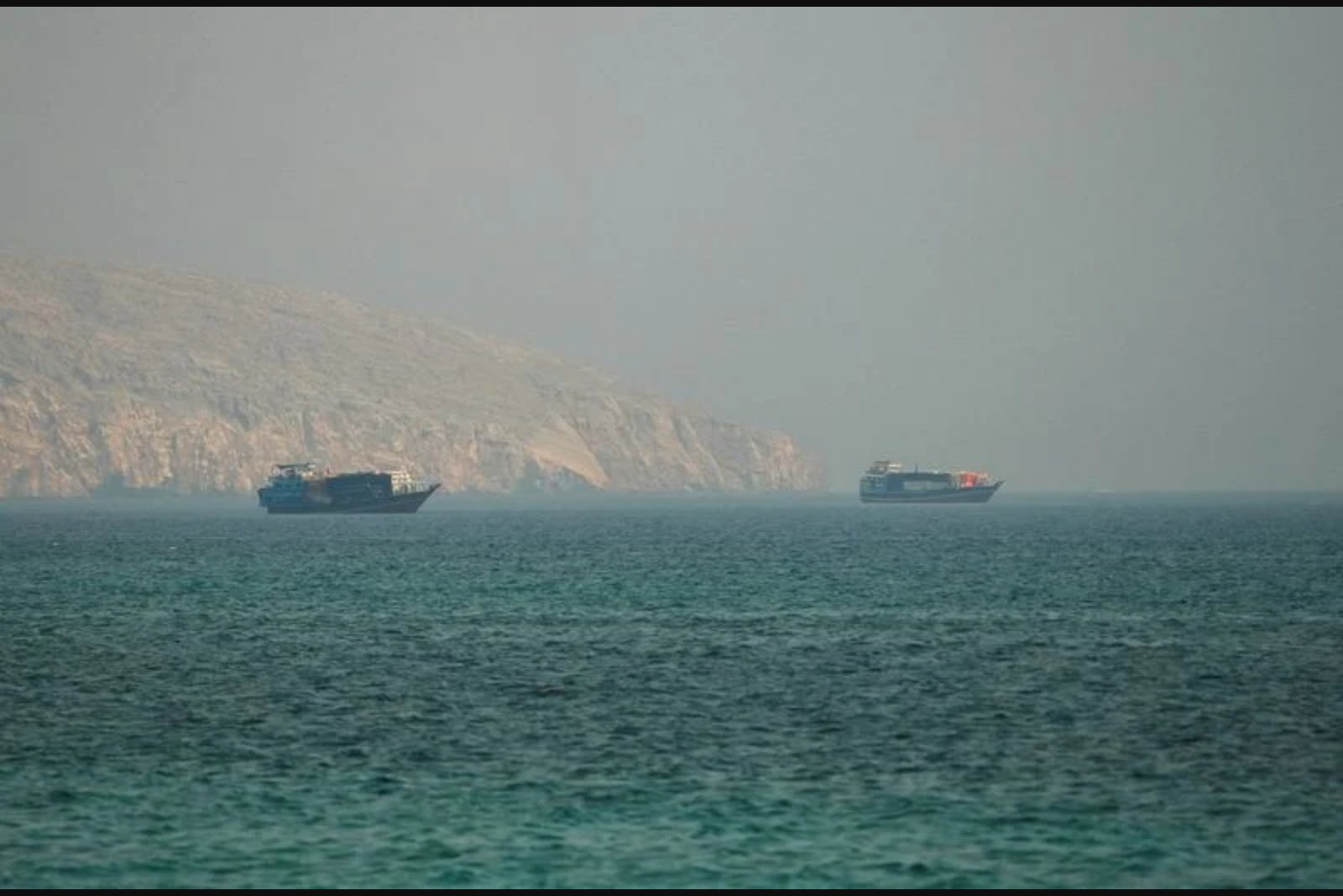
The narrow passage through which a large share of global seaborne oil moves returned to the front pages this week after a new round of tit-for-tat strikes between the United States and Iran. The exchanges began with a U.S. wave of strikes on Iranian targets on Tuesday, which coincided with the revocation of sanctions waivers on Iranian oil following repeated attacks on shipping in the Strait of Hormuz. Tehran answered by striking U.S. bases in the region, and both sides traded further blows on Wednesday and Thursday. Despite President Donald Trump's initial comment at the NATO summit in Ankara that the memorandum of understanding to end the conflict was "over," he later said he did not expect a return to full-scale war.
Markets have so far shown only measured moves in response to the escalation. That restrained reaction suggests investors may expect a return to negotiations rather than an all-out conflict. Still, the renewed violence highlights how emboldened Iran appears during the 60-day negotiating period that followed last month's interim ceasefire deal, and it underscores Tehran's interest in exerting control over the strait.
Oil market and shipping dynamics
Oil prices surged to a multi-week peak on Wednesday before easing the following day. Brent crude remains below the $80 per barrel mark for now, with the last settlement above that level recorded on June 19. Price moves have reflected traders' attempts to weigh a range of geopolitical and logistical variables that will determine the supply-demand balance in the near term.
On the logistical side, tanker traffic through the Strait of Hormuz was again at a near standstill on Thursday, constraining flows from Gulf producers. That disruption compounds a recent policy decision by OPEC+ to increase production quotas by 188,000 barrels per day. The key unresolved issues for market participants are how much of that incremental output will actually emerge from the Gulf and who will be in a position to purchase it if it does.
Market participants face two contrasting scenarios. If shipping through Hormuz remains constrained, the near-term supply outlook is tighter and price volatility may persist. Conversely, if traffic recovers, an increase in Gulf exports combined with the OPEC+ quota rise could produce a surplus as Gulf producers compete for market share. Several indicators point to demand not being as robust as hoped in the short run; producers, including Saudi Arabia, have already been offering notable price discounts in response. Those dynamics raise the prospect that OPEC+ may find itself disadvantaged in a price-competitive environment.
Geopolitical developments beyond the Gulf
The NATO summit in Ankara this week was initially dominated by strong comments from President Trump about Iran and a pledge to cut off trade with Spain. A separate and consequential development at the summit came during his meeting with Ukrainian President Volodymyr Zelenskiy: a pledge to grant Kyiv a license to produce Patriot missile interceptors. That move represents a material gain for Ukraine in terms of defensive capabilities.
Meanwhile, Ukraine has continued to target Russian energy infrastructure with drone strikes, a tactic described in this reporting as striking at what has been termed the Kremlin's Achilles' heel. Russia responded by announcing a ban on diesel exports on Wednesday, a step that could have significant implications for the global diesel market. Global diesel inventories have limited buffers after disruptions related to the war in the Middle East, and a Russian export ban could therefore represent a large shock to diesel supply.
The recent volatility in crude markets complicates the work of policymakers assessing the inflation outlook. Energy price swings are contributing to uncertainty, but they are not the only factor in price dynamics.
Macro signals: inflation, rates and bond markets
The Federal Reserve's minutes from its June meeting, released on Wednesday, noted that "a few participants" saw circumstances that might justify immediate rate hikes. Several participants also observed that price pressures were becoming "more broad-based," a phrasing that suggests energy is not the sole driver of inflation risk.
Global bond markets reflected rising concern about price pressure this week, with a notable spike in yields. Japan's benchmark 10-year government bond yield reached a 30-year high on Thursday before moving lower and the yen strengthening on Friday. That reversal followed comments from Japan's finance minister that the government intends to steer the country's large state pension funds to "substantially" lift investments in domestic assets.
Equities and the semiconductor narrative
Equity markets were heavily focused on semiconductor stocks this week, which have been volatile after an exceptional run earlier in the year. Samsung Electronics' shares fell even as the company reported a 19-fold jump in second-quarter operating profit on Tuesday. South Korea's chip-heavy KOSPI index entered bear market territory on Wednesday, though it recovered by Friday as chip names rallied; the index remains more than 70% higher year to date.
Investor appetite for semiconductors persists in some corners: SK Hynix's $26.5 billion U.S. share sale was reported as heavily oversubscribed, and the company is set to make its Nasdaq debut. Whether the week represented a reassessment of the AI investment narrative, a rotation after a strong quarter, or a mixture of both remains an open question for traders and portfolio managers.
Looking ahead
The coming week is expected to deliver fresh economic data and the formal start of the U.S. corporate earnings season. U.S. consumer price inflation for June is scheduled for release on Tuesday, and major banks including JPMorgan, Bank of America, Goldman Sachs, Wells Fargo and Citigroup are due to begin reporting results in earnest. Markets will be watching whether geopolitics or economic data takes center stage in the near term.
Conclusion
The latest spike in U.S.-Iran hostilities has put the Strait of Hormuz back into the spotlight, with immediate effects on tanker traffic and short-term oil price moves. At the same time, macro signals from central bank minutes and bond markets, together with turbulence in semiconductor equities, are reinforcing a complex risk landscape. Traders and policymakers alike face uncertainty about how much Gulf oil can reach global markets, how demand will evolve, and whether episodic violence in the Gulf will become a recurring feature - with significant implications for energy producers and broader market stability.