
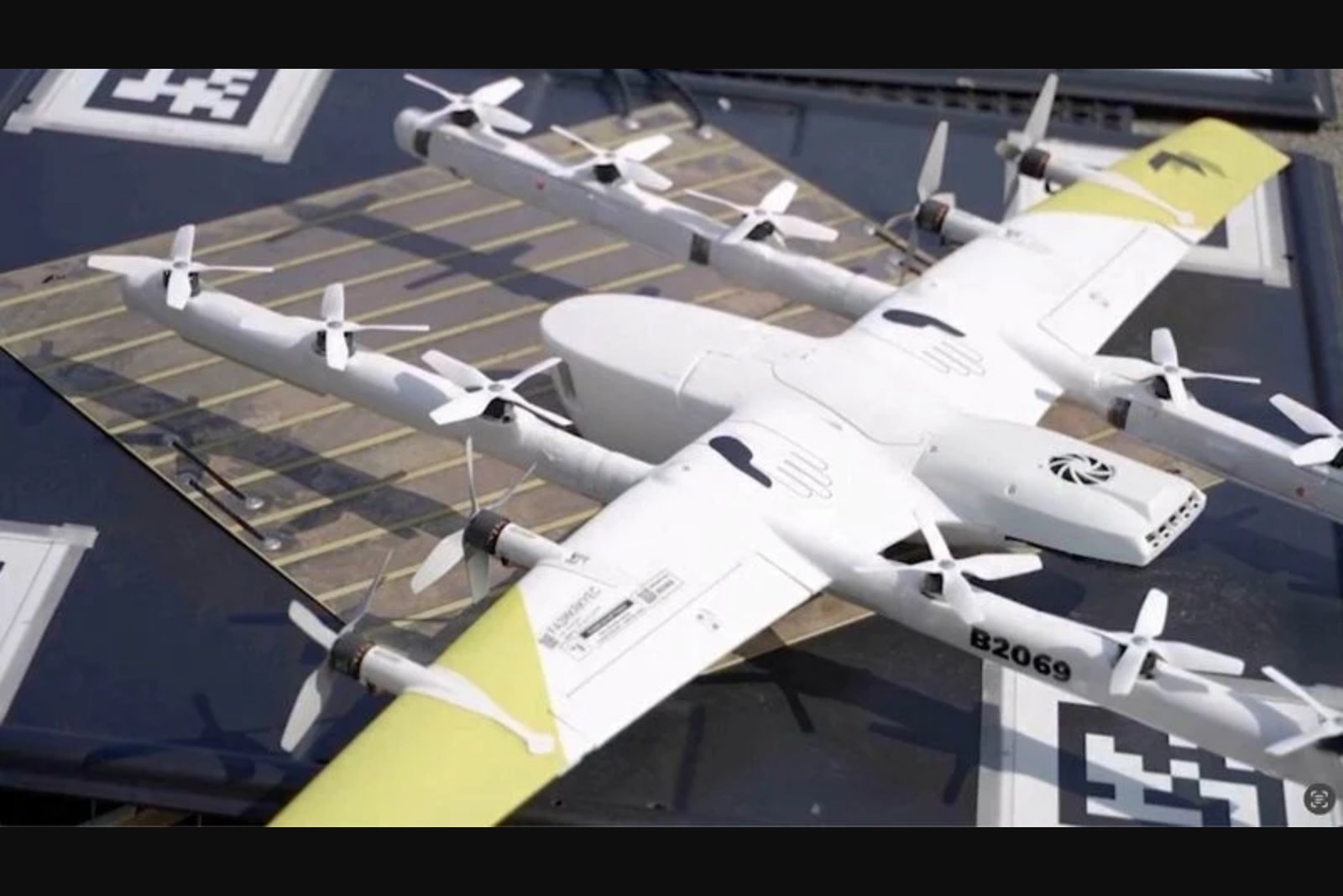
Summary: The Federal Aviation Administration's proposed rule changes to permit certified drone operators to fly beyond the visual line of sight would shorten a lengthy waiver process and could trigger rapid expansion of drone delivery across U.S. suburbs and cities. Retailers such as Walmart and Amazon, restaurant partners and dedicated drone firms are already expanding networks under waivers; broader certification could convert pilot projects that were previously unprofitable into scalable businesses.
Background and recent developments
Engineer Beth Flippo relocated her family from New Jersey to Ohio in 2021 to lead a Kroger pilot that used drones for grocery delivery. The program ran for eight months before Kroger and Flippo's company, Dexa, suspended operations. Flippo said profitability could not be achieved under the regulatory environment at that time: "We couldn’t make any money," she said, noting that U.S. regulations required drones to remain within human sight, which forced operators to position staff across a service area and constrained scale. "It just couldn’t scale," she added.
Dexa later obtained an FAA waiver to operate outside the visual line of sight, but Flippo said that process required four years. She also confirmed that Dexa is in active discussions with Kroger about restarting the program; a Kroger spokeswoman declined to confirm those talks.
Policy momentum is building. An executive order issued by the presidential administration in June 2025 prompted the FAA to propose new rules intended to accelerate drone deployment. The rules, if finalized, would allow certified operators to fly beyond visual line of sight without the lengthy waiver process that has been the norm. U.S. Transportation Secretary Sean Duffy has framed the effort in geopolitical terms, saying America should lead the technology - not China.
Commercial traction and industry players
Major retailers and e-commerce platforms have been among the earliest commercial adopters. Walmart has run drone deliveries and partnered with multiple drone service providers, including Zipline, and Wing - Alphabet's drone division - lists Walmart as its biggest client. Wing's chief business officer, Heather Rivera, who was hired less than a year ago to build commercial relationships with retailers and restaurants, described the market as approaching a commercial inflection point.
Amazon launched its drone program in 2022 and this week opened its 10th U.S. drone delivery network in Baton Rouge, Louisiana. Amazon says its drones complete deliveries in under 30 minutes. Papa John’s, Wonder and DoorDash are among food-industry participants that have tested drone delivery in partnership with drone operators that have secured waivers.
Operators and retailers emphasize use cases that fit current technology constraints: urgent, convenience-driven items such as allergy medication, pet food and forgotten condiments. At Walmart, shoppers are informed at the start of checkout whether items are drone-eligible; the app monitors cart contents to ensure weight limits are not exceeded. Payload capacities remain modest by logistics standards: Walmart reports drone payloads typically range from about 3 to 8 pounds depending on the aircraft.
Walmart says it is "inching toward 2 million" drone deliveries, with most of that lift occurring in the current year as the program scaled. Drones are operating out of about 70 Walmart stores in the U.S., a small share of the roughly 4,600 locations nationwide; Walmart aims to exceed 270 drone-enabled stores by the end of the next year, according to the company's fulfillment leadership. Amazon and Walmart declined to discuss per-delivery costs; PwC research cited in industry reports estimates per-delivery costs could fall as low as $2 by 2034.
Market forecasts and growth potential
Researchers at PwC forecast in 2024 that the U.S. drone market will grow at 65% annually through 2034. Globally, PwC projects drone deliveries will expand from about 13 million this year to more than 800 million by 2034. While current market size is relatively small - a few billion dollars globally under a range of estimates - the projection suggests rapid scaling if regulatory and operational constraints ease.
Industry executives see suburbs as the most attractive near-term opportunity because of spacious yards, higher road congestion and density that favors quick aerial delivery. Proponents highlight speed advantages: Walmart reports sub-five-minute drone deliveries in specific cases and argues drones are generally faster than ground-based options for short-range, time-sensitive orders. Flytrex, a Tel Aviv-based operator, has emphasized partnerships with restaurant chains such as Little Caesars to tap these quick-turn opportunities.
Labor and cost dynamics
The removal of the line-of-sight restriction would alter labor economics for drone operators. Without that constraint, monitoring becomes a remote operation: Flippo said one controller earning about $25 an hour can supervise 40 drones on a screen simultaneously, which she calculated would equate to roughly 160 deliveries an hour. That staffing model would represent a small fraction of the labor required for an equivalent number of traditional ground deliveries.
Amazon's global head of drone expansion, Matt McCardle, defended continued investment despite lingering questions about economics: "But if it wasn’t competitive, we wouldn’t be continuing to invest in the technology," he said. Smaller operators such as Dexa have formed niche partnerships with companies like Wonder for food deliveries, but Flippo acknowledged that competing with large players such as Alphabet can feel like "fighting Goliath."
Technology progress and testing
Testing by major retailers and partners is improving hardware, battery life, range and reliability in the field. Marios Savvides, a professor at Carnegie Mellon University’s College of Engineering, said the technology matures through operational cycles rather than purely laboratory work. Executives from drone makers argue that certification would unlock exponential growth: Andreas Raptopoulous, CEO of Matternet, said the FAA proposal could catalyze "massive, exponential growth of the space over the next few years."
International context
Competition from China is a recurring theme in U.S. policy discussions. Chinese analysts and institutions have forecast significant growth for the country's "low altitude economy" - aerial commerce below 3,000 meters - with figures cited that anticipate expansion to more than 2 trillion yuan by 2030 from 1.5 trillion yuan in 2025. Drone delivery activity in Chinese cities such as Shenzhen and Guangzhou has been reported, and JD Logistics has said its drones can reduce shipping times for rural customers by up to 70% in tested regions.
Community concerns and constraints
Alongside operational and cost considerations, communities have lodged concerns about noise and privacy from increased drone traffic. Those social and regulatory frictions could influence where and how quickly expansion occurs, particularly in densely populated urban neighborhoods. Regulators and operators will need to balance commercial ambitions against public acceptance and local constraints.
Conclusion
The proposed FAA rule to allow certified beyond-visual-line-of-sight operations represents a potentially transformative change for U.S. drone delivery. It could compress a multi-year waiver process into a faster certification pathway, improving the business case for operators and retailers. Major retail and technology companies are actively scaling in current waiver regimes, while smaller firms refine niche partnerships. If finalized, the rules could open the door to rapid commercial growth, particularly in suburban last-mile use cases, even as payload limits, community concerns and intense competition—domestic and international—shape the pace and geography of adoption.