
Meta Platforms saw its stock climb 3.8% in pre-open trading after the company announced Muse Spark 1.1 on July 9, describing the release as an advancement in its AI capabilities focused on agentic applications and coding. The release comes three months after the company debuted its first model under Chief AI Officer Alexandr Wang, and Wang characterized Muse Spark 1.1 as the firm’s "strongest model for agentic and coding work yet."
Alongside the technical update, Meta introduced a commercial change: developers will be required to pay for access to Muse Spark 1.1. That step creates a direct revenue path from Meta’s AI work, addressing a longstanding investor demand that the company begin converting its AI investments into explicit monetization.
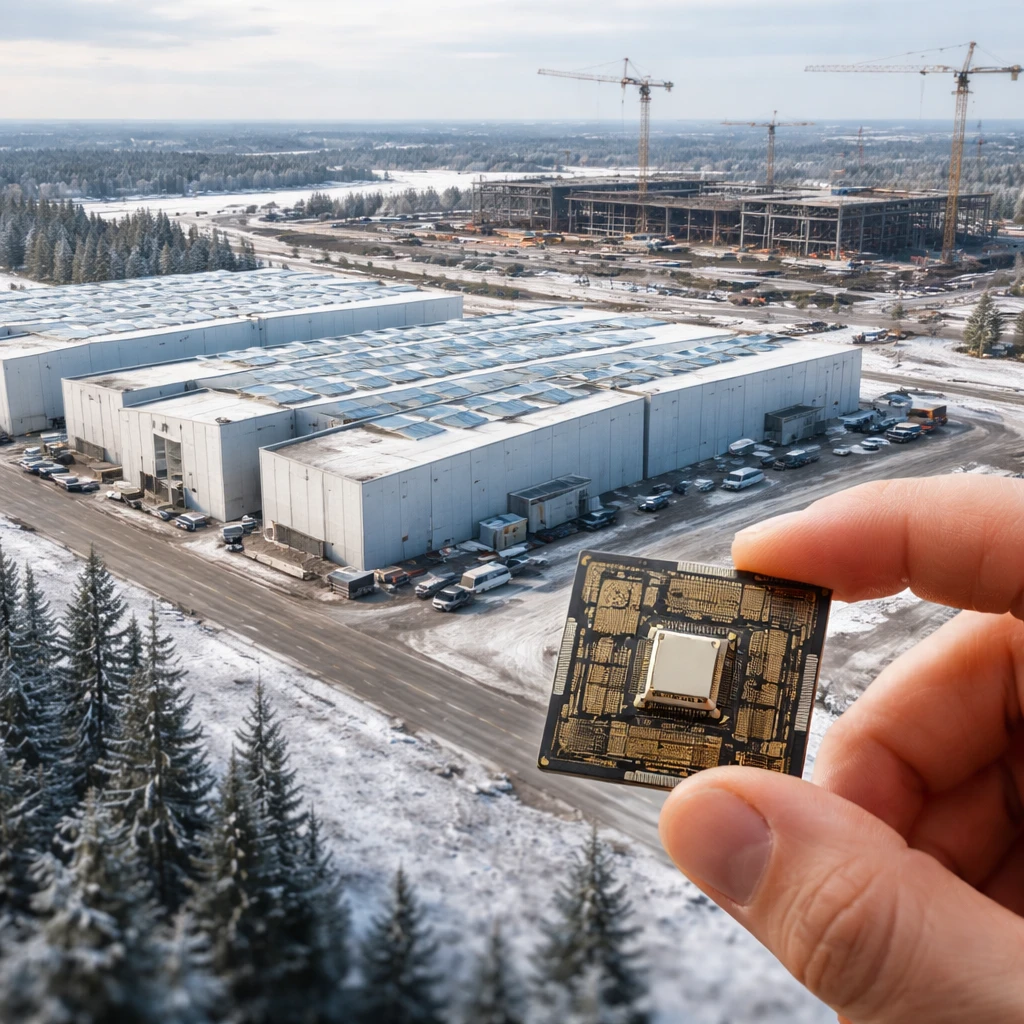
Investor enthusiasm was reinforced by concurrent progress on Meta’s AI hardware and data-center strategy. According to an internal memo reviewed by Reuters, Meta expects to begin manufacturing an AI chip codenamed "Iris" in September as part of its MTIA project. The memo said chip testing was completed in six weeks and revealed no major issues. Meta is collaborating with Broadcom on chip design and Taiwan Semiconductor Manufacturing Co for production, with the stated aim of reducing reliance on GPUs from Nvidia and AMD.
Meta also disclosed a substantial infrastructure commitment in Canada: a $9.1 billion investment to build its first AI data center in that country, sited in Sturgeon County, Alberta. The company described the facility as the largest data center outside the United States. Taken together, the new model release, chip program and data-center investment have helped ease investor concerns about the potential returns on Meta’s large capital expenditure initiatives tied to AI.
Not all news was favorable. The European Commission issued a preliminary finding that Meta breached the Digital Services Act by employing addictive design features on Instagram and Facebook, citing infinite scrolling, autoplay and highly personalized recommendation algorithms. That preliminary determination carries the prospect of a fine of up to c11 billion.
Geopolitical and deal-related complications also surfaced. Beijing ordered the reversal of Meta’s acquisition of Chinese AI startup Manus, and sources say Tencent is in talks to become the company’s largest shareholder by unwinding the deal at the same $2 billion valuation. These regulatory and geopolitical developments stand as counterweights to the AI-driven optimism among investors.
The broader market provided a constructive backdrop to Meta’s pre-market move. The Nasdaq rose 1.3% in the prior session to 26,206.89, led by strength in the chip sector, while the S&P 500 increased 0.8% to 7,543.64. Meta’s own share price is recovering from levels well below its 52-week high of $796.25.
Attention is shifting toward Meta’s second-quarter earnings report, scheduled for July 29. Wall Street consensus expects earnings per share of $7.18 and revenue of $60.22 billion, up from $47.52 billion a year earlier. That upcoming report will be a key test of whether the positive market reaction to the Muse Spark 1.1 launch and infrastructure milestones holds through to fundamental results.
Contextual note - The sequence of product launches, infrastructure announcements and monetization steps represents the clearest near-term evidence to date that Meta is attempting to convert its large AI outlays into commercial offerings and direct revenue. Investors have taken encouragement from the combination of a promising model upgrade, movement toward in-house chip production and a major new data-center commitment.
Implications for markets and sectors
- Technology sector - The moves touch AI software, cloud infrastructure and semiconductor supply chains, and contribute to chip-sector momentum in broader equity markets.
- Data-center and cloud services - The $9.1 billion Canadian data-center plan signals continued capital investment in AI-optimized facilities outside the United States.
- Corporate finance - Direct monetization of AI models through developer access establishes a new revenue vector that will be monitored by investors ahead of quarterly results.