
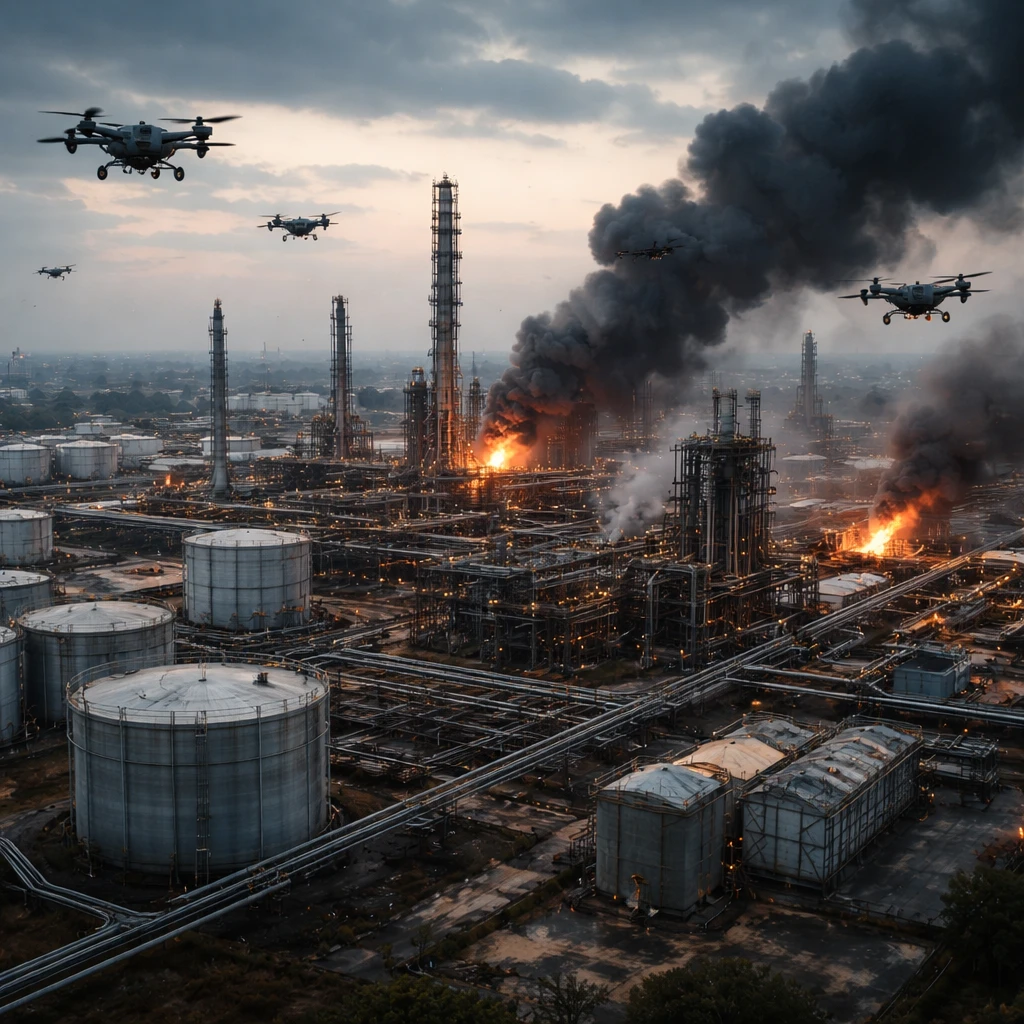
The International Energy Agency has revised down its outlook for Russian oil production, saying on Friday that escalating Ukrainian drone attacks on energy infrastructure have led it to project a 3% fall in output to 8.9 million barrels per day this year.
In its updated supply assessment, the Paris-based IEA trimmed its forecast for Russia by 85,000 bpd for the current year and by 150,000 bpd for the following year. Across the agency's forecast window, it now expects Russian production to average 8.8 million bpd.
The agency described a pattern of intensified Ukrainian strikes aimed at energy facilities inside Russia, naming targets such as oil refineries, storage terminals and transport links. Those attacks are intended to disrupt Moscow's war-related operations, according to the IEA's reporting on the incidents.
Under the revised outlook, Russian oil output is seen at 8.9 million bpd for this year and 8.8 million bpd in 2027, down from a previously noted level of 9.2 million bpd in 2025. Russia remains the world's third-largest oil producer.
The IEA linked the operational disruptions to a set of policy moves in Moscow. This week, Russia implemented a ban on diesel exports, adding to pre-existing restrictions on gasoline and jet fuel sales abroad. Those trade curbs are framed by Russian authorities as measures to alleviate domestic fuel shortages.
On production volumes, the IEA reported a month-on-month increase in crude output for June, saying Russian crude production rose by 120,000 bpd from May to reach 8.86 million bpd. The agency also noted that this June output sits some 900,000 bpd below the quota set by the OPEC+ grouping.
Separately, the IEA recorded that Russia's total crude oil exports in June were 5.8 million bpd, a rise of 620,000 bpd from May. By contrast, exports of oil products declined by 230,000 bpd from May to 1.91 million bpd in June.
On the broader state of production, Deputy Prime Minister Alexander Novak said last month that Russian oil output has fallen since the beginning of the year, attributing that reduction to unplanned refinery maintenance. The IEA also highlighted a transparency gap: Russia stopped publishing official oil output data in April 2023, more than a year after the onset of the war in Ukraine.
Context and implications
The IEA's downward revision reflects both direct disruptions from attacks on refining and storage capacity and secondary effects on trade flows, as reflected in changes to crude and product export volumes. For energy markets, these shifts influence supply balances and trade dynamics; for transport and refining sectors, the export curbs and maintenance-driven output declines alter feedstock availability and international deliveries.
The agency's numbers show divergent trends in June: crude exports rose while product exports contracted, underscoring a reorientation of flows as Russia confronts internal fuel pressures and external disruptions.