
Ukraine has created a new military formation focused solely on long-range operations aimed at targets inside Russia, the country's leadership said on Friday. The move is intended to intensify attacks on energy and logistics infrastructure to reduce Moscow's capacity to sustain its military effort.
In a nightly address, President Volodymyr Zelenskyy announced he had signed a decree to establish a special command within the Armed Forces. "Today, I signed a decree establishing a special command within the Armed Forces, a command aimed at a long-range and, in effect, global impact on Russia in response to this war," he said.
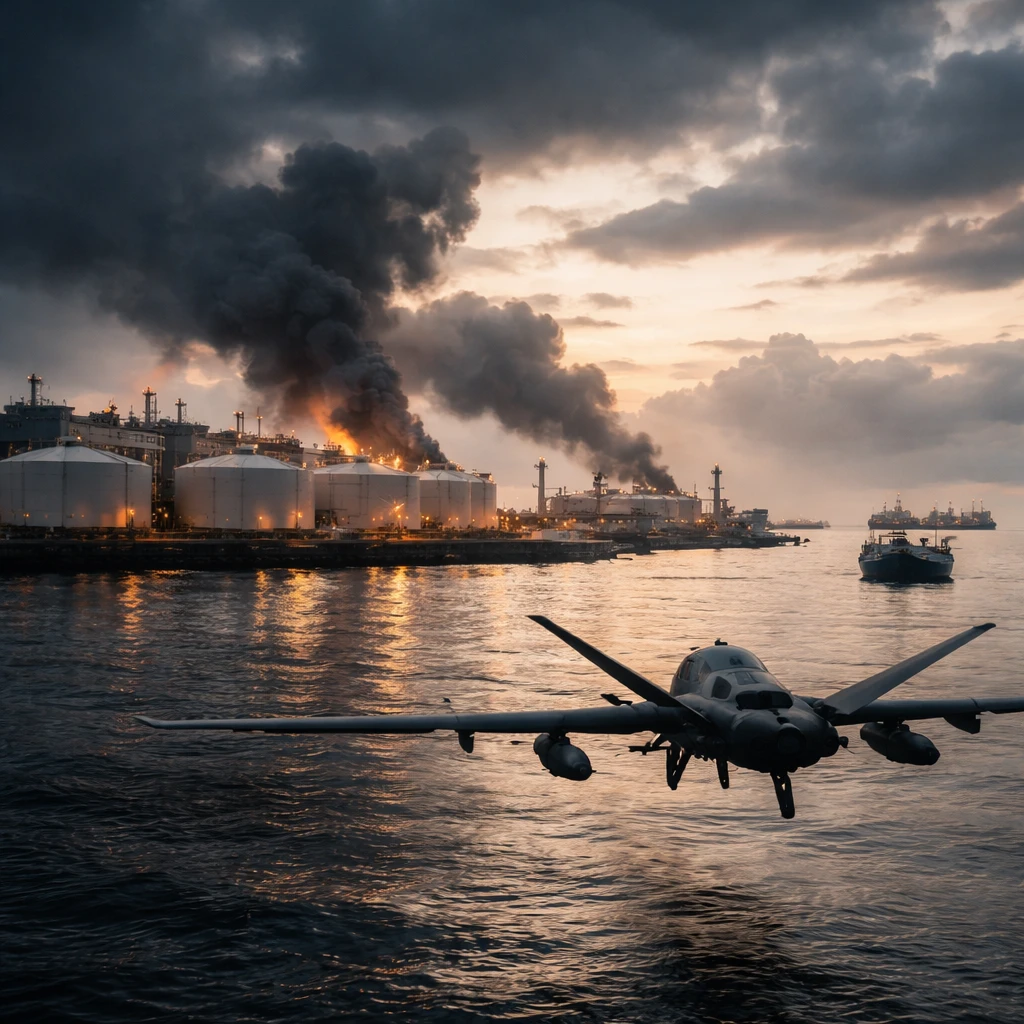
The new command will concentrate on broadening Ukraine's long-range campaign against installations and networks inside Russia. Kyiv has increasingly employed long-range drones to strike oil refineries, fuel depots and transportation infrastructure deep within Russian territory, framing these operations as economic pressure on one of the Kremlin's principal sources of wartime revenue.
According to statements from Ukraine's General Staff, forces struck the Ilsky oil refinery in Russia's Krasnodar region as well as the Ust-Luga refining complex in the Leningrad region on Friday. Ukrainian forces also reported hits on an oil terminal and a fuel depot in the Rostov region on the same day.
Those strikes have begun to have measurable effects on Russia's fuel sector. Moscow has imposed a ban on diesel exports this week to protect domestic supplies amid fuel shortages, with the situation particularly acute in occupied Crimea after repeated attacks disrupted refinery operations. Calculations based on industry sources show Russian gasoline production has fallen to about 65% of capacity as a result of the strikes.
Maritime operations have also been affected. Ukraine said it targeted 10 fuel tankers operating in the Sea of Azov on Friday, adding to reports that almost 50 vessels were damaged over the previous five days. Two grain industry sources said Russia had temporarily halted shipping through a channel that links the Don River to the Sea of Azov, a route that handles a significant share of the country's wheat exports.
Despite the escalation, military analysts caution that it is still too early to determine whether the long-range campaign will significantly alter the overall trajectory of the conflict. Ukraine remains subject to frequent Russian missile attacks and continues to face shortages of air-defence systems, factors that analysts say complicate Kyiv's ability to sustain a protracted strike campaign.
The new command marks a formalization of Kyiv's strategic emphasis on deep economic and logistical targets. How effectively it can translate intensified strikes into durable pressure on Russia's war-sustaining capacity will depend on operational tempo, available munitions, and the broader balance of air-defence and counterstrikes on both sides.