
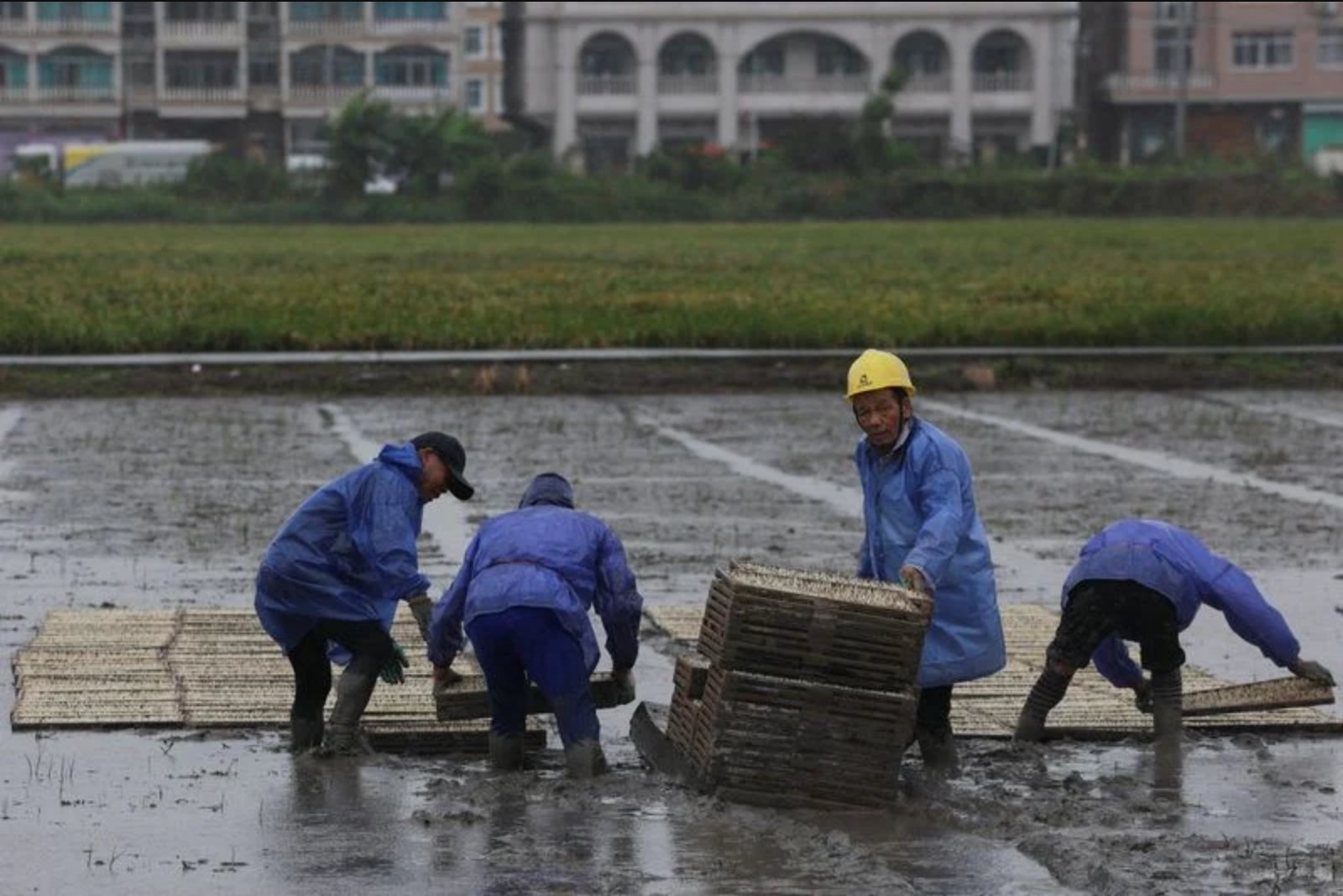
WENZHOU, China - Chinese authorities moved more than 1.8 million people away from vulnerable coastal and low-lying zones on Saturday as Typhoon Bavi moved northwest toward the eastern city of Wenzhou. The storm, which brought torrential rain and strong winds across parts of East Asia earlier in the weekend, held a substantial moisture field within its rain bands, described as spanning an area about the size of France from end to end.
According to the National Meteorological Center, Bavi had maximum sustained winds of 144 km per hour (90 mph) - the equivalent of a Category 1 storm on the Saffir-Simpson Hurricane Wind Scale - and was located roughly 200 km (124 miles) southeast of Wenling in Zhejiang province as of 0808 GMT. Forecasts from the same agency indicated the storm was likely to make landfall in the vicinity of Wenzhou, a municipality of roughly 10 million residents, early on Sunday.
Local media and government statements reported that more than 1.7 million people were evacuated within Zhejiang province, where Wenzhou is located, with an additional more than 100,000 people moved to safety in neighbouring Fujian province. The large-scale relocations formed part of precautionary measures as the system continued to slow and weaken while tracking over cooler seas, a change in the environment that can reduce wind intensity even as heavy rainfall remains a major hazard.
Regional impacts and precautions
Bavi had earlier battered Japan's southern Sakishima island chain with violent winds and heavy rain before brushing past the northern part of Taiwan. While Japan and Taiwan reported no fatalities directly attributed to the typhoon itself, the wider weather pattern associated with Bavi worsened an enhanced southwest monsoon over the Philippines, where authorities reported 17 deaths related to heavy rain.
Taiwan implemented wide-ranging precautions as the storm passed to its north. More than 14,000 people were evacuated, mainly from mountainous areas where forecasts called for close to 1 metre (3 feet) of rain in some locations. The island shut down for the approach: 920 international flights were cancelled, effectively closing Taiwan's principal international airport at Taoyuan outside Taipei, and all 282 domestic flights were also cancelled. Most cities and counties declared a typhoon holiday for Saturday, closing offices and schools that otherwise might have been open.
Transport services were also affected. The main north-south high-speed rail line remained in operation but at a reduced level of service. In downtown Taipei, blustery winds and rain kept many people indoors, though some remained out in the weather. In the Beitou neighbourhood on the northern foothills, gusts of around 100 kph caused trees to fall and led to swollen rivers.
Taiwan’s fire department reported 87 people injured, citing a pattern of incidents that included falls from motorcycles and bicycles, people slipping or being struck by objects.
Local reactions and preparations
Residents in eastern China described a mix of concern and steady preparation as the storm approached. In Wenzhou, market activity wound down as stalls closed ahead of the typhoon. "I’m a little worried, but I think it’ll be OK. We’ve been through typhoons before. We’ll get through it," said Huang Xinghuan, 50, who was purchasing groceries at a traditional wet market before it shut for the approaching storm. Huang said his household had stocked two to three days’ worth of water and that he believed supplies were currently secure, advising against panic and large-scale stockpiling.
"I think supplies are well guaranteed now. There’s no need to panic or stockpile a lot of food or other supplies," Huang said.
Other residents described practical preparations for elderly relatives and household items. Chen Qiuqin, in her 60s, walked through steady rain to her parents’ home to help secure their apartment and move balcony flowerpots indoors. "My parents are both elderly and they’re home alone, so I wasn’t at ease," she said, noting confidence in government preparations even as she took personal precautions.
In Taipei, some residents took a calmer view of conditions in the urban core. "It’s OK, it’s not that serious," said Yeh Mao-hsiung, 68, speaking while out for a morning walk with his dog. "It’s just a little bit more wind."
Outlook
While Bavi was forecast to weaken as it moved over cooler waters, its extensive rain bands and retained moisture present a continuing hazard for heavy rainfall, flooding and wind-related impacts as it nears the eastern China coast. Authorities across affected territories remained focused on moving people out of harm's way, cancelling flights and reducing transport services as part of an effort to limit loss of life and reduce risks from the storm’s rainfall and winds.
Reporting on-scene and agency meteorological updates formed the basis for this account.