
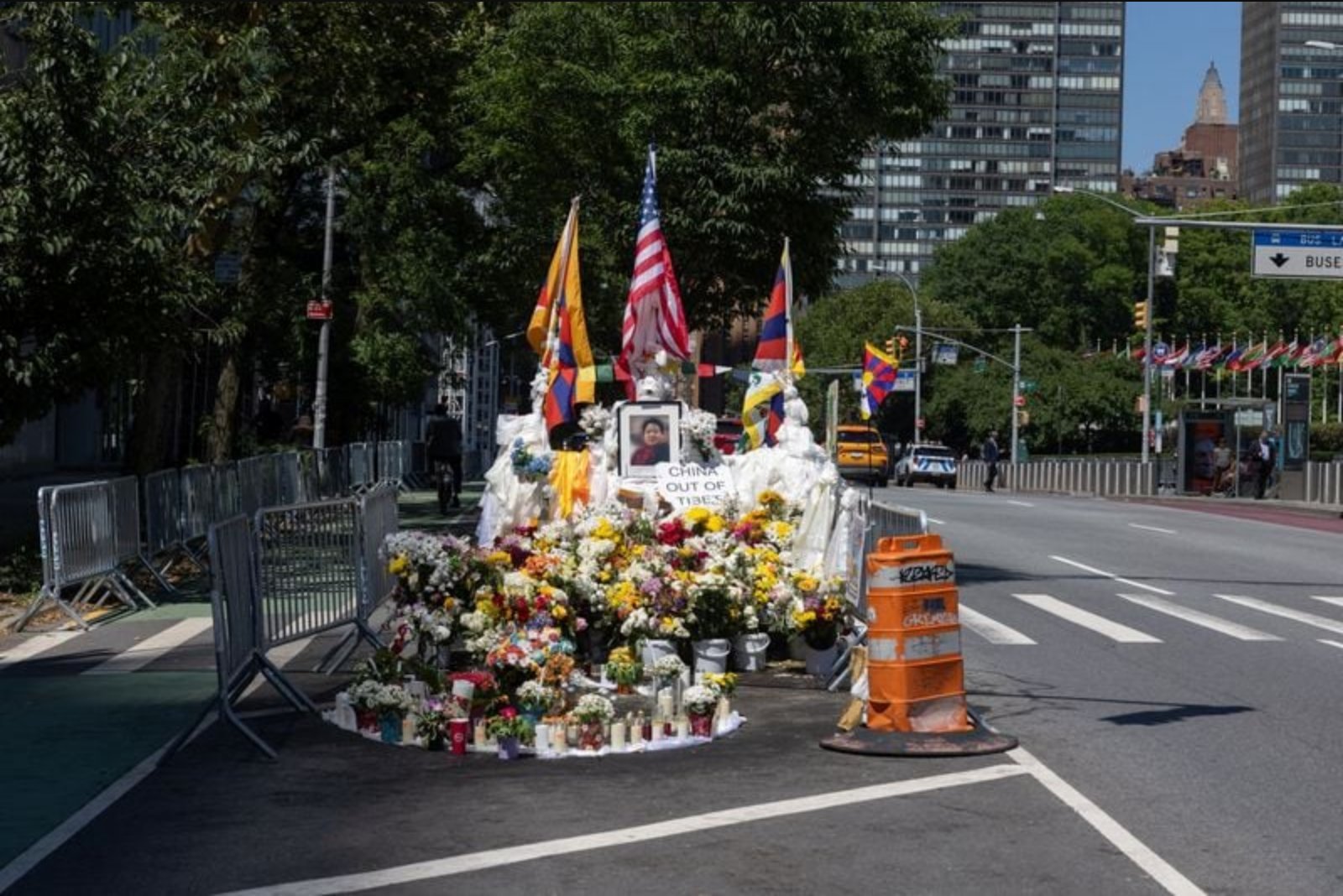
WASHINGTON, July 8 - The U.S. State Department said on Wednesday it will continue pressing China to resume direct discussions with the Dalai Lama after a Tibetan man died from severe burns sustained in a self-immolation near United Nations headquarters in New York.
Activists and an exiled Tibetan media outlet identified the man as Lobga Rangzen. Voice of Tibet reported that he "self-immolated outside the U.N. headquarters in New York after a live appeal for Tibetan independence and unity." The man succumbed to his injuries a week after the incident.
In a statement, a State Department spokesperson emphasized U.S. backing for the rights of Tibetans, saying: "The United States is committed to supporting the unalienable human rights and aspirations of Tibetans to celebrate and preserve their unique culture, language, and religion without fear of interference." The statement added that Washington "will continue to call on China to return to direct dialogue, without pre-conditions, with the Dalai Lama and his representatives, and with the democratically elected Tibetan leaders, to resolve differences and achieve meaningful autonomy for Tibetans."
China responded through its Foreign Ministry, where spokesperson Mao Ning urged Washington to adhere to prior commitments. At a regular news conference on Thursday, Mao Ning said: "We urge the U.S. side to honor its commitments to recognize Tibet as a part of China and not support Tibet independence, and to stop using Tibet-related issues to interfere in China’s internal affairs."
Chinese officials also reiterated long-standing assertions regarding Tibet’s status. After the man’s death, Beijing stated that Tibet has been "an inalienable part of the country’s territory since ancient times" and expressed confidence that "relevant countries will handle the matter in accordance with domestic laws."
The standoff over Tibet extends to questions of religious succession. China regards the Dalai Lama as a separatist and asserts it must approve his successor, citing a centuries-old ritual. The Dalai Lama, who serves as the spiritual leader for Tibetan Buddhists and is a Nobel Peace Prize laureate, has urged his followers to reject anyone selected by Beijing.
The historical and political dispute over Tibet has been a recurring point of contention. The Chinese government describes its 1950 takeover as a "peaceful liberation" from feudalistic serfdom. In contrast, international rights advocates and Tibetan exiles frequently denounce what they describe as oppressive rule in Tibetan areas; China rejects those assessments.
Ethnic minority governance in China remains highly sensitive, with authorities said to keep Tibetans and other minorities under tight surveillance to detect signs of alleged "separatism." The International Campaign for Tibet reports that there have been 159 self-immolations by Tibetans inside Tibet since 2009, and that 11 self-immolations involving Tibetans occurred in exile, according to its data.
The United States’ public call for renewed, unconditional talks with the Dalai Lama and Tibetan leaders underscores ongoing diplomatic friction between Washington and Beijing on Tibet-related matters. How both sides proceed remains uncertain, with recent developments highlighting the enduring sensitivity and international dimensions of the Tibet issue.