
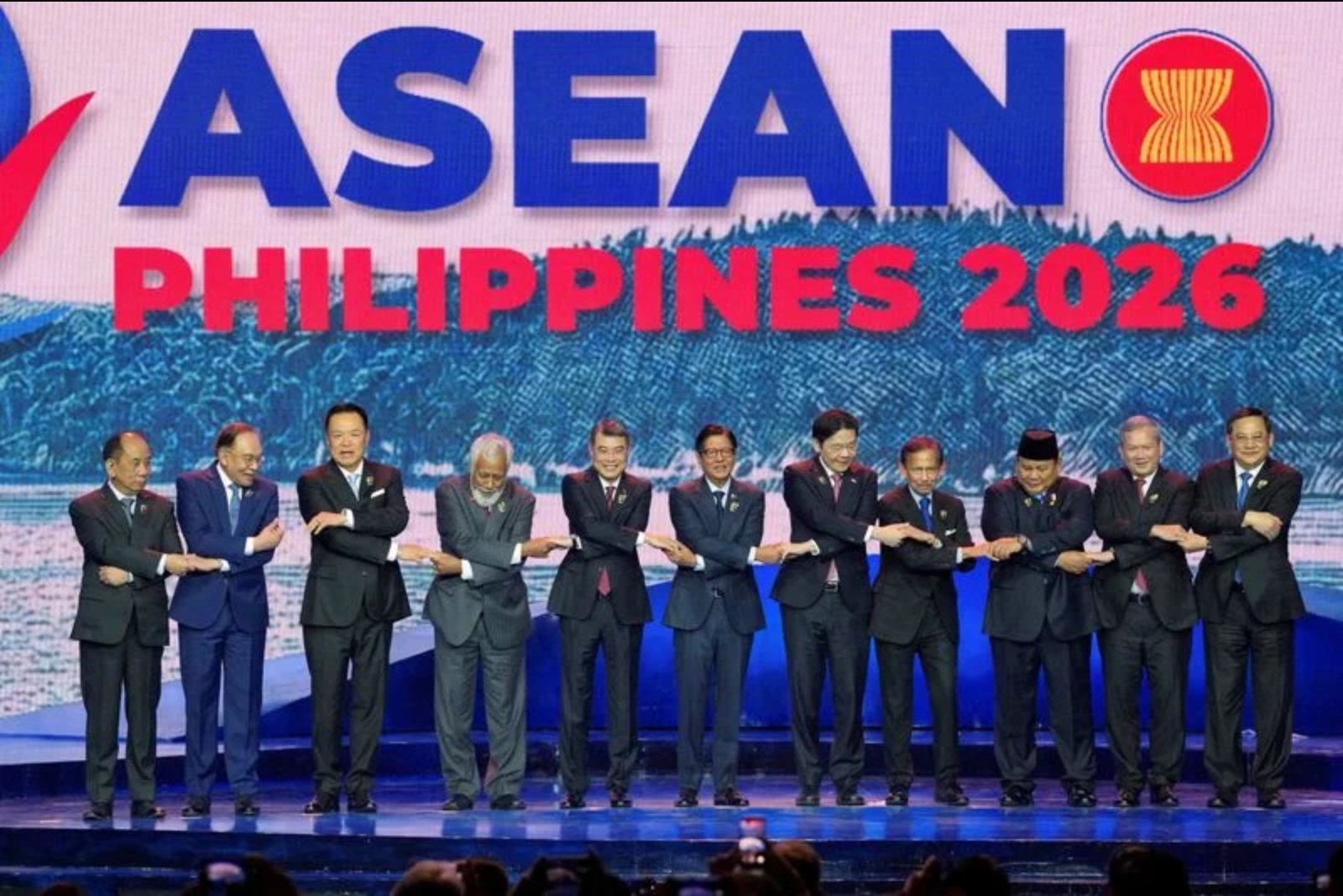
MANILA - The Philippines, acting as chair of the 11-member Association of Southeast Asian Nations (ASEAN), said on Friday that an informal gathering of regional foreign ministers with Myanmar's foreign minister will address the country's ongoing civil war and prospects for renewed engagement after about five years of diplomatic isolation.
The session, set for Sunday in Bangkok, will be the first in-person encounter between ASEAN foreign ministers and Myanmar's top diplomat since the 2021 military coup and the conflict that followed, which resulted in the exclusion of Myanmar's ruling generals from the bloc's summits.
Philippine foreign ministry officials emphasized that Myanmar remains an integral part of ASEAN and described the weekend meeting as informal - a setting intended to allow Myanmar’s foreign minister to brief regional counterparts about developments inside the country.
According to the Philippine statement, participants are expected to "exchange views on ASEAN’s engagement with Myanmar, as well as on possible concrete steps in which Myanmar may address concerns on the cessation of violence, constructive dialogue among concerned parties, and humanitarian assistance."
The violence in Myanmar followed a coup by the military, which has governed the country for five of the past six decades, and which triggered widespread unrest and a crackdown on protests. That turmoil evolved into a civil war that the article cites as having killed an estimated 100,000 people and displaced millions. Myanmar's military is accused of large-scale atrocities; the military denies those allegations.
Earlier this year, Myanmar held an election and a nominally civilian government has been formed, with Min Aung Hlaing - the former armed forces commander and junta leader - serving as president. Min Aung Hlaing has sought to end the diplomatic impasse with ASEAN and made his first state visit to an ASEAN member country last week.
Central to Myanmar's previous exclusion from full engagement with the grouping was its failure to implement a five-point consensus reached with ASEAN after the coup. That consensus set out steps aimed at de-escalation and creating space for dialogue among the warring parties. ASEAN officials have repeatedly cited implementation of that plan as a condition for normalising ties.
However, reestablishing full relations could face domestic pushback in Myanmar. The military-aligned parliament has introduced a motion to counter the peace plan, framing it as undue interference in internal affairs and a breach of ASEAN’s stated principles. On Friday, the Global New Light of Myanmar - described as the military’s mouthpiece - ran a two-page piece reporting that lawmakers from both houses largely supported a resolution urging the government to review and challenge ASEAN’s stance.
The parliamentary resolution, as reported, argues that ASEAN should reassess its position on Myanmar in light of recent political developments and the formation of a new elected government. The Philippine-led meeting is likely to hear Myanmar’s perspective on these developments alongside regional concerns about halting violence and ramping up humanitarian assistance.
Context and purpose of the meeting
The Philippines has positioned the Sunday session as an opportunity for frank exchanges on how ASEAN can engage Myanmar constructively while pressing for measures to reduce violence and expand humanitarian access. The informal format is intended to facilitate candid briefings rather than produce a formal communiqué or immediate policy shift.
What remains unresolved
Areas left open by recent developments include the implementation status of the five-point consensus and the response from Myanmar’s domestic institutions to ASEAN initiatives. The parliamentary action reported in state media signals that there is sizeable domestic resistance to certain forms of external engagement, complicating prospects for rapid normalization.
The meeting in Bangkok will test whether ASEAN can reconcile its emphasis on non-interference with the need to address severe humanitarian and security concerns raised by prolonged conflict in a member state.