
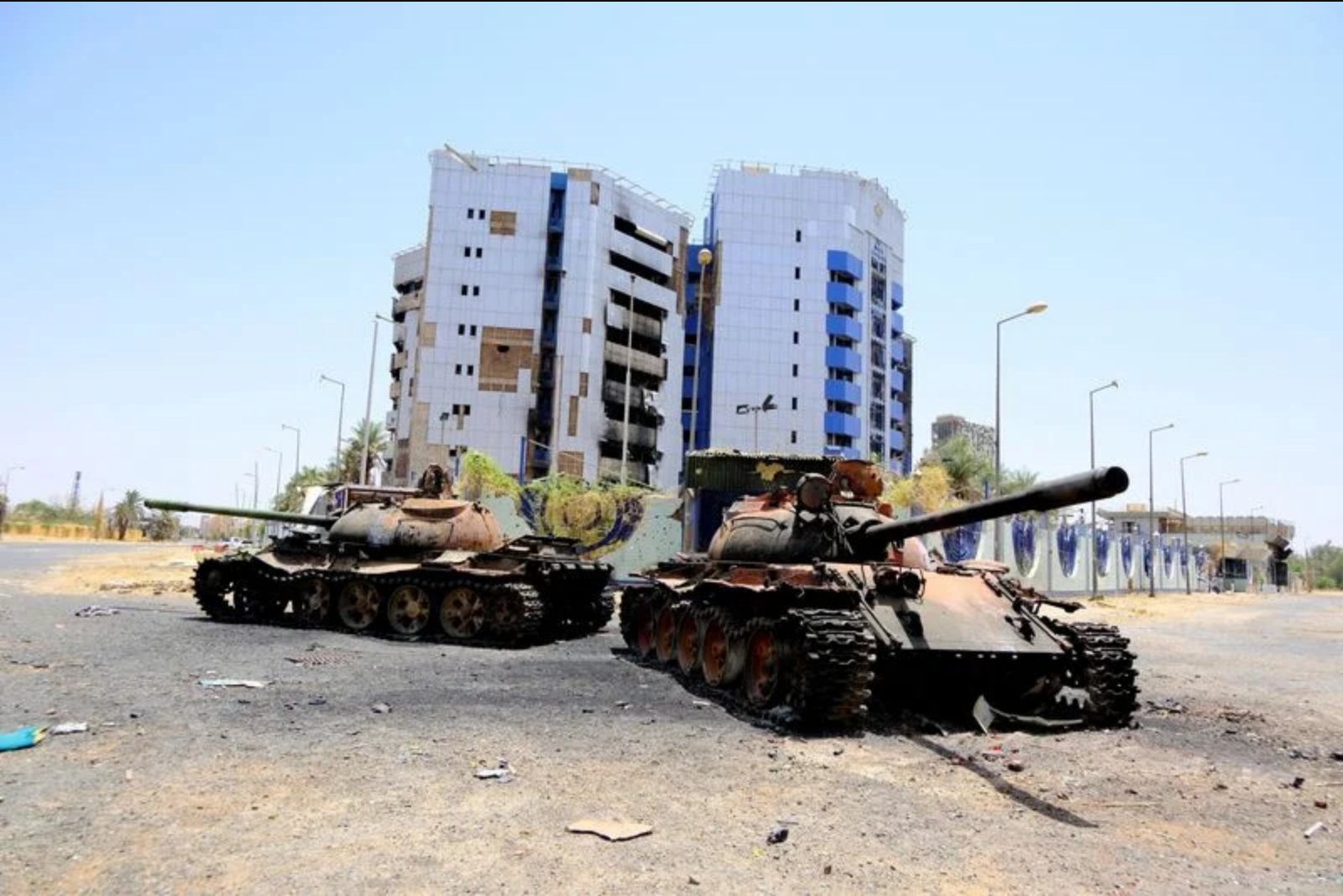
Documents whose contents were confirmed by senior Sudanese officials show that the Sudanese army has tied any broad acceptance of a recent U.S. proposal for ending the country’s three-year war to a full withdrawal by the paramilitary Rapid Support Forces (RSF) from cities it has occupied.
The documents outline a U.S. proposal, circulated last month, that calls on both combatants to agree to an immediate 90-day humanitarian truce - a pause intended to create space for negotiating a permanent ceasefire and a civilian-led transition to elections. The plan also envisages a UN-led mechanism to support limited RSF withdrawals, with priority attention to North Darfur and North Kordofan.
The emphasis on North Darfur reflects recent violence, including the RSF takeover of the city of al-Fashir in a forceful attack. North Kordofan has also been identified in the proposal because it has been the target of RSF drone strikes.
According to the documents, the army-led Sudanese government accepted most elements of the U.S. plan but objected to proposals that would only allow restricted RSF pullbacks. The army insisted the plan must require "the withdrawal of (the RSF) from all the cities it has occupied since May 11, 2023." The demand for broad RSF withdrawal has previously been a major sticking point in earlier peace negotiations.
The U.S. proposal also called for the creation of a unified national army with disarmament, demobilisation and reintegration arrangements, in addition to a Sudanese civilian-led political process that would exclude the Muslim Brotherhood and militia elements associated with atrocities, the documents state.
U.S. Senior Adviser for Arab and African Affairs, Massad Boulos, initially told the UN Security Council that Sudan had rejected the plan. He later posted on social media that he was "extremely pleased" to hear that Sudanese army head General Abdel Fattah al-Burhan "has apparently accepted - rather than rejected - the latest peace proposal."
The conflict has displaced millions, killed hundreds of thousands by multiple estimates, and contributed to widespread hunger and disease, according to the documents. UN experts have accused the RSF of committing genocide in Darfur, where the force retains control over a territory the documents describe as the size of France and where it has begun establishing a parallel government. The RSF denies targeting civilians.
A senior RSF official said the force had received and welcomed the latest proposal and had submitted a written response, but provided no further details. The RSF has previously publicly welcomed peace offers while continuing offensive operations.
Operationally, the paramilitary continues to conduct a drone-led campaign in the Kordofan region, which lies between Darfur and the army-controlled eastern half of Sudan. The current war began in April 2023 after the army and the RSF split over plans to integrate their forces and the pathway to a civilian-led transition.
The U.S. State Department did not respond to a request for comment, and the Sudanese Foreign Ministry did not immediately reply to an inquiry, according to the documents and related communications.
Summary
The Sudanese army has accepted most elements of a U.S. peace proposal but insists on a full withdrawal by the RSF from all cities it occupied since May 11, 2023. The U.S. plan calls for a 90-day humanitarian truce, a UN-led mechanism for limited withdrawals prioritising North Darfur and North Kordofan, and measures to unify the national army and exclude extremist and militia actors from the political transition.
Key points
- The army conditions agreement on full RSF withdrawal from cities occupied since May 11, 2023 - impacts security and urban governance.
- The U.S. proposal includes a 90-day humanitarian truce, a path to a permanent ceasefire and UN-led limited withdrawals prioritising North Darfur and North Kordofan - relevant to humanitarian aid logistics and regional stability.
- Elements include a unified national army and a civilian-led political process excluding the Muslim Brotherhood and militias accused of atrocities - implications for security sector reform and political transition.
Risks and uncertainties
- Refusal by the RSF to conduct a comprehensive urban withdrawal could prevent implementation of the proposal and prolong fighting - this threatens humanitarian operations and relief logistics.
- The RSF has continued offensive actions, including drone strikes in Kordofan, raising the risk that ceasefire measures may not hold even if accepted on paper - this risks further civilian displacement and disruption of internal trade.
- Allegations by UN experts that the RSF has committed genocide in Darfur, and the RSF denial of targeting civilians, create legal and political uncertainty that could complicate international engagement and post-conflict reconstruction funding.