
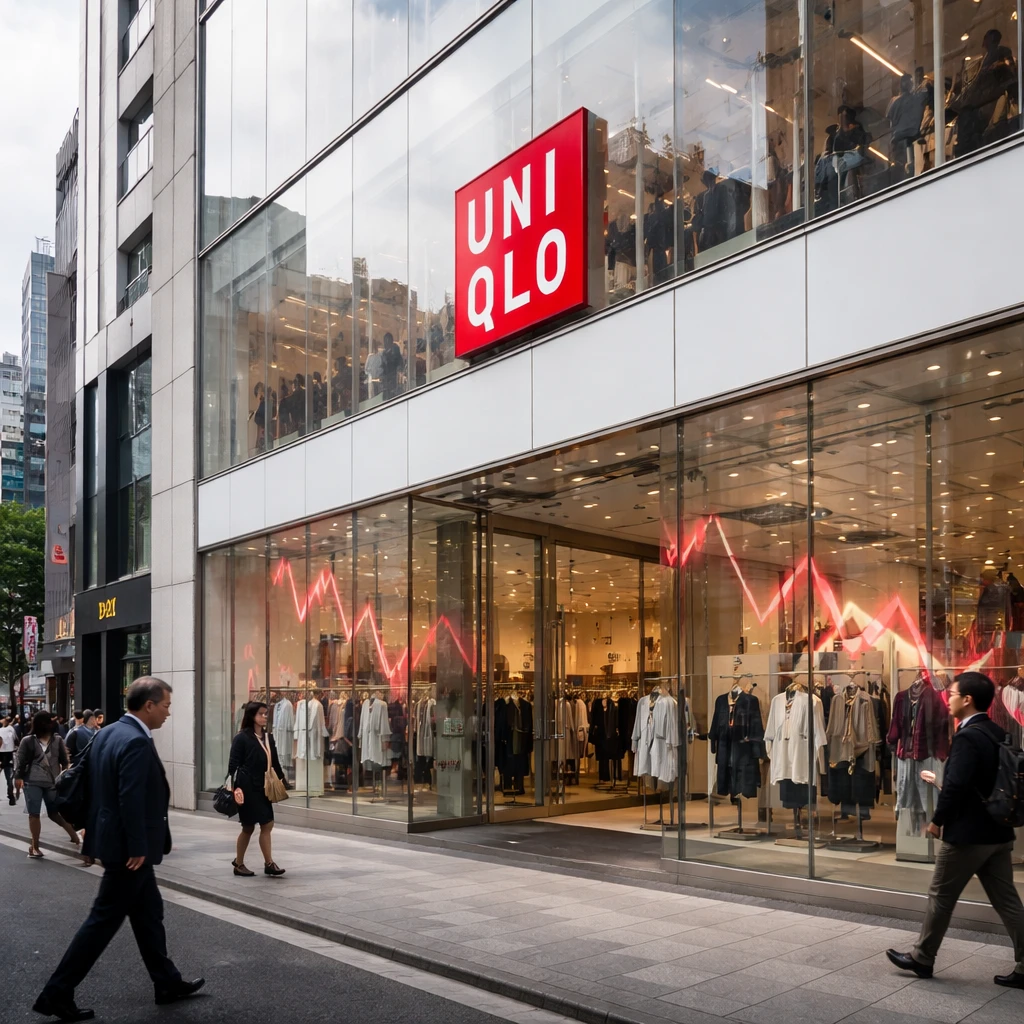
Fast Retailing Co. stock declined 4.0% to ¥81,800 on Friday despite the parent of Uniqlo delivering a markedly stronger third-quarter operating result. The firm reported operating profit of 213.79 billion yen for the quarter, a 45.7% increase from the prior year and about 40 billion yen above analyst consensus. Management also raised its full-year operating profit forecast to 730 billion yen from a prior target of 700 billion yen, marking the third upward revision this fiscal year.
Management cautions on currency and demand
The post-earnings share decline was influenced by cautionary comments from CFO Takeshi Okazaki, who highlighted that the recent depreciation of the yen is reducing the yen value of overseas earnings when converted back to the domestic currency. At the time of the statement, the yen was trading near a roughly 40-year low of about 162 yen per dollar, a level management said is weighing on reported results from overseas operations.
Company executives also pointed to a European heatwave as a potential headwind for summer clothing sales, introducing short-term uncertainty that appeared to temper investor enthusiasm despite the record-setting quarterly results. Management noted the near-term impact as a concern alongside currency-related translation effects.
Market context and stock trajectory
The stock had rallied sharply in the days before the earnings release and had been trading near its 52-week high of ¥88,690, leaving limited room for an upside surprise. The pullback in Fast Retailing contrasted with broader market strength - the Nikkei 225 rose 1.8% on news that Japan planned to encourage its largest pension funds to increase investment in local assets.
What this means for investors
- Strong underlying operating performance drove a sizeable year-over-year increase in quarterly profit and prompted management to lift full-year guidance to a company-record level.
- Currency translation effects from a weakened yen can offset gains in reported overseas earnings, creating volatility in reported profits even when underlying operations perform well.
- Near-term demand for seasonal apparel may be sensitive to unusual weather patterns in key markets, adding uncertainty to sales timing and product mix.
The combination of an outsized beat on operating profit, a third consecutive upward revision to annual guidance, and management commentary on currency and weather factors helps explain why the stock moved lower despite fundamentally strong results. Investors reacted to the change in near-term outlook and the limited scope for further positive surprises after the pre-report rally.