
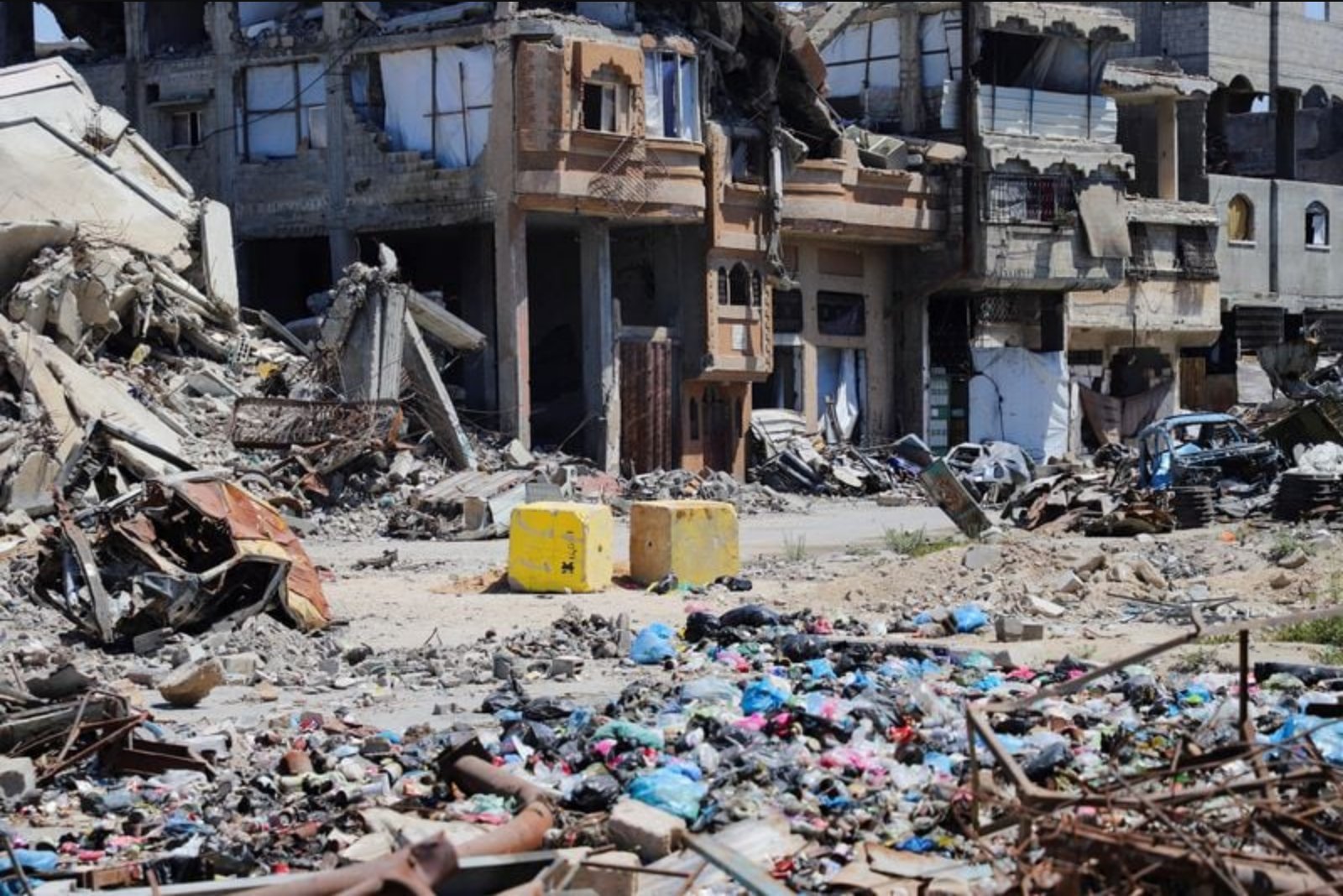
On June 16, an Israeli strike near a residential building in the Nuseirat refugee camp in the central Gaza Strip killed two Palestinians, health officials and medics said. The victims were identified as brothers Ahmed and Mahmoud Abu Heen. The Israeli military did not immediately issue a comment on the incident.
The killings occurred as Israeli ground forces continued to expand areas under their control across the territory, prompting further civilian flight and deepening humanitarian strain. According to Gaza health ministry figures cited by local medical authorities, the new deaths bring to nearly 1,000 the number of Palestinians killed by Israeli fire since October.
Israel has said four of its soldiers have been killed by militants during the same period.
Diplomatic efforts and deadlock
Diplomatic activity has intensified even as violence persists. Nickolay Mladenov, the U.S.-appointed Board of Peace envoy for Gaza named under the framework of the truce, arrived in Cairo to continue talks, sources close to the negotiations said. Mladenov’s visit follows a series of meetings that mediators from Egypt, Qatar and Turkey have held with Hamas leaders to discuss implementing the second phase of the truce plan brokered in October 2025 by U.S. President Donald Trump.
Despite those efforts, Israel and Hamas remain at an impasse over how to move forward. The next phase under the truce is understood to require Hamas to lay down its arms and for Israeli forces to execute withdrawals. According to people familiar with the discussions, negotiators have not yet bridged fundamental differences on sequencing and verification of those steps.
Territorial gains and population displacement
Israeli troops currently control more than 60% of Gaza’s territory, officials and witnesses say. Forces have ordered residents in those areas to leave and have demolished remaining structures in some neighbourhoods. On May 28, Prime Minister Benjamin Netanyahu reiterated his instruction to the military to expand Israel’s control with a goal to secure 70% of the enclave.
Witnesses in southern Gaza reported that the so-called "Yellow Zone" - the areas demarcated by Israeli forces as their control - has widened in recent days in eastern Khan Younis and northern Rafah. New markers and concrete boundary blocks have been placed in those locations. Video footage taken on Monday showed two yellow concrete blocks that had been moved closer to residential houses.
In the north, Israeli tanks moved further into the Al-Tuffah neighbourhood of Gaza City on Sunday, residents said, prompting several families to flee. One resident, Umm Muhammad Junaynah, described the confusion and fear of families forced to evacuate at short notice:
"I swear we don’t know where to go. We are getting our furniture out, we don’t know where to go. We don’t know where to go, we have nowhere to go."
Nearly the entire population of roughly 2 million people in Gaza now lives in a narrow coastal strip, with most displaced multiple times. Many are sheltering in improvised tents or in damaged buildings in areas still under Hamas control.
Describing the emotional toll and repeated displacements, 27-year-old Nour Shabat said of events in Al-Tuffah on Sunday night: "It was a night of terror, we were scared." She added later:
"I’m tired of displacement, honestly I’m tired of displacement. What is our fault that this is happening to us? Should I take my belongings, myself and go sleep in the street? I have slept in the streets many times and I have been displaced many times. I’m tired and can’t handle anymore. Enough, I am tired."
Residents and witnesses described intensified bombardment and widespread destruction across the territory, which they say has been reduced to ruins by what they call a two-year military assault that followed the 2023 Hamas attack on southern Israel. The continued operations and demographic compression along the coast are compounding the humanitarian challenges for civilians who remain inside Gaza.
Outlook
With combat operations ongoing and diplomatic talks attempting to restart implementation of the second phase of the truce, the situation on the ground remains fluid. Negotiators are reported to be pursuing avenues to move forward in Cairo, while residents face immediate choices about flight, shelter and survival amid expanding military control and persistent strikes.