
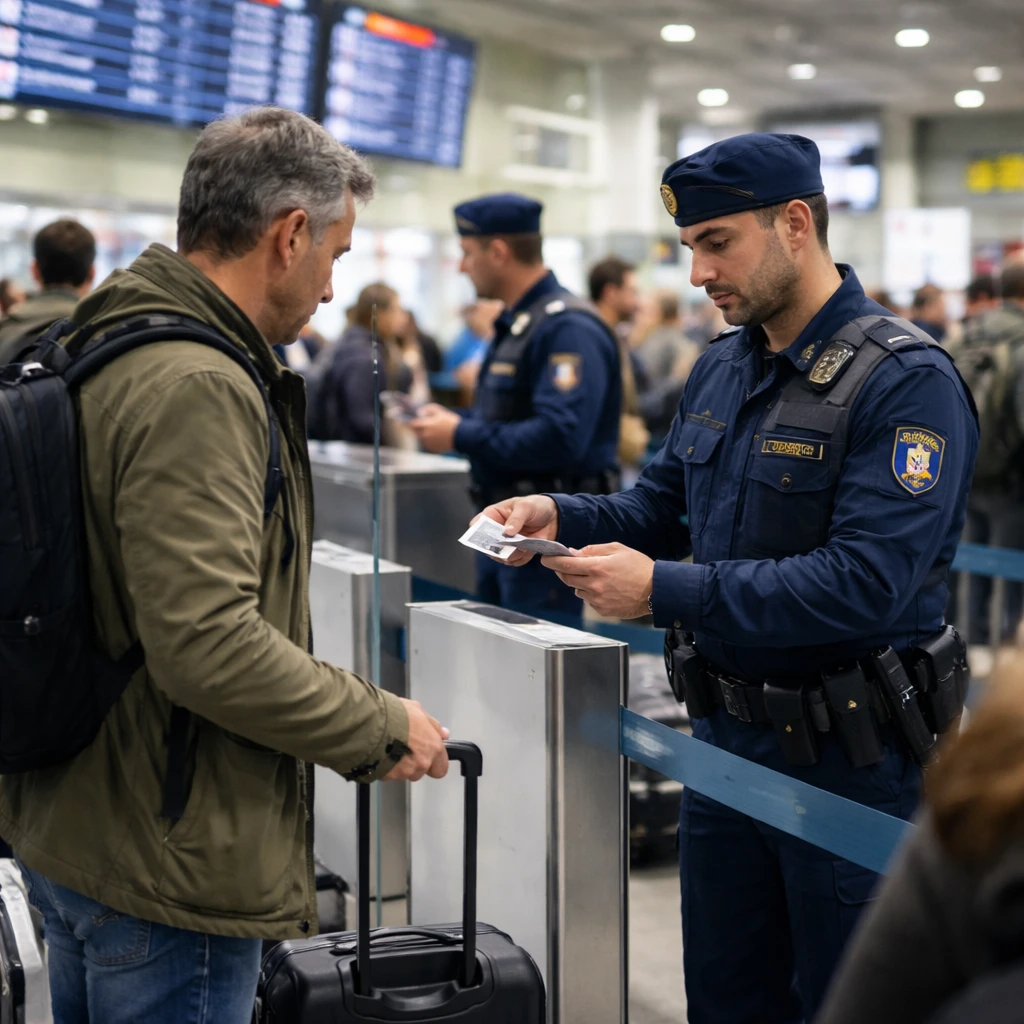
Italy said today it would temporarily suspend the European Union's Schengen arrangements with Spain for travel by air and sea after a large number of migrants entered Spain's North African enclave of Ceuta from Morocco.
Under the measure, passengers traveling between Italy and Spain by plane or boat will be required to present a passport at entry. The Italian interior ministry noted that Italy and Spain do not share a land border.
In a related step, Italian authorities said they had coordinated with Paris to reinforce checks along the Franco-Italian land border to curb the transit of undocumented migrants into Italy.
Spanish officials said they had reversed the rapid influx into Ceuta, reporting that most of the more than 50,000 people who had crossed the border returned voluntarily.
The decision comes as Prime Minister Giorgia Meloni's coalition, which took office in 2022 on a platform that included commitments to reduce illegal immigration, faces pressure from a new far-right party led by former army general Roberto Vannacci. That party's anti-migrant rhetoric has won support among segments of the electorate, increasing political incentives for tougher measures on migration.
Opponents of the government criticised the suspension of Schengen arrangements as largely symbolic and intended for domestic political effect. They pointed to a lack of evidence that the migrants who reached Ceuta planned to travel on to Italy. Centre-left critics accused the government of pursuing a populist course.
Context and implications - as stated by officials and political actors in the current account:
- The passport requirement applies specifically to travelers by air or sea between Italy and Spain; there is no change at any land frontier between the two countries because none exists.
- Italy and France have agreed to strengthen controls on the shared land border in an effort to prevent undocumented crossings into Italy.
- Spanish authorities reported that the majority of the more than 50,000 people who crossed into Ceuta moved back voluntarily, according to the statement cited by Italian authorities.
Political reaction has been immediate. Supporters of tougher border measures argue the steps respond to urgent migration pressures, while critics view them as symbolic acts aimed at satisfying domestic constituencies rather than addressing an immediate cross-border threat to Italy.
Questions remain about the duration of Italy's suspension of Schengen arrangements with Spain and how long the increased Franco-Italian border controls will remain in place; officials have not provided a timeline in the statements covered here.