
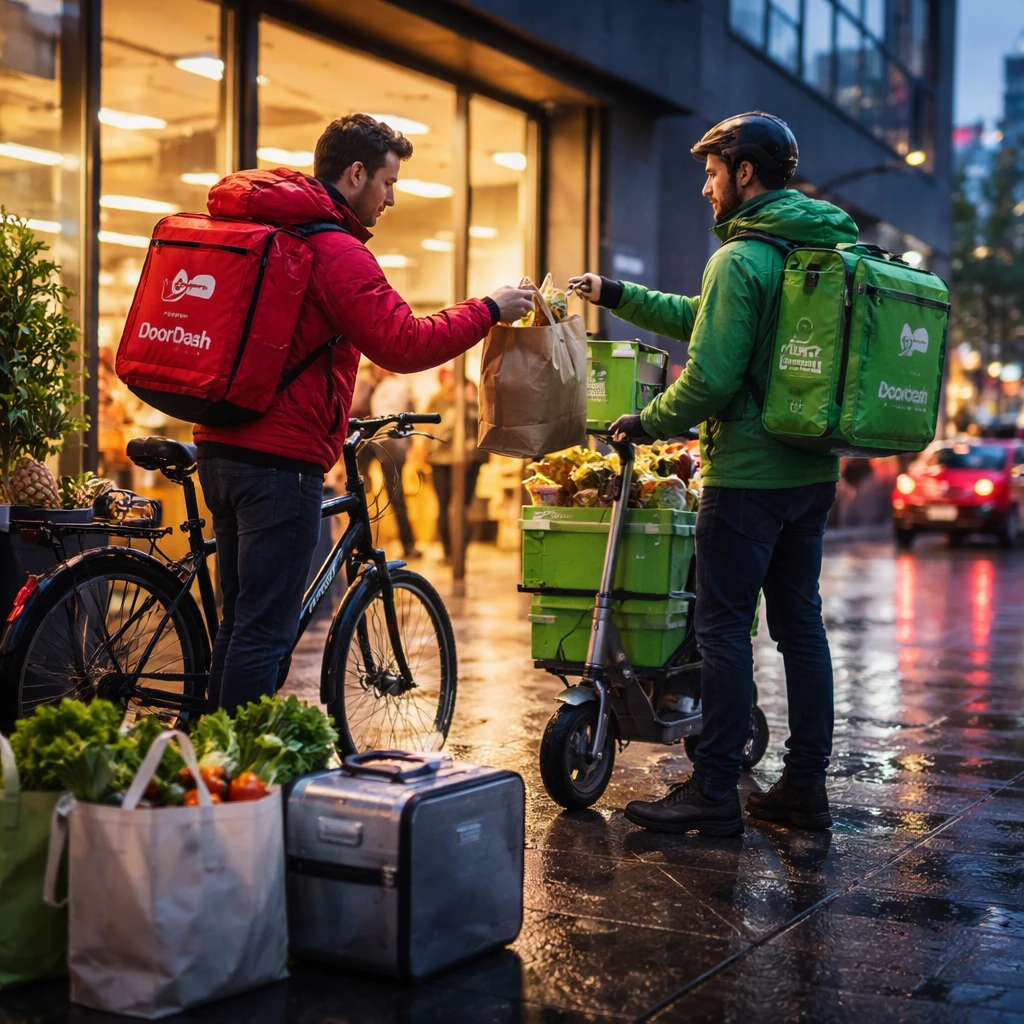
DoorDash and Instacart have reached a definitive agreement under which DoorDash will acquire Instacart for approximately $17 billion, formalizing takeover speculation that earlier in the week pushed Instacart shares higher while pressuring DoorDash stock.
Under the terms disclosed on Thursday, DoorDash will pay $65 for each Instacart share. The structure of the consideration will include at least 75% in cash. Instacart shareholders will be able to elect to receive cash, DoorDash stock or a mix of both, with elections subject to proration and a cap on the portion available in DoorDash equity. Instacart’s board unanimously approved the transaction.
Media reports in the days leading up to the announcement said Instacart had been exploring a possible sale. Initial conversations reportedly included DoorDash and Uber, with subsequent reporting indicating DoorDash had moved into advanced talks for a transaction valued at about $17 billion. According to later reporting referenced by the companies, discussions with Uber are no longer active.
DoorDash said bringing the two companies together would pair its delivery network with Instacart’s grocery fulfillment technology, its existing relationships with retailers and its advertising business. The combined company plans to offer grocers and other retailers a suite of services - delivery, technology and advertising tools - available across both apps and on retailers’ own websites.
The agreement comes as Instacart has faced slower growth since its 2023 initial public offering amid intensifying competition from DoorDash, Uber, Amazon and Walmart. The companies noted the deal would create more opportunities for delivery workers and expand the services local retailers can access.
The proposed transaction revives earlier acquisition discussions between the two firms. In 2021, exploratory talks valued Instacart at between $40 billion and $50 billion, but those negotiations did not result in a deal, in part because of regulatory concerns.
The transaction timetable set by the companies anticipates closing in late 2027 or in the first half of 2028, subject to approval by shareholders and regulators.
Key details
- Purchase price: $65 per share, with at least 75% of consideration in cash.
- Shareholder options: Elect cash, DoorDash stock or a combination; elections subject to proration and a cap on stock consideration.
- Approvals and timing: Expected close in late 2027 or the first half of 2028, subject to shareholder and regulatory approvals.
Summary
The deal pairs DoorDash’s delivery infrastructure with Instacart’s grocery fulfillment systems and retailer relationships, while integrating Instacart’s advertising business. Instacart’s board has unanimously approved the transaction; shareholders may choose between cash and stock under conditions that include proration and a cap on stock consideration. Regulators and shareholders must still approve the deal before it can close in the projected timeframe.
Key points
- The transaction establishes a $65-per-share valuation for Instacart and commits at least 75% of consideration to cash, providing immediate value to holders who elect cash.
- The merger is positioned as a strategic combination of delivery logistics, grocery fulfillment technology and ad services aimed at offering retailers expanded tools across apps and retailer websites.
- Sectors affected include delivery and logistics, grocery retail and digital advertising, with potential implications for competition among Amazon, Walmart and ride-hailing players that also deliver groceries.
Risks and uncertainties
- The deal is contingent on shareholder approval and regulatory clearances, and is not expected to close until late 2027 or the first half of 2028.
- Shareholder elections for cash versus stock are subject to proration and a cap on stock consideration, which may affect the final mix of cash and equity received by Instacart holders.
- Instacart has experienced slower growth since its 2023 IPO amid heightened competition from DoorDash, Uber, Amazon and Walmart, a dynamic that could affect integration outcomes and future performance.