
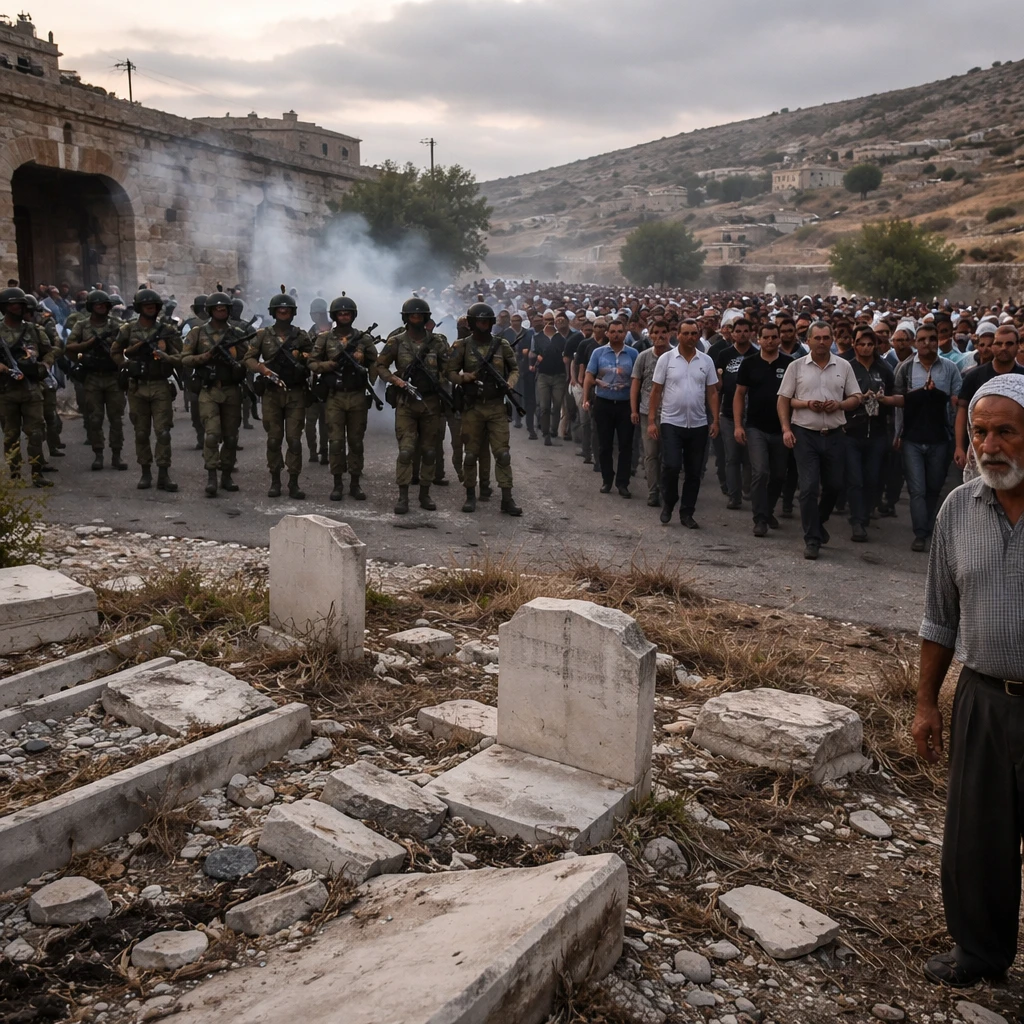
Tal, West Bank, July 31 - Israeli forces shot and wounded at least one Palestinian, detained at least three people and closed the access points to the village of Tal on Friday, while more than 100 Israeli settlers marched toward the community, residents said.
The mobilization followed a settler attack the previous weekend that left four Palestinians and two Israelis dead. The Israeli government described that attack as an act of terrorism, but video footage that emerged later showed armed settlers pushing Palestinians. Villagers in Tal say they acted in self-defence against settler attacks that, they allege, aim to force them off their land. Residents describe the latest incidents as part of a three-year surge in settler violence across the West Bank.
Since last Friday, the military has conducted near-daily raids and made multiple arrests in Tal, which lies near Nablus in the northern West Bank. The international community and many U.N. bodies consider Israeli settlements in the West Bank illegal - a position Israel rejects.
Munther Shtayya, vice-president of the local council, said that at least 24 people from Tal remained in Israeli custody. "All those arrested had no involvement in what happened last week. It was simply an expression of the resentment felt by the Israelis, and part of it was a form of punishment," he said.
Residents described a pattern they say undermines their ability to protect their homes and land. Abdulrahman Zaidan, 49, who lives on the outskirts of Tal near the settlements, said the army fires tear gas and live ammunition at people who approach or try to resist, in order to intimidate them and drive them away from their properties.
After the deadly incident the previous weekend, several settler-run social media channels called for "revenge," according to residents. Israeli media reported that Prime Minister Benjamin Netanyahu and Defence Minister Israel Katz vowed to expand military operations in the West Bank in the wake of the attack.
On Friday, as the settler march proceeded toward Tal, a correspondent on the ground observed some participants taking goods from at least one Palestinian building while Israeli soldiers followed without intervening. A later visit to a cemetery revealed broken gravestones that residents said had been vandalised by settlers while soldiers were present.
Residents also said soldiers blocked roads to allow settlers to pass unimpeded, and that smoke bombs were fired at cars approaching the march. Standing beside the shattered headstones of two sons and his wife, 76-year-old Mustafa Ali Abu Bakr said, "What harm did my son do to them? They just wanted to break the spirit of his father, his family, and his community."
The military said its forces were in the area to disperse settlers and to evacuate them from the scene. It acknowledged receiving reports of Israelis vandalising a cemetery but did not provide further details.
Abu Bakr and other villagers accused soldiers of assisting the settlers rather than stopping them. Palestinians often assert that settlers operate with impunity and that their violence is enabled by either the inaction or cooperation of the Israeli military. The military denies such allegations.
The broader political context remains contested. Palestinians seek the West Bank - occupied by Israel in the 1967 war - as the heartland of a future independent state. The current Israeli government, opposed to Palestinian statehood, has approved an expansion of settlements there. Israel maintains that the West Bank is legally disputed territory and has argued that it is not occupied.
Takeaway - The sequence of events in and around Tal reflects heightened tensions between Palestinian villagers and settlers in the West Bank, accompanied by intensified military operations and multiple allegations of vandalism and impunity. The situation has produced arrests, injuries and restrictions on movement, and villagers report repeated clashes as they seek to protect homes and land.