
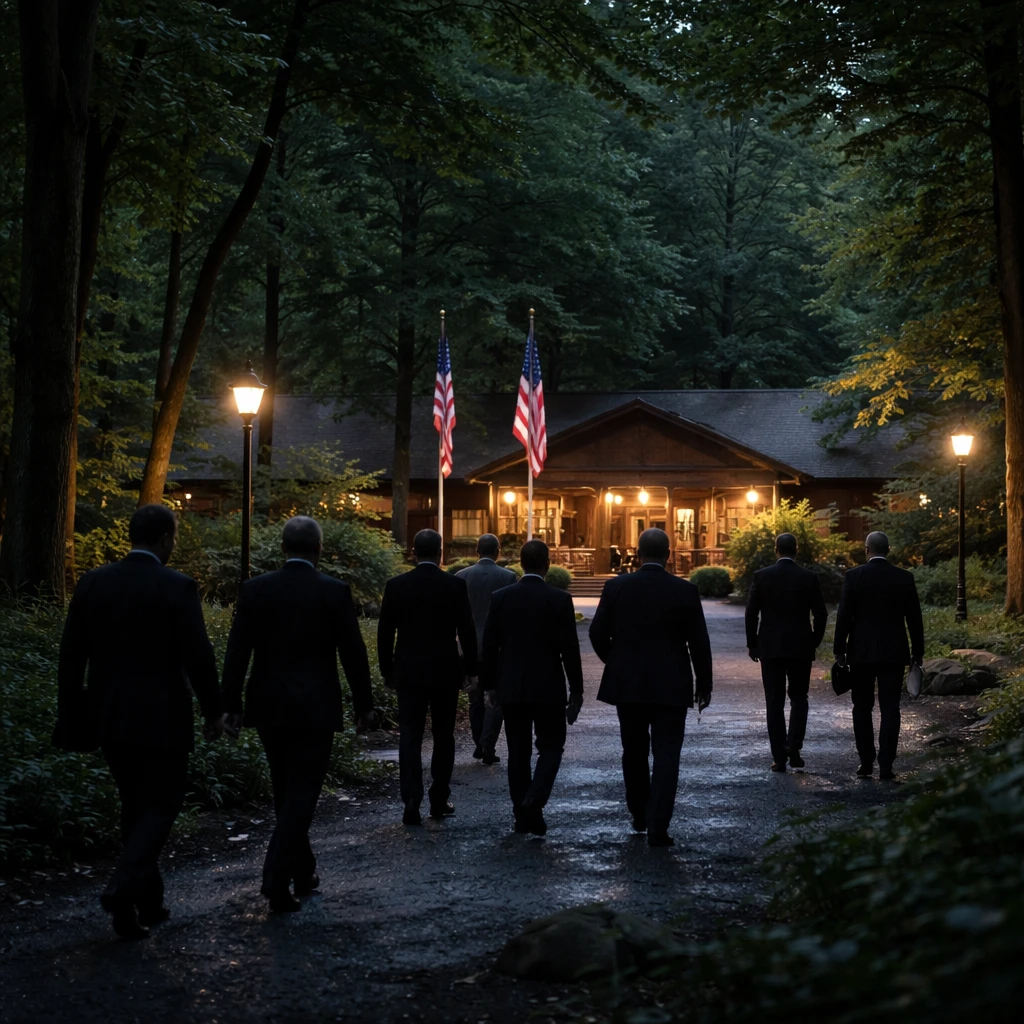
Camp David, Maryland, July 31 - President Donald Trump said on Friday the recent U.S. campaign to undermine the International Criminal Court is aimed at defending Israeli Prime Minister Benjamin Netanyahu and other individuals from potential prosecution, and not directed at him.
The president made the remarks after Secretary of State Marco Rubio briefed a Cabinet meeting at Camp David, saying that five countries had announced intentions to leave the court since Washington began a campaign earlier this month that portrays the ICC as a threat to U.S. sovereignty.
"There’s no information that they’re after me," Trump said. "It could happen, but just so you know ... he (Rubio) is not trying to defend me. He’s trying to defend Bibi and various other people." Using Netanyahu's nickname, Trump added: "But there are many people that shouldn’t be looked at that way. But there is no indication that I’m one of them at this moment."
Rubio responded during the meeting by stressing a separate concern: that U.S. service members face the greatest exposure to future ICC prosecutions. He warned they could be prosecuted years later over actions taken during conflicts, according to the administration's account of his remarks.
The International Criminal Court, established in 2002 by the international community, has a mandate to prosecute war crimes, genocide and crimes against humanity. The court asserts jurisdiction only when a member state is unable or unwilling to pursue prosecutions itself. The United States has never been a member of the ICC, but the court's statute permits prosecution of atrocity crimes committed on the territory of member states by nationals of non-member states.
Trump's stated opposition to the court dates back to his first term. The issue resurfaced in Washington in November 2024, when the White House developed an idea to penalize ICC officials after the court issued an arrest warrant for Netanyahu for alleged war crimes and crimes against humanity in the Gaza conflict, the administration says.
Earlier this month, Rubio denounced the court while based in The Hague, citing activist calls for ICC investigations into U.S. personnel for issues including the deportation of migrants and U.S. strikes on vessels alleged to be carrying narcotics. The administration has outlined a strategy that includes lobbying other countries to withdraw from the court and imposing travel bans and additional sanctions on the ICC and affiliated organizations in an effort to undermine the institution.
Those steps have prompted legal pushback. ICC judges and U.S. advocacy groups have challenged the administration's actions in court, arguing that some measures violate free speech rights. The administration maintains its approach is aimed at protecting U.S. interests and personnel and at challenging what it views as an overreach by the international court.
Contextual note - The administration's campaign, the ICC's legal authority, claims about potential prosecutions of U.S. service members and the November 2024 decision to pursue measures against ICC officials are described by the administration and reflected in the public record surrounding these developments.