
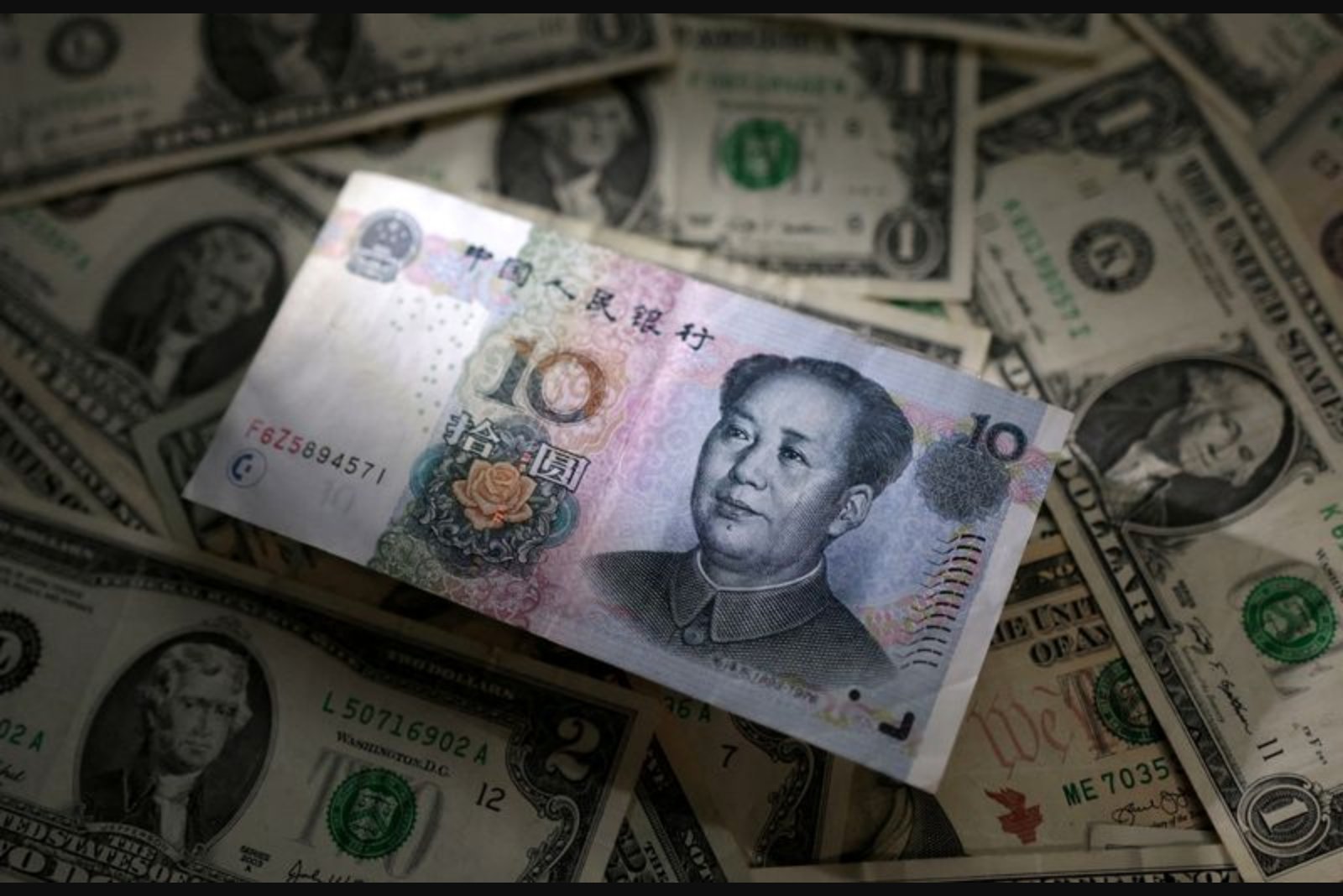
China’s currency firmed to a three-year high against the dollar on Thursday as a bilateral summit between the leaders of the United States and China began, even as domestic stock indexes declined amid investor caution.
U.S. President Donald Trump described China’s President Xi Jinping as a great leader and a friend as the two leaders opened two days of talks expected to address their delicate trade truce and issues related to the Iran war. Market participants moved cautiously, weighing which concrete outcomes might emerge from the meetings.
Central bank guidance and market reaction
The People’s Bank of China set its daily midpoint, or official guidance rate, at 6.8401 per dollar, the strongest midpoint fixing since March 24, 2023. That official fixing, however, was 513 pips weaker than an external estimate of 6.7888, representing the largest deviation from that estimate since March 2. Observers have noted that the central bank has often set midpoints weaker than market expectations since November - a practice market participants interpret as an attempt to limit excessive yuan appreciation and preserve overall currency stability.
Trading levels recorded near the midday break showed the onshore yuan at 6.7862 per dollar and the offshore yuan at 6.7852 per dollar. The currency has strengthened over the year, supported in part by strong export performance and a large trade surplus. Year-to-date, the yuan has risen by about 3% against the U.S. dollar and is up 2.15% against its major trading partners.
Equity markets and investor stance
Despite the currency’s gains, equity markets moved lower. By the midday break the Shanghai Composite index had fallen 1.02%, while the blue-chip CSI300 index was down 1.3%.
Some market professionals characterised investor positioning as cautious. "Beijing is adopting a wait-and-see mode, given the 'better than expected' first-quarter (economic) growth ... Beijing’s focus for the summit is not on deliverables but on optics, aiming to project stability and predictability to both international and domestic audiences," said Larry Hu, chief China economist at Macquarie.
Echoing a sentiment of tempered expectations, Ritesh Ganeriwal, group head of investments & advisory at digital investment platform Syfe, said market expectations were low and that many investors were not positioned for a positive surprise. He suggested that even modestly constructive outcomes could lift sentiment and that the next major trade milestone would not arrive until November, when current rare earth and tariff curbs are set to pause. According to Ganeriwal, a constructive meeting could create a window of relative stability lasting about six months.
Focus on technology and trade mechanics
Market participants broadly expect the two leaders to deprioritise heightened trade tensions during the meeting and to place more attention on the fast-growing artificial intelligence sector. Richard Pan, a fund manager at China Asset Management Co, observed that capital markets have become less responsive to news around Sino-U.S. trade talks and are increasingly focused on rapid technological progress. "The development of the trade war shows that China and the U.S. cannot afford to enter a real big conflict," Pan said. He added that competition in large AI models between the two countries will likely spur mutual technological advancement and eventually improve AI capabilities for both.
Reports suggest the United States and China may move toward a managed trade mechanism for non-sensitive goods during the summit, with each side possibly identifying roughly $30 billion worth of goods on which tariffs could be reduced and cross-sold without breaching national security boundaries.
Other trade-related developments
Separately, customs records indicated that China renewed export licences for hundreds of U.S. beef processing plants. This action was reported in customs data on Thursday.
Outlook and market implications
With policymakers seemingly focused on signaling stability rather than immediate deliverables, investors are parsing both signs of diplomatic thaw and the underlying economic data that have supported the yuan’s run higher. While the currency’s appreciation has been driven by trade strength and a sizeable surplus, stock market moves suggest that headline diplomacy alone may not be sufficient to lift domestic equities without clearer policy actions or tangible trade steps.
Summary
The yuan rose to a three-year high after the central bank raised its midpoint guidance, while Chinese stock indexes fell as markets awaited the outcome of a summit between the U.S. and Chinese leaders. Officials appear focused on optics and stability; investors expect limited, managed trade measures and are watching developments in AI and other technology areas.