
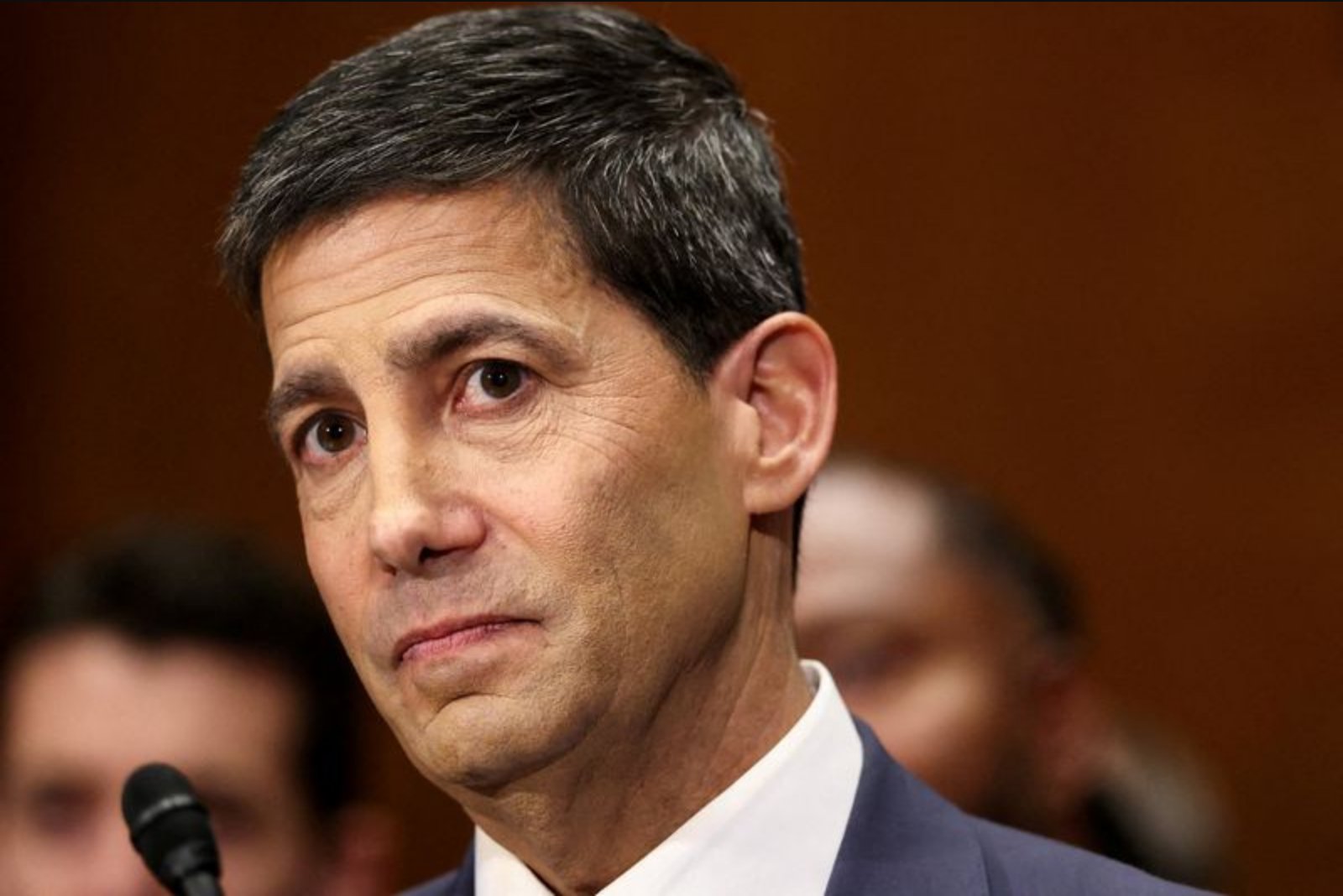
Investors are increasingly prepared for long-term U.S. Treasury yields to remain at elevated levels, driven by worries that incoming Federal Reserve Chair Kevin Warsh will struggle to control inflation heightened by rising oil prices amid a prolonged Middle East conflict. The market reaction has been most pronounced at the long end of the curve, where benchmark 10-year yields have surged as participants demand higher compensation for inflation risk tied to energy costs.
Higher long-term Treasury yields translate directly into steeper borrowing costs across the economy. Mortgages, corporate bonds and leveraged loans become more expensive as benchmark rates climb, a dynamic market participants say could create headwinds for both consumer spending and corporate profitability.
Market voices on inflation and yields
Christian Hoffman, head of fixed income at Thornburg Investment Management in Santa Fe, New Mexico, characterized the inflation backdrop as "uncomfortable and above target" and noted the difficulty in reassuring investors. He said persistent inflation now spans approaching five years and pointed to the lack of a clear path to comfort investors.
"It’s not an understatement to say that inflation has been uncomfortable and above target ... heading on five years now and there’s also not directionally a way to reassure investors and give them comfort," Hoffman said.
Energy markets are widely viewed by investors as the primary proximate driver of the recent rise in yields. Byron Anderson, head of fixed income at Laffer Tengler Investments in Scottsdale, Arizona, captured this sentiment succinctly: "Whatever oil does is where yields are going." Anderson said his firm is largely avoiding long-duration bonds and warned that persistent inflation could push 10-year Treasuries toward 5%, a level last seen in October 2023.
Since the start of March, the benchmark 10-year yield has climbed by roughly 45 basis points, and on Wednesday hit an 11-month high. At the most recent reading cited, the 10-year yield stood at 4.484%.
Implications for stocks and growth
Higher benchmark yields could weigh on U.S. equity markets because elevated borrowing costs squeeze company margins and consumer purchasing power. That combination can slow economic growth and depress corporate profits, while making bonds relatively more attractive compared with stocks.
Ryan Swift, chief U.S. bond strategist at BCA Research in Montreal, warned that a dovish tone from Warsh about cutting rates prematurely would pose a particular risk for the bond market by risking a breakout in inflation expectations and loss of control over the long end of the curve.
"If the first things we hear from him (Warsh) are ... dovish arguments about how the Fed can cut interest rates, I think that’s going to be a big problem for the bond market," Swift said.
Financial markets currently expect no change to the Fed’s policy rate target, which sits in a 3.5%-3.75% range, for the year ahead.
The steepening curve and what could drive it
Some market participants foresee a steeper yield curve in coming months. That view reflects an expectation that short-term rates will remain steady, while oil-driven inflation will erode long-dated Treasury prices, prompting a selloff at the long end.
When the Middle East conflict began, curve steepening briefly stalled as investors priced out interest rate cuts for the year in the face of persistent price pressures. Nevertheless, the curve steepened in the subsequent two sessions, with the spread between 10-year and two-year yields last reported at 48.50 basis points.
Chip Hughey, managing director of fixed income at Truist Wealth in Richmond, Virginia, said the stickiness of inflation underscores expectations that the Fed will hold rates until inflation eases. He expects an eventual Fed shift toward cuts later in the year, which would lower short-term yields even as longer-dated yields remain elevated due to persistent inflation and economic resilience.
"This would pull short-term yields lower while longer-dated yields remain elevated due to persistent inflation and economic resilience," Hughey said, describing a scenario that would produce a steeper curve.
Anderson at Laffer Tengler echoed that a steeper curve is sensible under current conditions, citing ongoing inflation as a driver for continued long-end selling.
Balance sheet policy and Treasury supply
Warsh’s stated long-term policy preferences, particularly his attention to reducing the Federal Reserve’s balance sheet and possibly shortening the maturity profile of the central bank’s portfolio, could also affect yield curve dynamics. A smaller Fed balance sheet would imply a withdrawal of a material source of demand for Treasuries, tightening financial conditions if the central bank provides less liquidity.
Reduced Fed purchases of bonds would increase available Treasury supply in the market, which tends to depress bond prices and lift long-dated yields, contributing to a steeper curve. Martin Tobias, U.S. rates strategist at Morgan Stanley, said markets are still attempting to gauge how Warsh might approach balance sheet policy and noted that the issue could ultimately shape term premiums and supply dynamics.
"It’s going to take some time for Kevin Warsh to build consensus," Tobias said, highlighting the gradual nature of any policy shift.
Outlook and investor positioning
Given the present configuration of risks - elevated oil prices, persistent inflation and uncertainty over balance sheet normalization - some investors are trimming duration exposure and shying away from the long end of the market. Others expect the curve to steepen as markets reconcile a steady front-end rate environment with inflation-driven pressure on long-term yields.
For now, market participants broadly agree the primary near-term driver for long-term yields is energy prices, and that incoming Fed leadership will need time to form and execute policy responses that could influence the path of the yield curve.
Key points
- Long-term U.S. Treasury yields have risen as investors demand higher compensation for inflation tied to rising oil prices, pushing the 10-year yield to an 11-month peak and to 4.484% in the latest reading.
- Higher benchmark yields raise borrowing costs across mortgages, corporate bonds and leveraged loans, which can weigh on economic growth and corporate profits.
- Market participants expect no change to the Fed’s 3.5%-3.75% policy rate target this year, but debate over balance sheet policy and the timing of rate cuts could steepen the yield curve.
Risks and uncertainties
- Persistent inflation, driven by higher energy prices, could push long-term yields higher - potentially toward 5% for the 10-year - creating further pressure on borrowing costs for households and businesses.
- Any early dovish messaging from the incoming Fed chair about cutting rates could unsettle the bond market by risking a rise in inflation expectations and loss of control over long-term yields.
- Changes to the Fed’s balance sheet - including reduced bond purchases or a shorter maturity profile - could increase Treasury supply and lift long-dated yields, steepening the yield curve and tightening financial conditions.
Tags: bonds, yields, inflation, Fed, Treasuries